Checked against the official notice on 8 Oct 2026
On this page8 min read
A solar panel scheme in Pakistan today almost always means a provincial programme, not one national offer. Punjab, Sindh and Khyber Pakhtunkhwa each run their own government solar panel scheme with different rules, and there is no nationwide “free solar panel” programme for homes from the Prime Minister. This guide compares what each scheme gives, who qualifies, how to apply, and when buying your own system makes more sense.
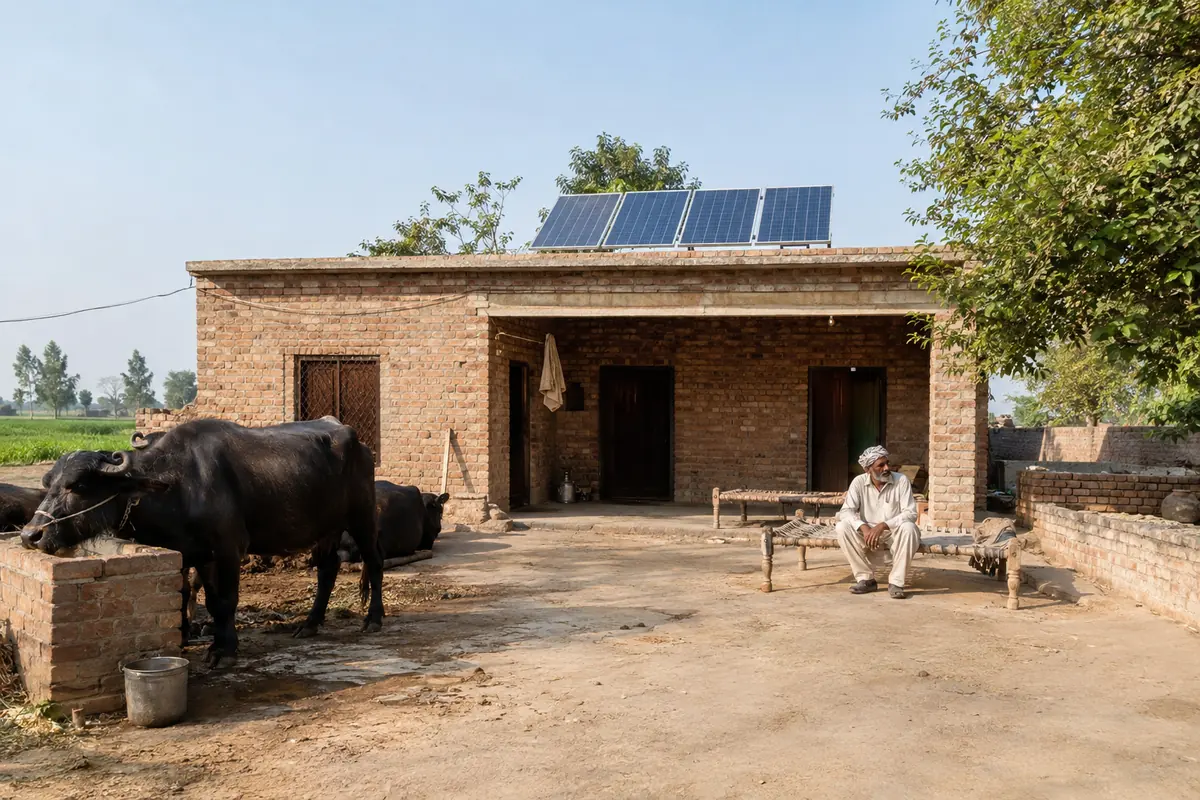
What the government solar panel schemes offer
For anyone searching for a solar panel scheme 2026 option, the table below lists the household and farm schemes we could confirm from official announcements and reputable Pakistani news as of 8 October 2026. Anything not in an official notice is marked as such.
| Scheme | Province | What you get | Status (as reported) |
|---|---|---|---|
| CM Punjab Free Solar Panel Scheme | Punjab | Free 0.55 kW or 1.1 kW rooftop system | Phase one launched March 2025; deadline extended to December 2026 |
| Solarisation of agricultural tubewells | Punjab | Fixed subsidy towards a solar tubewell, by pump size | Applications taken 2024-25; rollout delayed |
| Sindh Solar Home System project | Sindh | Free kit: 180 W panel, lithium battery, fan and LED lights | Phase II launched April 2026; completion planned for June 2027 |
| KP household solarisation | Khyber Pakhtunkhwa | Free system for half the homes, 50% subsidy on instalments for the rest | PC-1 finalised March 2026; distribution ordered |
| Balochistan tubewell solarisation | Balochistan (federal and provincial funding) | Solar systems for 27,000 farm tubewells | Funds approved May 2025; progress slow |
The Punjab scheme in short
Punjab’s is the biggest household programme. Homes using up to 100 units a month are matched to a 0.55 kW system and homes using 101 to 200 units to a 1.1 kW system, both installed free and registered to the owner’s CNIC. Phase one covered about 94,000 systems. Full details, documents and steps are on our CM Punjab solar panel scheme page.
Sindh: small kits, not rooftop grid systems
Sindh’s scheme gives a solar home kit rather than a grid-tied system. According to the Sindh government’s July 2026 review, each family gets a 180 watt panel, a lithium battery, a fan and LED lights. The programme targets 275,000 low-income families and is valued at about Rs 18.2 billion.
Khyber Pakhtunkhwa: free and half-price
KP announced 130,000 households across the province, with 65,000 getting free units and 65,000 getting systems at half price, payable in instalments. A separate component for the merged districts targets another 120,000 homes. System sizes had not been published at the time of checking.
Which scheme fits your situation
Most readers fall into one of a few situations. Find yours before spending time on applications:
| Your situation | Scheme to look at | Realistic expectation |
|---|---|---|
| Punjab home, bill under 200 units | CM Punjab free solar | Worth applying; selection by ballot |
| Punjab home, bill 200 to 500 units | None at present | Buy your own, possibly on instalments |
| Punjab farmer with an electric tubewell | Tubewell solarisation | Check with the district office for a new round |
| Remote Sindh village, no grid | Sindh solar home kits | Kit for lights and a fan, via district verification |
| Sindh city home, up to 100 units, BISP family | Sindh solar home kits | Priority group, small kit only |
| KP home in a vulnerable group | KP household solarisation | Wait for the district distribution process |
| Any home above 500 units | None | Buy a grid-tied system sized to your load |
Who is eligible for each solar panel scheme
There is no single rule. Each province uses its own data: Punjab uses your electricity bill, Sindh leans on BISP and grid access, and KP prioritises vulnerable groups.
| Scheme | Main eligibility test | Priority or exclusions |
|---|---|---|
| Punjab free solar | Domestic consumer using up to 200 units a month, single meter, sanctioned load up to 2 kW | Excluded: faulty meters, theft cases, multiple meters, three or more late payments in 12 months |
| Punjab tubewells | Small farmers with 1 to 25 acres, as reported in 2025 | Subsidy fixed by pump size: up to 10, 15 or 20 kW |
| Sindh solar kits | 132,000 off-grid homes in remote areas and 143,000 on-grid protected consumers using up to 100 units | BISP-registered families get priority |
| KP solarisation | Deserving households, allocated to districts by population | Widows, persons with disabilities, displaced and disaster-hit families, off-grid areas |
Two things catch people out with every government free solar panel scheme. First, these schemes are for residents of that province only, so a Lahore family cannot apply in Sindh or KP. Second, every scheme is oversubscribed. Punjab received more than 861,000 applications for fewer than 100,000 systems in its first phase. Meeting the criteria makes you eligible for selection, not certain of getting a system.
Is there a Prime Minister solar panel scheme?
No household scheme of that name has been announced by the federal government as of October 2026. Federal work on solar has focused on policy and on projects such as the Balochistan tubewells and a 100 MW solar project for Gilgit-Baltistan. Videos and websites advertising a “PM free solar panel scheme registration” are not official, and many collect CNIC and phone numbers for scams.
Documents required
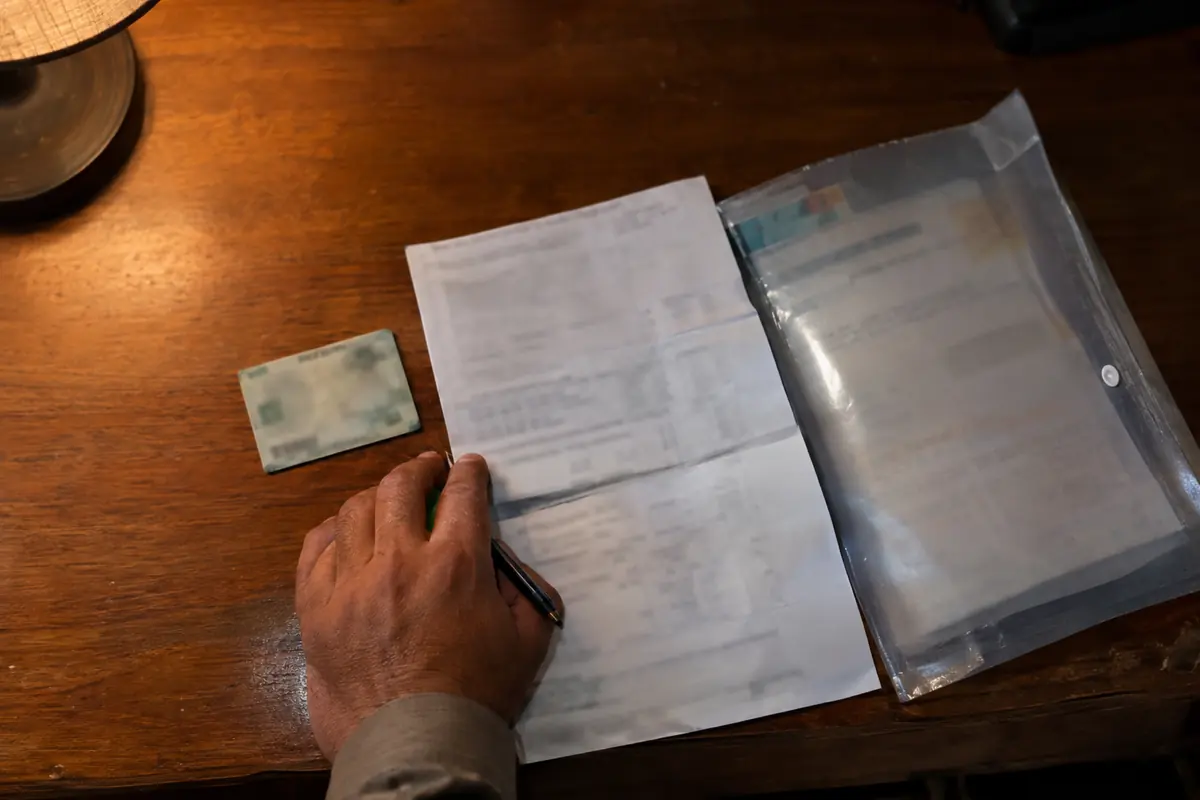
Most schemes ask for less than people expect, because the government already has your electricity and NADRA records. What changes is which record they check.
| Document | Punjab free solar | Sindh kits | KP scheme | Tubewell schemes |
|---|---|---|---|---|
| CNIC | Yes | Yes | Yes | Yes |
| Electricity bill reference number | Yes, main check | For on-grid applicants | Not confirmed | Usually, for the tubewell connection |
| BISP registration | No | Gives priority | Not confirmed | No |
| Land record | No | No | No | Yes, to prove acreage |
| Mobile number in your name | Yes | Not confirmed | Not confirmed | Yes |
Before you apply anywhere, put these in one folder:
- A clear photo of both sides of your CNIC
- Your latest electricity bill, and the bill history for the last 12 months
- Proof that the meter name matches your family, if it is in someone else’s name
- For farmers, the fard or other land record and the tubewell’s electricity bill
How to spot a fake solar scheme
The more popular a scheme gets, the more copycat pages appear. Warning signs we see again and again:
- A website ending in .com, .org.pk or .pk instead of .gov.pk that uses the chief minister’s photo
- A “registration fee”, “verification fee” or “delivery charges” paid by JazzCash, Easypaisa or bank transfer
- A WhatsApp message with a PDF form to fill and send back
- A caller asking for the OTP sent to your phone
- A promise of a larger system, such as 3 kW or 5 kW, for free
If you have already shared your CNIC with a fake site, watch for SIMs or accounts opened in your name and report it to the federal cybercrime authorities.
How to apply online
Only Punjab has a fully online public application process that we could confirm. The others mostly work through district administration, surveys and verification, and you should follow your district office’s announcements.
Punjab
- Go to the official portal cmsolarscheme.punjab.gov.pk and create an account with your CNIC, mobile number and email.
- Verify your email, sign in, and enter your bill’s reference number.
- Check the details pulled from your DISCO record and submit.
- Or skip the website and SMS your reference number, a space, and your CNIC to 8800.
Sindh and KP
- Watch announcements from your deputy commissioner’s office and your MPA or union council office. Sindh’s Phase II has been handed out through district events.
- If you are BISP-registered in Sindh, keep your BISP status up to date, since those families get priority.
- Wait for the verification survey. In both provinces teams verify homes before kits are handed over.
Tubewell schemes
Punjab took applications for tubewell solarisation through a government portal in 2024-25. Check with your district agriculture or energy office for whether any new round has opened.
Whatever the province, follow three rules:
- Never pay a “registration fee”. Government schemes do not charge one.
- Never share an OTP or PIN with someone who calls about a solar scheme.
- Type the address yourself. Official sites end in .gov.pk.
How to check your application status
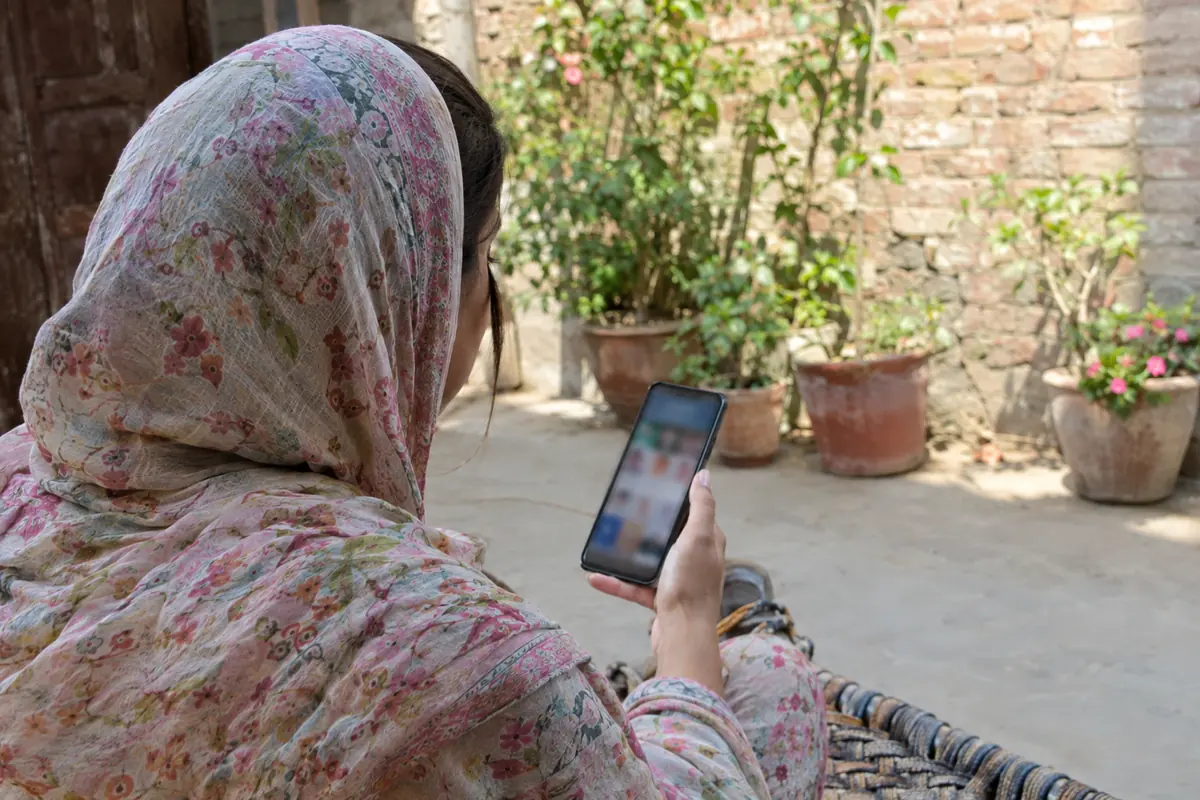
Status checks also differ by scheme. Here is what to expect.
| Scheme | Where to check | What happens after selection |
|---|---|---|
| Punjab free solar | Sign in on the portal; SMS from 8800 | Physical verification at home, then installation |
| Sindh kits | District administration and local representatives | Verification, then kit handover at district events |
| KP solarisation | District administration once distribution starts | Not yet published in detail |
| Punjab tubewells | The portal used to apply, district agriculture office | Vendor installation after approval |
A few practical points:
- Keep the same mobile number active. Selection messages and verification calls go to the number you gave.
- Save the confirmation SMS or screenshot. It is your only proof of applying if records are disputed.
- If you are rejected, read the reason. For Punjab, the usual causes are units above 200, more than one meter, or late bill payments.
If you were not selected
Not winning the draw is the normal result, not a sign you did anything wrong. Keep your registration confirmation safe and watch the official portal and news for any new phase. Meanwhile, cut your bill with what you control: move heavy loads to daytime, replace old fans with inverter or DC fans, and compare the cost of a small system of your own using the 1kW solar system price guide.
Scheme vs buying solar yourself
For a low-use home, a free scheme system is worth trying for. But if your bill is over 200 units, or you need power this summer rather than next year, buying your own system is usually the realistic option. Compare the two honestly:
| Government solar scheme | Buying your own system | |
|---|---|---|
| Upfront cost | Free or subsidised | Full cost, or spread on instalments |
| Size | Fixed and small (0.55 to 1.1 kW in Punjab, a 180 W kit in Sindh) | Sized to your actual load, from 1 kW up to 10 kW or more |
| Certainty | Balloting or selection; most applicants miss out | Guaranteed |
| Timeline | Months from applying to installation | Days |
| Brand and warranty | Decided by tender | Your choice: Jinko, Longi, Canadian, JA Solar and others |
| Net metering | Not part of the schemes | Possible for grid-tied systems, under current NEPRA rules |
For reference, the panels alone for a typical 5 kW home system with 585 watt plates cost about Rs 210,600 at today’s cheapest listed rate, and the market average price per watt is Rs 41.3. Use the solar panel calculator to size a system from your monthly units, and the solar system price in Pakistan guide for full system costs with inverter and batteries.
If the upfront amount is the problem, our solar panels on installments page compares bank and company plans. To pick panels, start with the solar panel price list and the best solar panels in Pakistan comparison.
A word on net metering rules in 2026
Anyone buying their own grid-tied system should know that NEPRA changed the rules this year. From 9 February 2026, new solar users moved from unit-for-unit net metering to net billing, where units you export are paid at a much lower rate than the units you buy, and the agreement term was cut from seven years to five. In April 2026 the government also removed the licence requirement and the Rs 1,000 per kW fee for systems of 25 kW or less. Existing net-metering users were to keep their old terms until their agreements expire. Because these rules were still being revised in 2026, confirm the current terms with your DISCO before you size a system around exports.
Confirmed vs not announced
| Confirmed (October 2026) | Not announced |
|---|---|
| Punjab free 0.55 and 1.1 kW systems for homes up to 200 units | A federal free solar panel scheme for homes |
| Sindh free kits for 275,000 families, Phase II under way | An online application portal for Sindh or KP |
| KP plan for 130,000 homes, half free and half at 50% subsidy | KP system sizes and distribution dates |
| Punjab deadline extended to December 2026 | An exact closing day for Punjab |
Frequently asked questions
Is there a free solar panel scheme in Pakistan right now?
Yes, but it depends on your province. Punjab gives free 0.55 kW and 1.1 kW systems to homes using up to 200 units a month, Sindh gives free solar home kits to low-income families, and KP has approved free and half-price systems for 130,000 households.
Is there a Prime Minister solar panel scheme for homes?
No federal household solar scheme had been announced as of October 2026. Federal solar work has focused on net metering policy and projects such as Balochistan tubewells, so treat any "PM free solar registration" site as unofficial.
How do I apply for the government solar panel scheme in Punjab?
Register on cmsolarscheme.punjab.gov.pk with your CNIC and electricity bill reference number, or send the reference number, a space and your CNIC by SMS to 8800. Selection is by digital balloting.
Do I have to pay any fee to register for a solar scheme?
No. Government solar schemes do not charge registration, verification or delivery fees. Anyone asking for money through JazzCash, Easypaisa or a bank transfer is running a scam.
What do I get in the Sindh solar scheme?
According to the Sindh government, each selected family gets a 180 watt panel, a lithium battery, a fan and LED lights free of cost. BISP-registered families and off-grid homes are given priority.
Can I get a free solar system if my bill is above 200 units?
Not under the Punjab scheme, which is capped at 200 units a month. Higher-use homes generally need to buy their own system, often on bank or company instalment plans.
Can I apply for a scheme in another province?
No. Each provincial scheme is limited to consumers or residents of that province, and checks are done against local electricity and NADRA records.
Does a scheme system qualify for net metering?
The free systems are small and meant for self-use, and none of the schemes include net metering. Net metering or net billing applies to grid-tied systems you install yourself under NEPRA rules.