On this page
Choosing solar panels for home use in Pakistan is really choosing a whole system: panels, an inverter, a structure, wiring and, if you want backup, batteries. This guide breaks down what each part costs, how the price changes between 2 kW, 3 kW, 5 kW and 10 kW, and how to avoid the mistakes that make a cheap quote expensive later. Panel figures update automatically from our live price sheet.
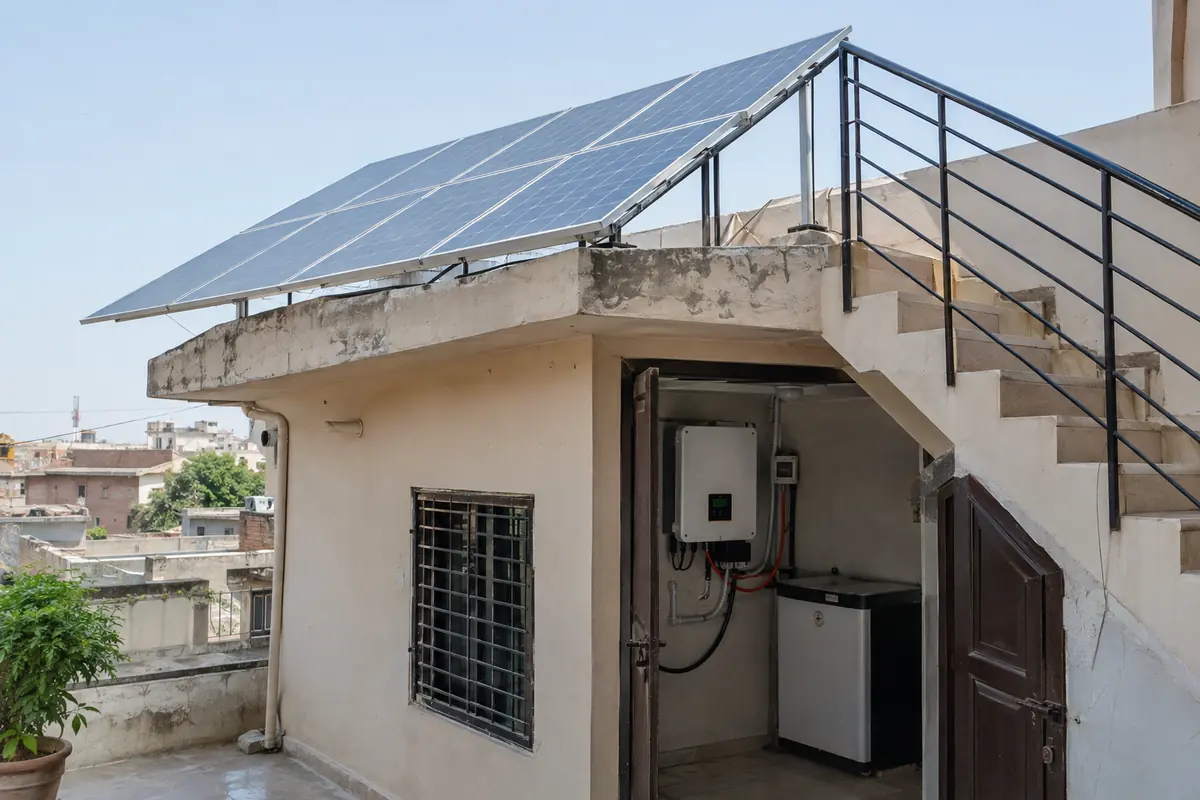
Quick answer: solar system price for a home in Pakistan
The panels for a 5 kW home system using 585 W plates cost Rs 210,600 today (9 panels). On top of that you pay for the inverter, structure, wiring and installation, which together usually cost more than the panels themselves. Adding lithium batteries for a hybrid system can raise the total a lot further, because storage is the most expensive part per unit of energy.
| System | Panels (585 W) | Panel cost now | What it suits |
|---|---|---|---|
| 2 kW | 4 | Rs 93,600 | Fans, lights, fridge, TV in a small home |
| 3 kW | 6 | Rs 140,400 | A small home plus one 1-ton inverter AC in daytime |
| 5 kW | 9 | Rs 210,600 | A typical family home with one or two ACs |
| 10 kW | 18 | Rs 421,200 | Large homes, three or more ACs, offices |
Three numbers decide almost every home quote: the system size in kW (from your bill), the system type (on-grid, hybrid or off-grid, from your load-shedding) and the battery size in kWh (from what you want to run at night). Fix those three first and the rest of the quote becomes easy to compare between installers.
How we checked these prices
We do not want to give you a number that is wrong next month, so here is exactly where each figure on this page comes from.
| Item | Source | How often it changes |
|---|---|---|
| Panel prices and panel counts | Our live price sheet, built from dealer rates for A-grade panels | Updated as the market moves; shown live on this page |
| Inverters, batteries, structure, wiring, labour | Current retail listings and installer quotes we reviewed for Pakistani cities, given as ranges as of October 2026 | Moves with the dollar and with each budget |
| Net billing rules | NEPRA’s prosumer regulations notified on 9 February 2026, as reported in the national press | Changes only when NEPRA issues new rules |
| Sales tax on panels | 10% GST on imported panels, set in the 2025-26 budget and kept in the 2026-27 budget | Reviewed every June |
| Energy output | Standard rule of thumb for Pakistani sunshine: about 4 to 5 units per kW per day across the year | Varies by city, season and shading |
What we did not include
- Dealer margins on package deals. Installers bundle everything into one price, and their margin varies a lot. Use the ranges here to check whether a package is fair.
- Load extension fees. If your sanctioned load is lower than the system you want, the DISCO charges for an extension. This depends on your connection.
- Civil work. Strengthening an old roof, building a raised platform or long cable runs to a far meter add cost.
Solar panels for home: system types and full cost by size
There are three kinds of solar panel system for home use in Pakistan. The type you choose matters more to the final bill than the panel brand.
1. On-grid (grid-tied)
Panels feed an on-grid inverter that works with the WAPDA supply. During the day, solar runs the house and any surplus goes to the grid under net billing. There are no batteries, so when the grid goes down, the inverter shuts off for safety.
- Best for: cities with short load-shedding and high daytime use.
- Cheapest per kW installed.
2. Hybrid
A hybrid inverter runs the house from solar, charges a battery bank and also connects to the grid. When the grid fails, it switches to battery power.
- Best for: homes that want backup during load-shedding and still want to export surplus.
- Cost driver: battery size.
3. Off-grid
Panels charge batteries through an off-grid inverter, with no connection to the grid for export. Common in villages and on farms with weak or no supply.
- Best for: areas with long outages or no connection.
- Downside: you cannot sell surplus, and the batteries do all the night work.
Component costs as of October 2026
These ranges come from current Pakistani retail listings and installer quotes. They are wide because brand, city and roof make a real difference.
| Component | 2 to 3 kW | 5 kW | 10 kW |
|---|---|---|---|
| On-grid inverter | about Rs 70,000 to 180,000 | about Rs 100,000 to 230,000 | about Rs 200,000 to 450,000 |
| Hybrid inverter | about Rs 90,000 to 200,000 | about Rs 110,000 to 250,000 | about Rs 250,000 to 500,000 |
| Standard rooftop structure | about Rs 12,000 to 35,000 | about Rs 25,000 to 60,000 | about Rs 50,000 to 110,000 |
| DC/AC cable, MC4, breakers, SPD, earthing | about Rs 10,000 to 25,000 | about Rs 18,000 to 40,000 | about Rs 35,000 to 70,000 |
| Installation labour | about Rs 15,000 to 35,000 | about Rs 20,000 to 50,000 | about Rs 40,000 to 90,000 |
| Net billing paperwork and meter | about Rs 15,000 to 25,000 | about Rs 15,000 to 30,000 | about Rs 20,000 to 40,000 |
Local and budget inverter brands sit at the bottom of each range; well-known international brands with a stronger warranty sit near the top. For model-by-model rates, see our solar inverter price page.
Batteries: the biggest swing in a hybrid quote
| Battery type | Rough cost as of October 2026 | Typical life | Notes |
|---|---|---|---|
| Lithium (LiFePO4) | about Rs 45,000 to 70,000 per kWh, more for premium brands | Many years; check the cycle rating on the datasheet | Lighter, deeper discharge, little maintenance |
| Tubular lead-acid | Lower upfront cost per kWh than lithium | About 3 to 5 years | Needs water top-ups and ventilation; heavy |
A 5 kWh lithium bank will run fans, lights, a fridge and a TV through a typical evening outage. Running an AC on batteries needs a much larger bank. Our solar battery price page compares brands and sizes.
What each system size can run
Appliance ratings below are typical figures; check the label on your own appliances. Daytime use is what solar covers best.
| Appliance | Typical running watts | 2 kW | 3 kW | 5 kW | 10 kW |
|---|---|---|---|---|---|
| Ceiling fans (AC fans; DC fans use less) | about 75 to 100 each | Yes | Yes | Yes | Yes |
| LED lights (each) | 10 to 20 | Yes | Yes | Yes | Yes |
| Refrigerator | 150 to 300 | Yes | Yes | Yes | Yes |
| 1-ton inverter AC | about 600 to 1,200 | No | One, in good sun | Two | Three to five |
| 1 hp water pump | about 750 | Short runs | Yes | Yes | Yes |
| Washing machine, iron | 500 to 1,500 | One at a time | One at a time | Yes | Yes |
Worked example: a 5 kW system for a family home
Take a family in a double-storey house that uses about 650 units a month in summer, most of it from two inverter ACs and fans in the afternoon.
- Size: 650 units ÷ 30 days ≈ 22 units a day. At 4 to 5 units per kW per day, about 5 kW of panels covers it.
- Panels: 9 × 585 W panels, costing Rs 210,600 at today’s rates.
- Inverter: a 6 kW hybrid inverter gives headroom for both ACs and leaves room to add a battery later.
- Battery: a 5 kWh lithium bank covers fans, lights and the fridge through a two-hour evening outage. The ACs stay on grid power at night.
- Structure: an elevated frame keeps the roof usable for drying clothes and reduces heat on the top floor.
- Paperwork: the installer applies for net billing with the DISCO so that midday surplus earns a credit.
The result is a system that covers most of the daytime bill, keeps essential loads running during outages and exports only what the house cannot use. For more 5 kW options, see the 5 kW solar system price page, and for a starter setup the 1 kW solar system price page.
How many solar panels are required for 10 kW?
Divide 10,000 by the panel wattage and round up:
| Panel size | Panels for 10 kW | Panel cost now |
|---|---|---|
| 550 W | 19 | Rs 397,100 |
| 585 W | 18 | Rs 421,200 |
| 620 W | 17 | Rs 421,600 |
| 650 W | 16 | Rs 447,200 |
A 10 kW system with 585 W panels needs roughly 50 to 60 square metres of clear roof once you allow for walkways and row spacing. If your roof is tight, a larger panel cuts the count.
Sizing the inverter
- On-grid: the inverter’s kW rating is usually close to the panel kW, sometimes a little lower.
- Hybrid: size the inverter for the biggest load you want to run at once, not just the panels. Two ACs and a pump starting together need headroom.
- Off-grid: the battery voltage (24 V, 48 V) must match the inverter. Larger systems use 48 V.
- Future growth: if you plan to add panels later, buy an inverter with spare input capacity now. Changing inverters later costs more.
What “3 kv” and “2 kv” mean
People often ask for the “3 kv solar panel price” or a “2 kv system”. Strictly, kVA (often said “kv”) describes an inverter’s rating, and kW describes the panels. In everyday Pakistani use, a “3 kv system” usually means a 3 kW solar setup with a matching 3 to 4 kVA inverter. When you ask for a quote, say the panel kW and the inverter kVA separately so there is no confusion.
| What you ask for | What you should get |
|---|---|
| 2 kv solar system | About 2 kW of panels (4 × 585 W) and a 2 to 3 kVA inverter |
| 3 kv solar system | About 3 kW of panels (6 × 585 W) and a 3 to 4 kVA inverter |
| 5 kv solar system | About 5 kW of panels and a 5 to 6 kVA inverter |
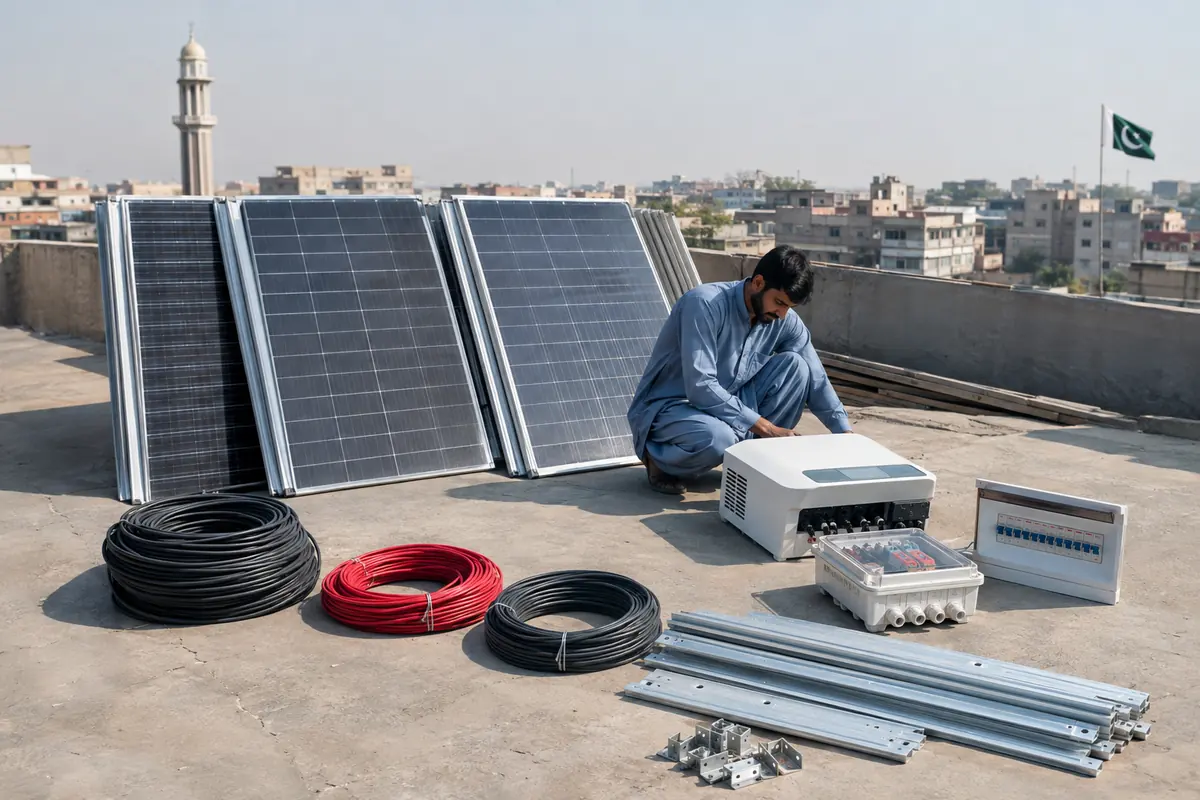
Comparison table: on-grid vs hybrid vs off-grid
Here is how the three system types compare for a typical 5 kW home.
| On-grid | Hybrid | Off-grid | |
|---|---|---|---|
| Panels for 5 kW (585 W) | 9 | 9 | 9 |
| Panel cost now | Rs 210,600 | Rs 210,600 | Rs 210,600 |
| Batteries | None | Yes, size by your backup need | Yes, larger bank needed |
| Works during load-shedding | No | Yes | Yes |
| Exports to grid (net billing) | Yes | Yes | No |
| Relative total cost | Lowest | Medium to high | Medium to high |
| Main running cost | Almost none | Battery replacement over time | Battery replacement over time |
| Best fit | Daytime-heavy homes in big cities | Homes with regular outages | Villages, farms, weak supply |
Which system size for which home?
| Monthly units on your bill | System size | Typical loads covered in daytime |
|---|---|---|
| Up to about 250 | 2 kW | Fans, lights, fridge, TV, washing machine |
| About 300 to 450 | 3 kW | The above plus one 1-ton inverter AC |
| About 500 to 750 | 5 kW | Two inverter ACs, water pump, iron |
| About 1,000 to 1,500 | 10 kW | Three or more ACs, a big family or a small office |
Under net billing, size the system mainly for what you use during the day. Exported units are bought back at a much lower rate than you pay for imported units, so oversizing only to sell power back is weaker value than it used to be. The solar panel calculator will size a system from your bill in a minute.
How net billing changes the savings
Under the 2026 rules, every unit you import is billed at your normal tariff, and every unit you export is bought at the national average energy purchase price, reported at around Rs 11 a unit when the rules came in. Imagine a 5 kW system that makes 22 units on a sunny day:
| Where the 22 units go | Home that uses 18 in daytime | Home that uses 8 in daytime |
|---|---|---|
| Used directly in the house | 18 units, each saving the full tariff | 8 units, each saving the full tariff |
| Exported to the grid | 4 units at the buyback rate | 14 units at the buyback rate |
| Result | Most of the value is captured | Much of the output earns the low export rate |
The first home gets far more value from the same system. If your family is out all day, a battery or moving loads like washing, ironing and pumping to daytime will help more than adding panels.
Buying checklist
Work through these steps before you pay any advance.
- Collect twelve months of bills. Note your monthly units in summer and winter and your sanctioned load.
- Decide on on-grid, hybrid or off-grid. Base it on how long your outages last and when you use most power.
- Measure the roof. Note shade from tanks, stair rooms and neighbours. Panels in partial shade lose a lot of output.
- Get at least three written quotes. Each should name the exact panel model and wattage, the inverter model, battery model and capacity, structure type and cable size.
- Compare panel cost against our live rates. Multiply the panel count by the price on this site. If the installer’s panel figure is far higher, ask why.
- Check the warranty chain. Who handles a panel claim, who handles an inverter claim, and for how long? Get it on paper.
- Ask about earthing and protection. A proper system has DC and AC breakers, surge protection and a separate earth pit.
- Confirm net billing support. If you want to export, the installer should handle the DISCO application and tell you the expected timeline.
- Agree a payment schedule. A sensible split is a token advance, a larger payment on delivery of equipment, and the balance after commissioning.
- Ask for a handover. You should get the inverter app set up, a wiring diagram and the serial numbers of every panel.
Paying for it
Many installers and some banks offer instalment plans for home solar. Compare the total amount you will pay over the plan, not just the monthly figure, and check whether the plan locks you into one installer’s equipment. Our solar panels on installments page explains what to ask.
Running costs after installation
- Cleaning: plain water every couple of weeks in dusty months.
- Battery replacement: budget for it if you choose tubular batteries.
- Inverter service: fans and filters need occasional cleaning; keep the inverter in a shaded, ventilated spot.
- Monitoring: check the inverter app weekly. A sudden drop in daily units points to shading, dirt or a fault.
What a good quote looks like
| Line in the quote | Good | Red flag |
|---|---|---|
| Panels | “9 × Jinko Tiger Neo 585 W, A-grade” | “9 × 585 W A-grade” with no brand or model |
| Inverter | Brand, model and kVA rating | “6 kW hybrid” only |
| Structure | Material, gauge and height | “Structure included” |
| Cable | Size in mm² for DC and AC | No cable size |
| Warranty | Separate lines for panels, inverter, batteries, workmanship | “Full warranty” |
Common mistakes to avoid
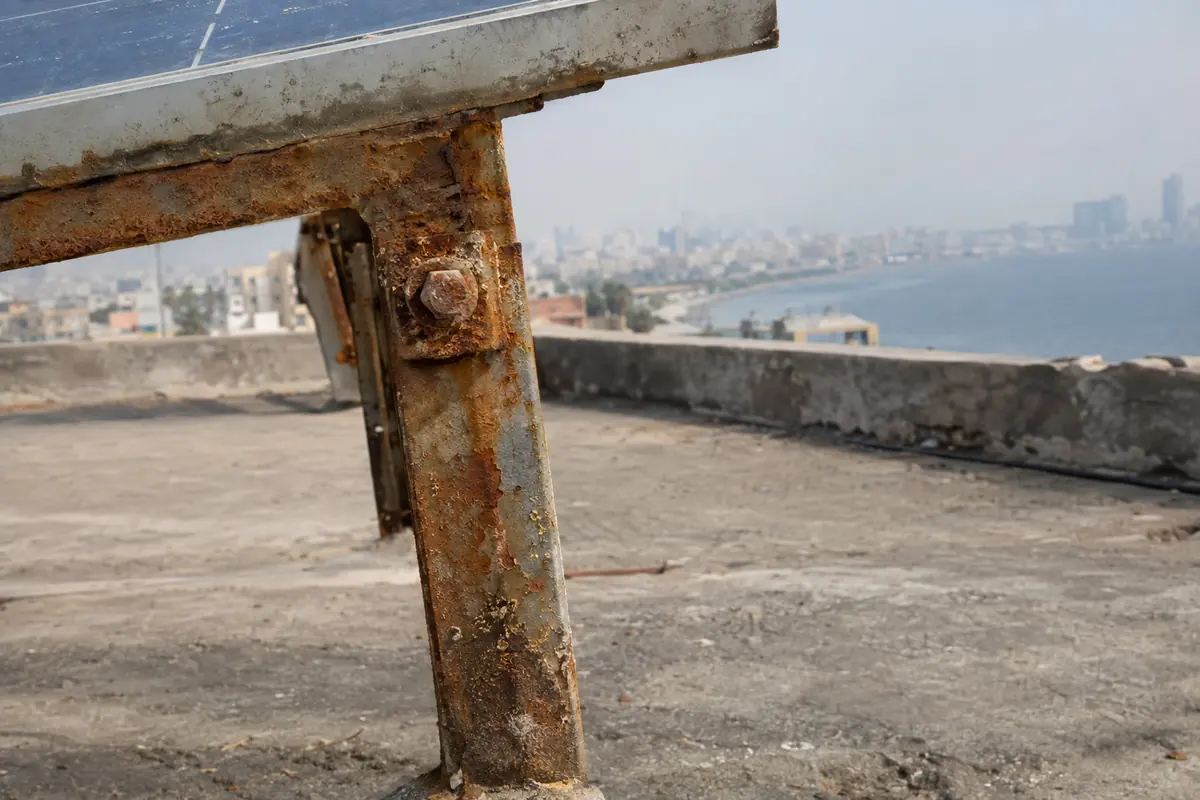
Most bad solar experiences in Pakistan come from a short list of avoidable mistakes.
| Mistake | What goes wrong | How to avoid it |
|---|---|---|
| Buying on total price only | Cheap quotes hide thin cables, weak structures or B-grade panels | Compare line by line using the checklist above |
| Oversizing for export | Low buyback rate under net billing makes the extra panels slow to pay back | Size for daytime use first |
| Ignoring sanctioned load | The DISCO will not approve a system larger than your sanctioned load | Check your bill and apply for an extension early |
| Mixing panel models | Strings with mixed panels lose output | Buy all panels of one model at once |
| Too small a battery for the AC | The inverter trips or the battery drains in an hour | Size storage for the loads you really need at night |
| Poor earthing | Risk of shock and damage in storms | Insist on a proper earth pit and surge protection |
| Skipping cleaning | Dust can cut output noticeably in dry months | Wash panels with plain water, early morning or evening |
| Low tilt or wrong direction | Lower yearly output | Face panels south with a tilt close to your latitude where the roof allows |
Standard vs elevated structure
| Standard rooftop frame | Elevated (girder) structure | |
|---|---|---|
| Height | Low, close to the roof | Raised several feet, roof usable underneath |
| Cost | Lower | Noticeably higher |
| Roof cooling | Some shade | More shade and airflow; top floor stays cooler |
| Cleaning access | Easy | Needs a ladder or walkway |
| Best for | Roofs not used for anything else | Family roofs used for drying clothes or sitting |
Our solar panel stand price page covers structure types in more detail, and the installation cost guide explains labour charges.
Red flags in a sales pitch
- “Zero bill guaranteed.” Your bill depends on your night use, fixed charges and taxes, not just solar.
- “Net metering at the old rate.” New connections get net billing under the 2026 rules.
- “Price valid only today if you pay full advance now.”
- “No need for a structure drawing; we will manage on site.”
If you want to see how panel prices compare by size before you get quotes, start from the solar panel price in Pakistan page.
Frequently asked questions
What is the price of a complete solar system for home in Pakistan?
It depends on size and type. The panels for each size are priced live on this page, and the inverter, structure, wiring and labour usually add more than the panel cost again. Batteries for a hybrid system are the biggest extra.
What is the 3kW solar panel price in Pakistan?
A 3 kW system needs 6 panels of 585 W, and the panel cost is shown live in the table on this page. Add a 3 to 4 kVA inverter, structure, wiring and installation for the full price.
What does a 3 kv or 2 kv solar system mean?
In everyday use, "3 kv" usually means about 3 kW of solar panels with a 3 to 4 kVA inverter, and "2 kv" means about 2 kW with a 2 to 3 kVA inverter. Ask the installer to state panel kW and inverter kVA separately in the quote.
How many solar panels are required for 10kW?
You need 18 panels of 585 W, 19 panels of 550 W or 16 panels of 650 W. Allow roughly 50 to 60 square metres of clear roof for a 10 kW system.
Which solar panel system is best for a home: on-grid, hybrid or off-grid?
On-grid is cheapest and works well where outages are short. Hybrid adds batteries for backup during load-shedding, and off-grid suits areas with weak or no grid supply.
Can a 5 kW solar system run an AC?
Yes. A 5 kW system can usually run two 1-ton inverter ACs on a sunny afternoon, along with fans and lights. Running ACs at night needs a large battery bank or grid power.
Is net metering still worth it for a new home system?
New connections now get net billing, where exported units earn much less than imported units cost. Solar still pays off well if you use most of the power during the day, so size the system for your daytime load.
How long does installation take?
A typical home system takes one to three days to install once equipment is on site. The net billing application with the DISCO takes longer and depends on your distribution company.