On this page
Tax on solar panels in Pakistan changed more in the last two budgets than in the ten years before. This page explains what is charged on a panel today, when each rule took effect, how it shows up in the price you pay a dealer, and what the 2025-26 and 2026-27 budgets did and did not change. It is written for homeowners and shopkeepers, not tax lawyers, so we keep the legal detail to what affects your bill.
Quick answer: what tax is on solar panels in Pakistan
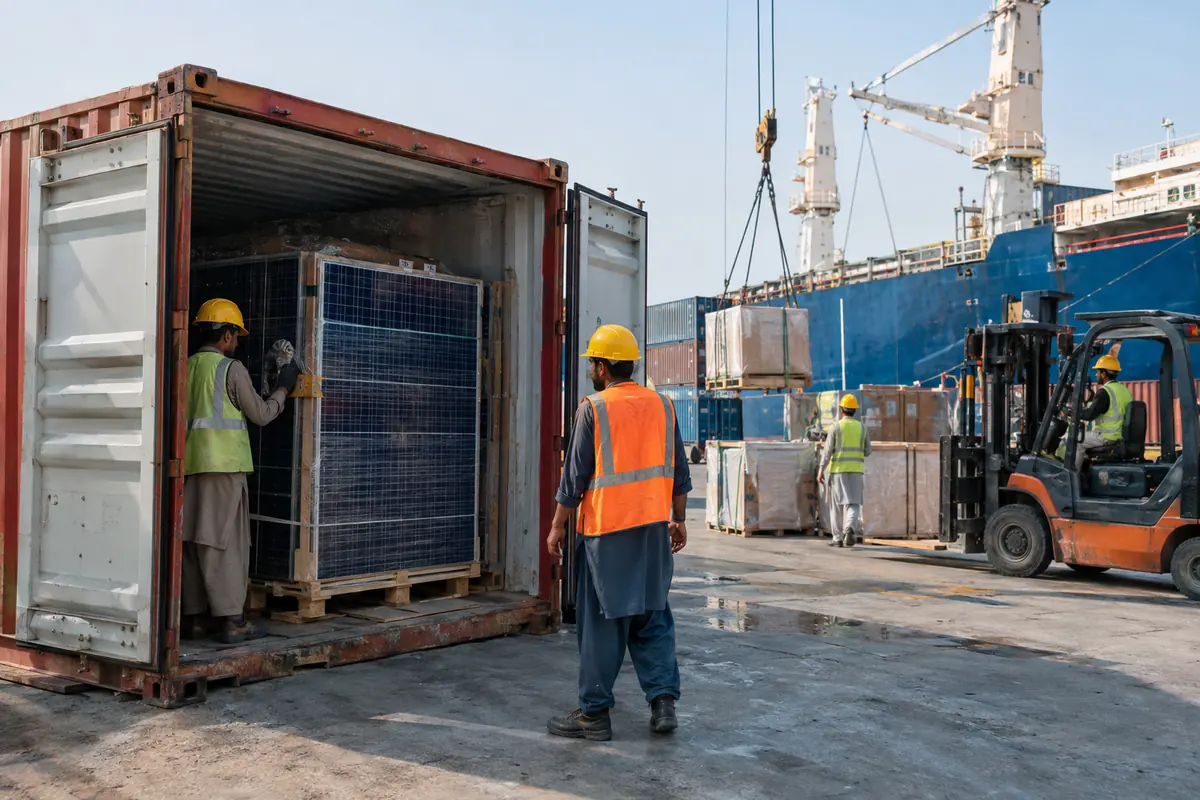
As of October 2026, imported solar panels carry 10% sales tax (GST) and no customs duty.
- 10% GST on solar panels has applied since the start of the 2025-26 fiscal year on 1 July 2025, through the Finance Act 2025. Before that, imported panels were fully exempt from sales tax.
- The government first proposed 18% in the June 2025 budget, then cut it to 10% after protests. Deputy Prime Minister Ishaq Dar announced the 10% figure in the National Assembly on 18 June 2025.
- In the 2026-27 budget (June 2026) another proposal to raise the rate to 18% was dropped, and the 10% rate stayed in place.
- Customs duty on solar panel imports has been exempt since a federal decision in December 2014, and the recent budgets did not bring it back.
- Inverters, batteries and other parts do not get the reduced panel rate. Business Recorder reported in March 2026 that solar inverters are taxed at 18% sales tax.
The tax is collected at import, so you never see it as a separate line from a retail dealer. It is already inside the per-watt rate, which currently averages Rs 41.3 on our live sheet.
How we checked this
Tax rules are where most solar websites go out of date, so we checked each point against a primary or reputable news source and noted the date it took effect.
| Rule | Source we used | Date it took effect or was reported |
|---|---|---|
| Customs duty and GST exemption on panel imports | Dawn report on the federal decision | 9 December 2014 |
| Sixth Schedule exemption (serial 164) withdrawn for imported panels | Finance Act 2025 and FBR Sales Tax Circular No. 2 of 2025-26, as reported by tax news sites | From 1 July 2025 |
| 18% proposal reduced to 10% | Geo News, statement by Ishaq Dar in the National Assembly | Announced 18 June 2025 |
| 10% GST kept, 18% proposal dropped | Daily Times budget coverage | Reported 12 June 2026, for fiscal year from 1 July 2026 |
| Inverters at 18% sales tax | Business Recorder report on a Pakistan Solar Association proposal | Reported 29 March 2026 |
| Customs valuation ruling on panels | Directorate General of Customs Valuation, ruling 1839/2024 | 11 January 2024 |
What we did not include: provincial taxes on services, withholding income tax rates for commercial importers, and the exact assessed value per watt used at the port. These vary by importer and change by notification, and they are not something a homeowner can control. If you are importing a container yourself, speak to a licensed customs agent.
The final word on any rate is the Finance Act and the FBR notifications issued under it, published on fbr.gov.pk. News reports are useful for dates and context, but they sometimes describe a proposal as if it were law, or quote a rate before parliament has voted. Where a news report and the law could differ, we describe the rule in general terms rather than guess.
We will revisit this page after each federal budget and after any mid-year Finance (Supplementary) Act. If you read a headline about “new solar tax”, check the date and whether it was a proposal or an enacted change. Many 2026 headlines were about proposals that never passed.
Solar panel tax explained: what is charged and where
From full exemption to 10%: the timeline
For about ten years, Pakistan treated imported solar panels as tax-free to encourage renewable energy. That changed in 2025.

- December 2014: Federal government exempts customs duty and sales tax on imported solar panels.
- Up to June 2025: Imported panels stay exempt, latterly under serial 164 of Table-1 of the Sixth Schedule of the Sales Tax Act. Local assemblers complain that imported finished panels are cheaper than locally assembled ones, which paid tax on inputs.
- 10 June 2025: Budget 2025-26 proposes 18% GST on imported solar panels.
- 18 June 2025: After criticism from the public, installers and lawmakers, the government agrees to 10% instead of 18%.
- 1 July 2025: Finance Act 2025 takes effect. Imported panels move from exempt to the reduced 10% rate. FBR later explains the change in Sales Tax Circular No. 2 of 2025-26.
- First half of 2026: Reports surface that the government may push GST on panels back to 18%, linked to IMF revenue targets.
- June 2026: Budget 2026-27 is presented without the 18% increase. The 10% rate continues into the fiscal year that began on 1 July 2026.
Solar panel tax vs inverter and battery tax
The reduced rate is for panels only. A full system has several items, and they do not all carry the same tax.
| Item | Sales tax treatment as of October 2026 | Notes |
|---|---|---|
| Solar panels (modules) | 10% GST, no customs duty | Reduced rate since 1 July 2025 |
| Solar inverters | 18% sales tax (reported March 2026) | Standard rate, not the panel rate |
| Lithium and lead-acid batteries | Not covered by the panel rate | Expect normal sales tax on the invoice |
| Mounting structures, cables, breakers | Not covered by the panel rate | Often locally made, taxed as normal goods |
| Installation labour | Provincial sales tax on services may apply to registered firms | Small installers often quote a single package price |
| Net-metering application fees | A DISCO fee, not a tax | Varies by company |
For price ranges on the other parts, see our solar panel inverter price and solar panel battery price guides.
Solar panel HS code
The HS code tells customs what the item is, which sets the duty and tax. For finished solar panels, the international heading is 8541.43: photovoltaic cells assembled in modules or made up into panels. In the Pakistan Customs Tariff it appears as 8541.4300. Older paperwork from before the 2022 HS update may show 8541.4000, which covered all photosensitive devices including panels.
- 8541.4300: solar panels and modules (the code most buyers need)
- 8541.42: cells not assembled into modules (used by local assemblers)
- 8504.40: static converters, the heading under which inverters are normally classified
For a homeowner, the HS code mostly matters when you read an import document or a bill of entry shown by a dealer to prove stock is genuine. The description, brand, wattage and quantity on that paper should match the panels on your roof.
Why it matters to you: if a seller claims a panel is “tax free” because it came in under a different code, that is a warning sign, not a bargain. Mis-declared goods can be seized, and the buyer has no warranty claim on smuggled or mis-declared stock.
How the 10% shows up in your price
Sales tax is charged on the assessed import value, and the importer passes it down the chain. You will not see “GST” on a city market dealer’s handwritten bill, but it is built into the per-watt price.
A simple way to think about it: if the full tax were passed on with no extra margin, 10% on the import value equals about 9.1% of the tax-inclusive price (10 divided by 110). In practice the share inside a retail price is a little lower, because dealer margins and transport are added after the port.
| System | Panel cost on our live sheet (585 W) | Rough share that is sales tax (up to) |
|---|---|---|
| 5 kW | Rs 210,600 | about one-eleventh |
| 10 kW | Rs 421,200 | about one-eleventh |
| 15 kW | Rs 608,400 | about one-eleventh |
Solar panel price after budget: what actually moved prices
When the 10% tax arrived in July 2025, many buyers expected rates to jump by the full 10% overnight. Shop prices do not work that simply, because other forces move at the same time and importers sell existing stock at old cost for a while. Over any year, the solar panel price after a budget depends on several things besides the tax:
- The rupee-dollar rate, since every panel is imported or made from imported cells
- Chinese factory prices, which fell sharply during 2024
- Customs valuation rulings, which set the minimum value tax is charged on
- Stock levels at importers before and after the budget
So if a dealer says “rates went up because of the budget” months after the fact, ask what has changed this month. Our live table below shows current rates and the previous figure for each model.
| Model | Watt | Price per panel | Per watt | This week | Trend |
|---|---|---|---|---|---|
| Crown N-type bifacial 20BBN-type TOPCon | 620 W | Rs 24,800 | Rs 40.0 | No change | |
| Trina Vertex N bifacialN-type i-TOPCon | 620 W | Rs 25,110 | Rs 40.5 | No change | |
| Aiko Stellar 1N ABCN-type ABC | 620 W | Rs 25,110 | Rs 40.5 | No change | |
| Inverex Mustang double glassN-type | 620 W | Rs 26,350 | Rs 42.5 | No change | |
| Jinko Tiger Neo 3.0 bifacialN-type TOPCon | 620 W | Rs 26,660 | Rs 43.0 | No change | |
| Inverex Jolywood dual glassN-type | 600 W | Rs 25,500 | Rs 42.5 | No change | |
| Longi Hi-MO X9N-type HPBC 2.0 | 600 W | Rs 26,400 | Rs 44.0 | No change | |
| Trina Vertex N bifacialN-type i-TOPCon | 590 W | Rs 23,600 | Rs 40.0 | No change | |
| Canadian TOPHiKu6 bifacialN-type TOPCon | 590 W | Rs 25,370 | Rs 43.0 | No change | |
| Crown N-type bifacial 16BBN-type | 585 W | Rs 23,400 | Rs 40.0 | No change | |
| JA Solar DeepBlue 4.0 N-type bifacialN-type | 585 W | Rs 23,545 | Rs 40.2 | No change | |
| Astronergy ASTRO N5 bifacialN-type TOPCon | 585 W | Rs 23,985 | Rs 41.0 | No change | |
| Inverex Mustang bifacialN-type TOPCon | 585 W | Rs 24,280 | Rs 41.5 | No change | |
| Longi Hi-MO X7 bifacialN-type | 585 W | Rs 25,010 | Rs 42.8 | No change | |
| Canadian TOPHiKu6 bifacialN-type TOPCon | 585 W | Rs 25,155 | Rs 43.0 | No change | |
| Jinko Tiger Neo N-type bifacialN-type TOPCon | 585 W | Rs 25,420 | Rs 43.5 | No change | |
| Jinko Tiger Neo N-typeN-type TOPCon | 580 W | Rs 24,505 | Rs 42.3 | No change | |
| Jinko Tiger Pro P-type (old stock)Mono PERC | 550 W | Rs 20,900 | Rs 38.0 | No change | |
| Longi Hi-MO 5 (old stock)Mono PERC | 545 W | Rs 21,255 | Rs 39.0 | No change | |
| Jinko Tiger Pro P-type (old stock)Mono PERC | 540 W | Rs 20,520 | Rs 38.0 | No change |
Worked example: where tax sits in a 10 kW system
Here is how the different rates add up across a typical 10 kW hybrid system. We use shares of each item’s price rather than rupee figures, because prices move every week but tax rates do not.
| Part of the system | Tax rate on that item | Tax share of that item’s price (if fully passed on) |
|---|---|---|
| 18 panels of 585 W | 10% | about 9.1% (10 / 110) |
| Hybrid inverter | 18% | about 15.3% (18 / 118) |
| Lithium battery, if added | Standard sales tax | about 15.3% at 18% |
| Structure, cables, breakers | Normal goods | varies by item and seller |
| Labour | Services, if the firm is registered | varies by province |
The interesting result: on a system with a battery, the inverter and battery often carry more tax in rupees than the panels do, even though the panel tax gets all the headlines. If you are trying to cut total cost, choosing the right battery size saves far more than waiting for a tax change on panels.
Who actually pays, and can you claim it back
Sales tax is designed to be paid by the final consumer. How that works for solar depends on who you are:
- Households: You pay the tax inside the price and cannot claim it back. The only way to reduce it is to buy only what you need.
- Registered businesses and factories: If your business is registered for sales tax and the solar system is used for taxable supplies, the input tax on a proper invoice can usually be adjusted against your output tax, subject to the rules in the Sales Tax Act. Ask your tax adviser before assuming this.
- Unregistered shops: Like households, you bear the tax. A bill still matters for warranty.
- Farmers with tube-wells: The same panel rate applies. Check separately whether any provincial agricultural solar programme covers part of the cost, since that is a subsidy, not a tax change.
Reading a quotation with tax in mind
Most installer quotations in Pakistan are a single package price. Ask for it to be broken down like this, so you can see where tax applies and compare quotes fairly:
- Panels: brand, model, wattage, quantity and price per watt
- Inverter: brand, model and rating in kW
- Battery (if any): chemistry, kWh capacity and warranty years
- Structure: type (L2, elevated, ground) and steel gauge or galvanising
- Cables, breakers, earthing and DB box
- Labour, transport and net-metering paperwork
A quote broken down this way also stops a common trick, where a cheap panel price hides an inflated inverter or structure price. If one installer’s total is much lower than the rest, the gap is almost never tax. It is usually in the panel grade, the inverter brand or the structure thickness.
Locally assembled panels
A few firms assemble panels in Pakistan from imported cells. Before 2025 they paid tax on their inputs while finished imports were exempt, which was one reason the government gave for the change. Locally assembled panels sold by tax-registered firms should come with a sales tax invoice. If you are a business that can claim input tax, buying from a registered seller with a proper invoice matters more to you than to a homeowner.
What to watch in future budgets
Solar tax has become a regular budget topic, because grid demand has dropped as rooftop systems spread and the government wants more revenue. When the next budget arrives each June, these are the points that would change your cost:
- The panel GST rate. Whether it stays at 10% or moves to the standard 18%.
- A switch to retail-price valuation. In March 2026 the Pakistan Solar Association proposed charging tax once at import on 130% of the declared retail price, through the Third Schedule. It was a proposal, not a law, but it shows the direction of the debate.
- Customs valuation rulings. A higher assessed value per watt raises the tax collected even if the rate stays the same.
- Inverter and battery rates. Any relief or increase here affects hybrid systems more than the panel rate does.
- Net-metering rules. These are set by NEPRA and the government, not the budget, but they change the payback of a system more than tax does.
Comparison table: tax before and after the last two budgets
| Item | Until 30 June 2025 | From 1 July 2025 | From 1 July 2026 |
|---|---|---|---|
| Imported solar panels: sales tax | Exempt | 10% | 10% (18% proposal dropped) |
| Imported solar panels: customs duty | Exempt | Exempt | Exempt |
| Batteries: panel rate applies? | No | No | No |
| Net metering fees | DISCO fee | DISCO fee | DISCO fee |
The key point for a buyer: the tax on panels is now a known, stable 10%. The rate has not changed in the 2026-27 budget, so there is no reason to rush a purchase or delay one because of tax alone.
Buying checklist: tax and paperwork
Before you pay for panels, run through these points. They protect your warranty as much as your wallet.
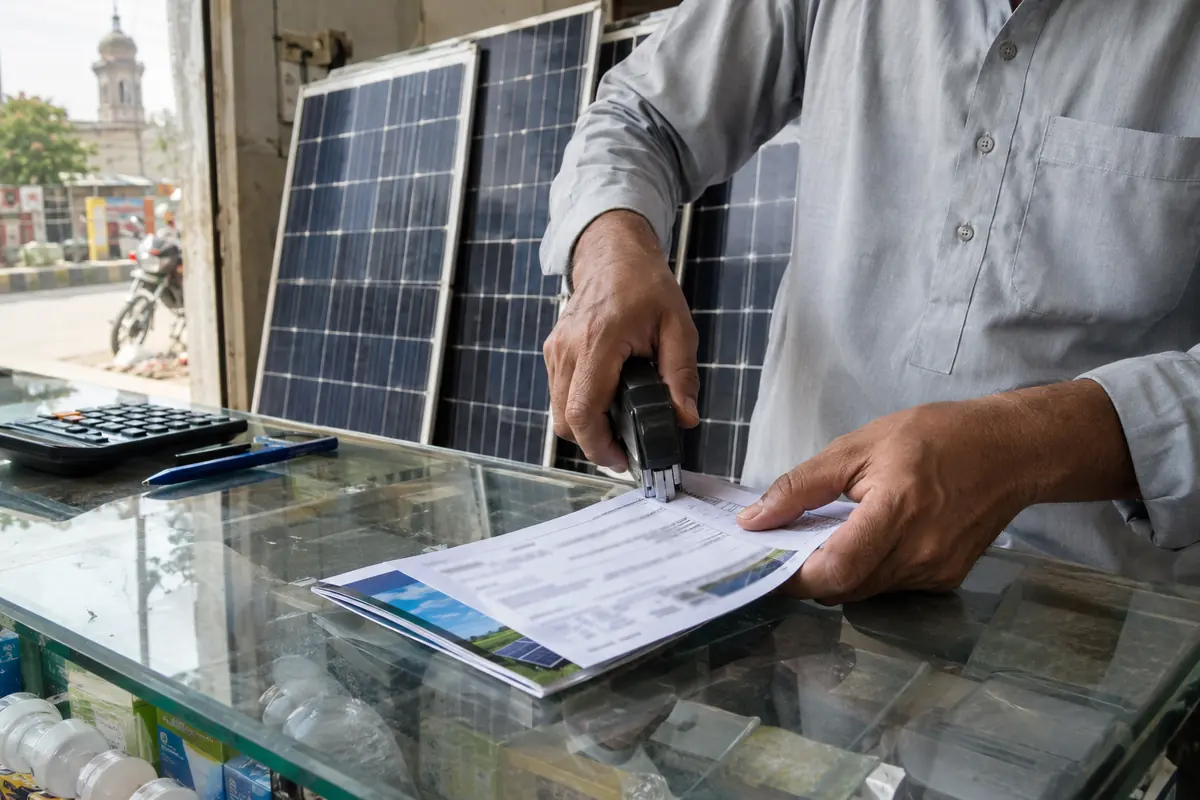
- Ask whether the price includes all taxes. For a homeowner buying from a dealer, it nearly always does. Get it written on the quotation.
- Get a proper bill with the model and serial numbers. Brand warranty claims usually need proof of purchase from an authorised channel.
- For businesses, ask for a sales tax invoice. If you are registered and can claim input tax, the seller must be registered too.
- Check the panel is from a legitimate import. Genuine stock comes with box labels, flash test data and serial numbers that match the maker’s records. For Jinko, see our verification guide.
- Do not pay a “budget surcharge” without asking why. Rates move for many reasons; tax is only one. Compare with the solar panel price list.
- Separate panel and inverter prices on the quote. They carry different tax rates, so a bundled price hides where the money goes.
- Check financing costs. Bank and installment plans add markup that is far bigger than the 10% tax. Our installments guide explains the options.
- Size the system first. The cheapest tax is the tax on panels you do not need. Use the solar panel calculator before you buy.
Common mistakes to avoid
- Believing old “no tax on solar” articles. Anything written before July 2025 is out of date on sales tax.
- Believing proposal headlines. Several 2026 reports said 18% was coming. It was dropped from the 2026-27 budget. Always check whether a change was enacted.
- Assuming inverters and batteries are 10% too. They are not on the reduced panel rate.
- Buying “tax-free” stock from unknown sources. Smuggled or mis-declared panels have no brand warranty and can be confiscated.
- Confusing net-metering fees with tax. DISCO charges for meters and processing are fees, not GST.
- Forgetting the dollar. Over a year, a move in the rupee often changes panel prices more than the 10% tax ever did.
- Ignoring paperwork for commercial systems. Factories and shops that want to claim tax credits need a registered seller and a proper invoice.
Tax is one part of the cost. Once you know it is fixed at 10% for panels, the smart move is to compare brands and wattages on the home page and pick the best value per watt.
Frequently asked questions
How much tax is on solar panels in Pakistan?
Imported solar panels carry 10% sales tax and no customs duty. The 10% rate has applied since 1 July 2025 under the Finance Act 2025, and the 2026-27 budget kept it unchanged.
Did the 2026-27 budget increase tax on solar panels?
No. A proposal to raise sales tax on panels to 18% was reported before the June 2026 budget, but it was dropped and the 10% rate continued from 1 July 2026.
When did the 10% GST on solar panels start?
It started on 1 July 2025, the first day of fiscal year 2025-26. Before that, imported panels were exempt from sales tax under the Sixth Schedule of the Sales Tax Act.
What is the HS code for solar panels in Pakistan?
Finished solar panels fall under heading 8541.43, shown as 8541.4300 in the Pakistan Customs Tariff. Older documents from before the 2022 HS update may show 8541.4000.
Is there customs duty on imported solar panels?
No. Customs duty on solar panel imports has been exempt since a federal decision in December 2014, and the 2025 and 2026 budgets changed only the sales tax.
Are inverters and batteries taxed at 10% like panels?
No. The reduced 10% rate applies to panels. Business Recorder reported in March 2026 that solar inverters are taxed at 18%, and batteries also do not get the panel rate.
Did solar panel prices rise after the budget?
The 10% tax added to the import cost from July 2025, but shop prices also move with the dollar rate, factory prices in China and importer stock. Check the live table on this page for current rates rather than relying on old budget headlines.
Can a business claim back the GST paid on solar panels?
A sales tax registered business using the system for taxable supplies can usually adjust input tax shown on a proper invoice, subject to the Sales Tax Act. Households and unregistered shops cannot claim it back.