| Model | Watt | Price per panel | Per watt | This week | Trend |
|---|---|---|---|---|---|
| Jinko Tiger Pro P-type (old stock)Mono PERC | 550 W | Rs 20,900 | Rs 38.0 | No change | |
| Jinko Tiger Pro P-type (old stock)Mono PERC | 540 W | Rs 20,520 | Rs 38.0 | No change | |
| Longi Hi-MO 5 (old stock)Mono PERC | 545 W | Rs 21,255 | Rs 39.0 | No change | |
| Crown N-type bifacial 20BBN-type TOPCon | 620 W | Rs 24,800 | Rs 40.0 | No change | |
| Trina Vertex N bifacialN-type i-TOPCon | 590 W | Rs 23,600 | Rs 40.0 | No change | |
| Crown N-type bifacial 16BBN-type | 585 W | Rs 23,400 | Rs 40.0 | No change | |
| JA Solar DeepBlue 4.0 N-type bifacialN-type | 585 W | Rs 23,545 | Rs 40.2 | No change | |
| Trina Vertex N bifacialN-type i-TOPCon | 620 W | Rs 25,110 | Rs 40.5 | No change | |
| Aiko Stellar 1N ABCN-type ABC | 620 W | Rs 25,110 | Rs 40.5 | No change | |
| Trina Vertex N UltraN-type i-TOPCon | 740 W | Rs 30,340 | Rs 41.0 | No change | |
| Risen Hyper-ion Pro HJTN-type HJT | 720 W | Rs 29,520 | Rs 41.0 | No change | |
| Astronergy ASTRO N5 bifacialN-type TOPCon | 585 W | Rs 23,985 | Rs 41.0 | No change | |
| Inverex Mustang bifacialN-type TOPCon | 585 W | Rs 24,280 | Rs 41.5 | No change | |
| Risen Hyper-ion HJTN-type HJT | 700 W | Rs 29,400 | Rs 42.0 | No change | |
| Jinko Tiger Neo N-typeN-type TOPCon | 580 W | Rs 24,505 | Rs 42.3 | No change | |
| Inverex Mustang double glassN-type | 620 W | Rs 26,350 | Rs 42.5 | No change | |
| Inverex Jolywood dual glassN-type | 600 W | Rs 25,500 | Rs 42.5 | No change | |
| Longi Hi-MO X7 bifacialN-type | 585 W | Rs 25,010 | Rs 42.8 | No change | |
| Aiko Stellar 1N+ ABCN-type ABC | 650 W | Rs 27,950 | Rs 43.0 | No change | |
| Jinko Tiger Neo 3.0 bifacialN-type TOPCon | 620 W | Rs 26,660 | Rs 43.0 | No change | |
| Canadian TOPHiKu6 bifacialN-type TOPCon | 590 W | Rs 25,370 | Rs 43.0 | No change | |
| Canadian TOPHiKu6 bifacialN-type TOPCon | 585 W | Rs 25,155 | Rs 43.0 | No change | |
| Jinko Tiger Neo N-type bifacialN-type TOPCon | 585 W | Rs 25,420 | Rs 43.5 | No change | |
| Longi Hi-MO X9N-type HPBC 2.0 | 600 W | Rs 26,400 | Rs 44.0 | No change |
On this page9 min read
The solar panel price in Rawalpindi follows the national market, but what you finally pay for a working system here depends on three local things: IESCO’s net billing file, the monsoon storms that hit the Potohar region hard, and the age and shape of your roof. The live rate table above shows today’s A-grade plate prices. This page turns those numbers into a realistic budget for a Rawalpindi home or shop.
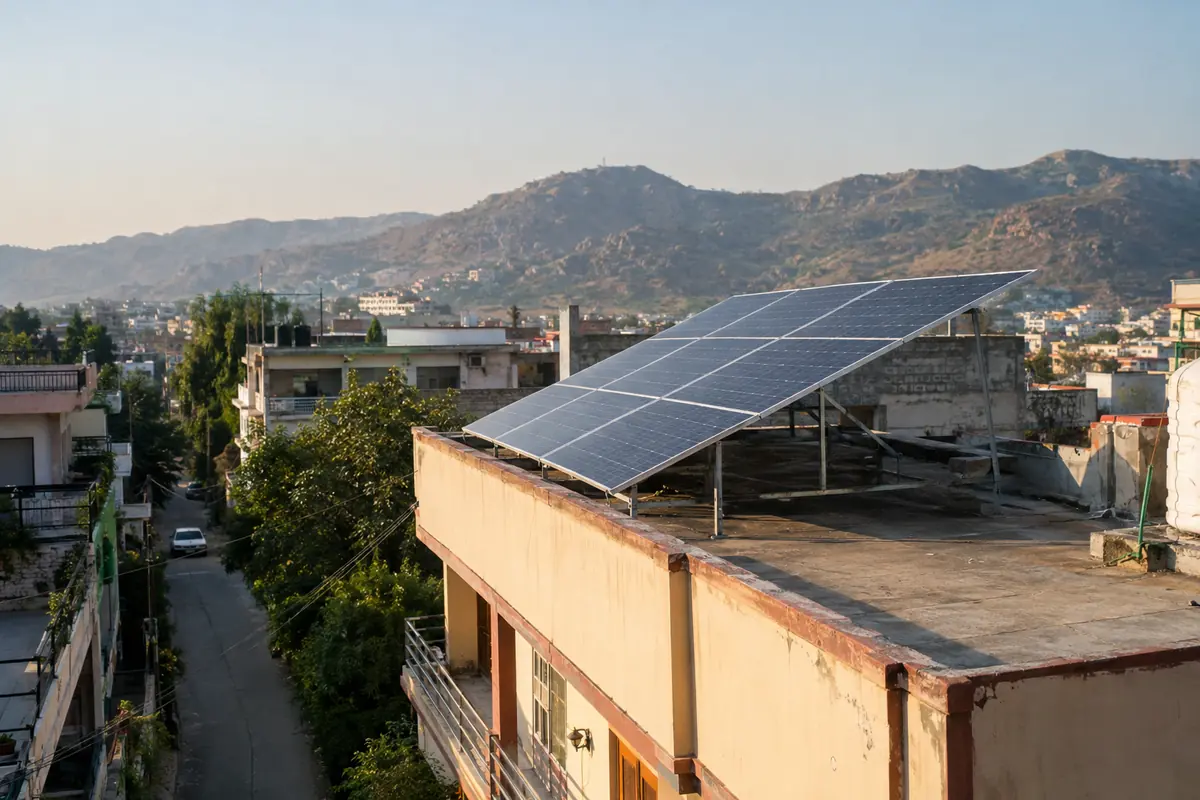
Solar panel markets in Rawalpindi
Unlike Lahore, Rawalpindi does not have one famous solar street that everyone points to, and we could not confirm a single dedicated solar panel wholesale market in Rawalpindi. Plates are sold in three main ways:
| Seller type | Where you find them | What to expect |
|---|---|---|
| Electronics and electrical traders | Old city bazaars and main commercial roads | Plates by the piece, some inverters and batteries, cash prices |
| Installers and solar companies | Showrooms along main roads in the cantonment and newer housing schemes | Full system quotes with IESCO paperwork |
| Twin-city distributors | Larger firms serving both Rawalpindi and Islamabad | Brand-authorised stock, proper warranty cards |
Most panels reach Rawalpindi by road from Karachi’s port and from larger stockists further south, so local plate prices are usually close to national rates with a small freight margin. A quick way to judge a quote is to compare it with today’s cheapest A-grade 585 W plate, now at Rs 23,400, and the market average of Rs 41.3 per watt.
| Model | Watt | Price per panel | Per watt | This week | Trend |
|---|---|---|---|---|---|
| Trina Vertex N bifacialN-type i-TOPCon | 590 W | Rs 23,600 | Rs 40.0 | No change | |
| Canadian TOPHiKu6 bifacialN-type TOPCon | 590 W | Rs 25,370 | Rs 43.0 | No change | |
| Crown N-type bifacial 16BBN-type | 585 W | Rs 23,400 | Rs 40.0 | No change | |
| JA Solar DeepBlue 4.0 N-type bifacialN-type | 585 W | Rs 23,545 | Rs 40.2 | No change | |
| Astronergy ASTRO N5 bifacialN-type TOPCon | 585 W | Rs 23,985 | Rs 41.0 | No change | |
| Inverex Mustang bifacialN-type TOPCon | 585 W | Rs 24,280 | Rs 41.5 | No change | |
| Longi Hi-MO X7 bifacialN-type | 585 W | Rs 25,010 | Rs 42.8 | No change | |
| Canadian TOPHiKu6 bifacialN-type TOPCon | 585 W | Rs 25,155 | Rs 43.0 | No change | |
| Jinko Tiger Neo N-type bifacialN-type TOPCon | 585 W | Rs 25,420 | Rs 43.5 | No change | |
| Jinko Tiger Neo N-typeN-type TOPCon | 580 W | Rs 24,505 | Rs 42.3 | No change |
How to compare two Rawalpindi quotes
- Convert every quote to price per watt for the plates alone. A plate-only quote far below the table above is a warning sign.
- Check whether the price includes delivery to your roof. Narrow streets in older parts of the city can add labour for carrying plates up by hand.
- Ask which exact model you are getting, not just the brand. A brand’s older mono PERC line and its newer N-type line differ in price and heat performance.
- Confirm the warranty is registered in Pakistan through an authorised distributor.
Used and B-grade plates
Rawalpindi has an active resale trade in plates removed from older systems, often 250 to 350 W mono panels. They can make sense for a small backup setup that runs a fan and lights, but they come with no warranty and unknown wear. If you buy used, test each plate in sunlight with a meter for open-circuit voltage and short-circuit current, and pay only for plates that read close to their label. For a full home system, new A-grade plates are almost always the better value per unit produced over the system’s life.
Our 585 watt solar panel price page lists every brand at that size if you want to compare further.
Solar system installation cost in Rawalpindi
A solar panel in Rawalpindi is rarely bought on its own; most buyers want a complete system that keeps fans and lights on during outages. The panel cost below updates with the market. The other figures are ranges we checked as of October 2026 for the inverter, structure, wiring, protection and labour.
| 3 kW | 5 kW | 10 kW | |
|---|---|---|---|
| Plates (585 W) | 6 | 9 | 18 |
| Panel cost today | Rs 140,400 | Rs 210,600 | Rs 421,200 |
| Budget build: local hybrid, basic frame | Rs 1,05,000 extra | Rs 1,58,000 extra | Rs 3,25,000 extra |
| Branded build: tier-1 inverter, raised frame | Up to Rs 2,25,000 extra | Up to Rs 3,75,000 extra | Up to Rs 5,90,000 extra |
| Battery | Optional | Common | Common for large homes |
Batteries are priced separately and can easily match the inverter cost, so decide on them after you know your feeder’s outage pattern.
Rawalpindi roofs: what to budget for
- Older houses in the city: roofs are often small and crowded with water tanks, so a raised frame over the tanks is common. That adds steel and labour.
- Rented portions: many Rawalpindi families rent upper or lower portions. You will need the owner’s written consent for the installation and for the IESCO application.
- Waterproofing: drilling into an old roof slab before the monsoon is a recipe for leaks. Ask for chemical anchors and sealed bolt holes, or a weighted frame that needs no drilling.
- Hilly plots in newer schemes: houses on slopes may have a roof facing east or west. That costs some output, so plan one or two extra plates.
Sizing backup for IESCO outages
Most of urban Rawalpindi sees shorter outages than many rural feeders, but schedules vary by feeder and by season. Match the battery to what you actually need to keep running:
| What you want during a cut | Rough battery need | Inverter type |
|---|---|---|
| Fans, lights, router and TV for 2 to 3 hours | About 2.5 to 5 kWh | Hybrid, 3 to 6 kW |
| Add a fridge and a water pump | About 5 to 10 kWh | Hybrid, 6 kW or more |
| One inverter AC through an evening cut | 10 kWh or more | Hybrid, 8 to 10 kW |
| No backup needed, feeder rarely trips | None | On-grid or hybrid without battery |
See our solar panel installation cost guide for a line-by-line breakdown of fitting charges.
Net metering in Rawalpindi: step by step with IESCO
Rawalpindi is in the area of IESCO, the Islamabad Electric Supply Company, which also serves Islamabad, Attock, Jhelum and Chakwal. New solar connections in Rawalpindi now come under NEPRA’s Prosumer Regulations 2026, notified on 9 February 2026. These replaced net metering with net billing: units you send to IESCO are credited at the national average energy purchase price, and units you take from IESCO are billed at the normal tariff. If you signed a net metering agreement before 9 February 2026, your old terms continue until the agreement expires.

| Step | Who does it | Deadline in the regulations |
|---|---|---|
| Check three-phase connection and sanctioned load | You and your installer | Before applying |
| Submit application form, single-line diagram, equipment list, bill, CNIC, ownership or owner’s consent | Installer on your behalf | Day 1 |
| Acknowledge and check the file is complete | IESCO | 5 working days |
| Technical review of your feeder and transformer | IESCO | 15 working days |
| Sign interconnection agreement | You and IESCO | 7 working days |
| Issue estimate for meter and connection | IESCO | 7 working days after agreement |
| Pay the estimate | You | 7 working days |
| Install bidirectional meter and commission | IESCO | 15 working days after payment |
| Grant concurrence (fee Rs 1,000 per kW) | NEPRA | After IESCO forwards your file |
As of October 2026, buyers should budget Rs 15,000 to 50,000 for the meter and connection work, depending on system size, on top of NEPRA’s fee. The system you apply for cannot be bigger than your sanctioned load, so if your bill shows a small load and you want 10 kW, apply for a load extension first.
Why net billing changes system size in Rawalpindi
Under the old rules, many twin-city homes over-sized their systems and banked the extra units with IESCO. Under net billing, exports are worth far less than imports, so the better plan is:
- Size the system to the load you actually run between 9 am and 4 pm.
- Move pumping, laundry and ironing into daylight hours.
- If evening AC use is heavy, consider a battery instead of extra plates.
Sun hours and solar output in Rawalpindi
Rawalpindi gets a planning average of about 5.0 peak sun hours a day, a bit lower than the southern Punjab cities because of its northern latitude and heavy monsoon. The best tilt for year-round output is around 33 to 34 degrees facing south. These modelled estimates come from the European Commission’s PVGIS tool (ERA5 data), with panels at 33 degrees and 14% system losses.
| Month | Units per kW per day | 3 kW system, units in the month |
|---|---|---|
| January | 4.2 | 390 |
| February | 4.2 | 354 |
| March | 4.6 | 429 |
| April | 4.9 | 438 |
| May | 4.8 | 444 |
| June | 4.5 | 402 |
| July | 3.9 | 360 |
| August | 3.9 | 366 |
| September | 4.5 | 402 |
| October | 4.7 | 438 |
| November | 4.4 | 399 |
| December | 4.4 | 408 |
Over a year, each kW makes about 1,600 units, so a 3 kW system gives roughly 4,800 units. Rawalpindi’s cooler winters actually help: panels lose less power to heat, so December output holds up better than in hotter cities.
Cleaning and tilt in the Potohar climate
Dust here comes from construction, unpaved streets and dry spells between rains. The monsoon washes panels for free, so cleaning needs change with the season.
| Season | How often to clean | Note |
|---|---|---|
| March to June | Every 2 weeks | Dry, dusty and the highest-output months |
| July to September | Only after dust storms | Rain does most of the work |
| October to February | Every 3 to 4 weeks | Fog and dew can leave spots on the glass |
If your roof allows, a fixed tilt of about 33 degrees works well all year. You can test other angles with our solar panel tilt angle calculator, and estimate units from your bill with the solar panel calculator.
Monsoon, storms and hail
The twin cities get some of the heaviest monsoon rain in Punjab, and spring storms can bring strong gusts and hail. Protect your investment:
- Choose plates with tempered glass of at least 3.2 mm, or dual-glass models, and check the hail test on the datasheet.
- Fix clamps at the points the panel maker specifies, not wherever is convenient.
- Fit a proper earthing pit and a DC surge protector. Monsoon lightning is a common cause of inverter failures.
- Keep drainage clear under the frame so rain does not pond around the anchors.
How to choose a solar installer in Rawalpindi
Many installers serve both Rawalpindi and Islamabad, so you will see the same names on both sides of the city line. Use this checklist:
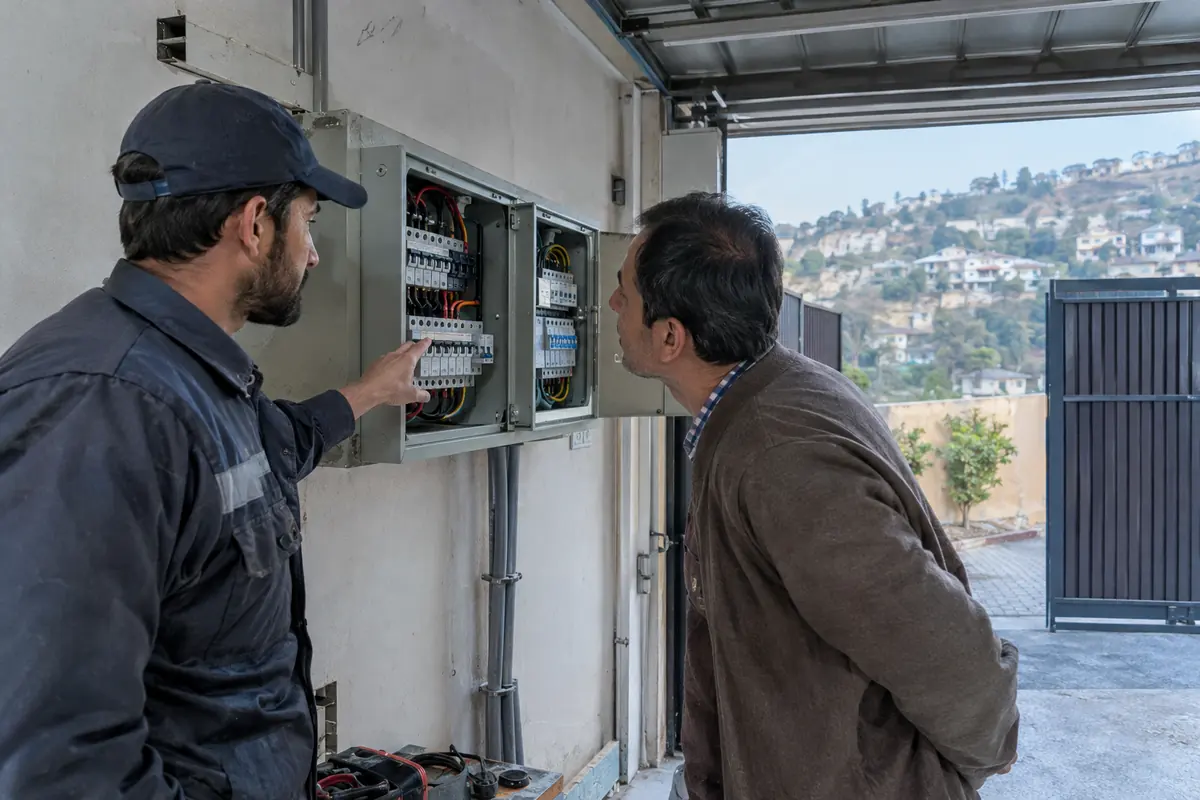
- Certification: is the firm on PPIB’s certified installer list (AEDB’s certification now sits with PPIB)? IESCO and banks often ask for it.
- IESCO experience: how many net billing files have they completed under the 2026 rules, and how long did they take?
- Written specification: brand, model, wattage and serial numbers for plates; inverter model; cable size; structure height and type.
- Storm-ready design: earthing, surge protection and roof sealing should be listed in the quote, not promised verbally.
- After-sales: who visits if the inverter shows a fault, and how quickly?
- References: two installations in Rawalpindi at least one monsoon old.
Read the warranty card before you pay
Panel makers usually give two warranties: one on the product (materials and workmanship) and one on power output over 25 to 30 years. Inverters normally carry a shorter warranty. Ask your installer who handles each claim in Rawalpindi, whether the inverter must be sent to a service centre, and whether the workmanship warranty covers leaks caused by the structure.
Our list of solar panel companies in Pakistan is a good place to start a shortlist.
Rawalpindi vs other cities: price difference
For the same panel, the solar panel price in Pakistan Rawalpindi buyers see is close to the national rate. The real differences sit in the extras.
| Rawalpindi | Islamabad | Lahore | Karachi | |
|---|---|---|---|---|
| Utility | IESCO | IESCO | LESCO | K-Electric |
| Plate price | National rate plus freight | Same as Rawalpindi | Close to national rate | Often lowest |
| Typical roof | Small, crowded older roofs and newer scheme houses | Larger sector houses | Mixed | Flats and bungalows |
| Yearly units per kW | About 1,610 | About 1,610 | About 1,610 | About 1,720 |
| Main local risk | Monsoon storms, leaks | Storms, hail | Smog | Salt air |
Where Rawalpindi quotes do run higher, the reason is usually the job rather than the plates: raised frames over water tanks, carrying plates through narrow streets, extra waterproofing and stronger earthing for the monsoon. These are worth paying for. A cheaper quote that skips them often costs more within two or three years in leaks, loose clamps or a burnt inverter. When you compare a solar panel price in Rawalpindi with a quote from another city, compare the full specification line by line, not just the bottom figure.
If you live near the city line, compare with our Islamabad solar panel price page, or head back to the solar panel price in Pakistan home page for national rates.
Frequently asked questions
What is the solar panel price in Rawalpindi today?
The cheapest A-grade 585 W plate is currently around Rs 20,520, and the table on this page shows other brands and sizes. Rawalpindi prices are close to the national rate, sometimes with a small freight margin.
Is there a solar panel wholesale market in Rawalpindi?
Rawalpindi does not have one well-known solar street like Hall Road in Lahore. Plates are sold by electrical traders in the city's bazaars, by installers across the cantonment and housing schemes, and by distributors who serve both Rawalpindi and Islamabad.
Which company handles solar net billing in Rawalpindi?
IESCO handles applications for Rawalpindi, Islamabad, Attock, Jhelum and Chakwal. New files follow NEPRA's Prosumer Regulations 2026, so they are on net billing rather than the old unit-for-unit net metering.
How much does net billing cost with IESCO?
NEPRA charges a one-time concurrence fee of Rs 1,000 per kW. On top of that you pay IESCO's estimate for the bidirectional meter and connection work, which depends on system size and meter type.
How many units will a 3 kW system make in Rawalpindi?
About 4,800 units a year, or roughly 400 a month on average. April, May and October are the strongest months, while July and August dip because of monsoon cloud.
Do I need a battery for solar in Rawalpindi?
Only if your feeder has regular outages or you use a lot of power in the evening. A grid-tied inverter shuts down during a cut, so homes with daily load-shedding usually choose a hybrid inverter with a small battery.
How do I stop my roof leaking after a solar installation?
Ask for chemical anchors and sealed bolt holes, or a weighted frame that needs no drilling, and have the work done before the monsoon. Check the anchor points after the first heavy rain and reseal any that show damp patches.
Can I install solar in a rented portion in Rawalpindi?
Yes, but you need the owner's written consent both for the installation and for the IESCO application. Many tenants choose a frame that can be unbolted and moved when they leave.