| Model | Watt | Price per panel | Per watt | This week | Trend |
|---|---|---|---|---|---|
| Astronergy ASTRO N5 bifacialN-type TOPCon | 585 W | Rs 23,985 | Rs 41.0 | No change |
On this page12 min read
Astronergy solar panels price in Pakistan is the number many installers check first when a customer wants a Tier 1 N-type panel without paying the Longi or Jinko premium. Astronergy, sold in shops simply as “Astro”, is the module arm of China’s Chint Group, and its ASTRO N5 585 W panel is now one of the most common N-type plates on Pakistani roofs. This page covers the ASTRO N range, the datasheet warranty, how to avoid fake “Astro” panels and how the price per watt stacks up against other Tier 1 brands.
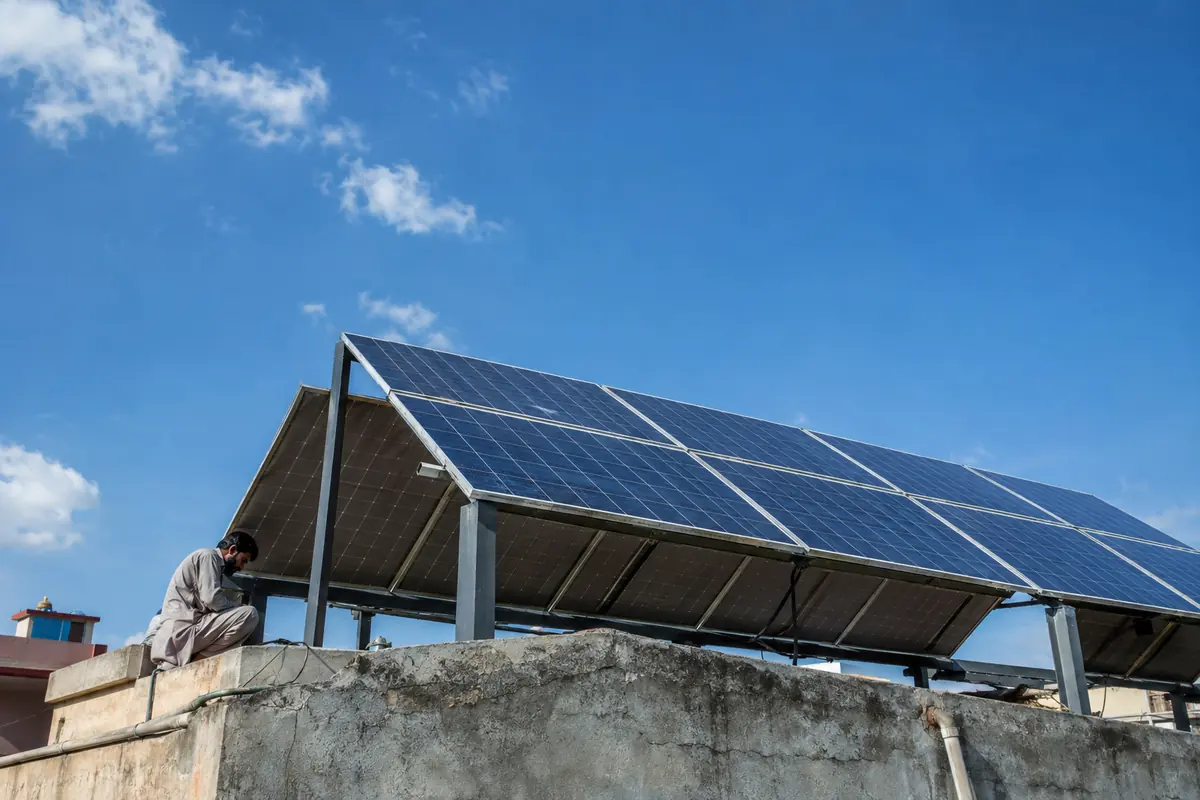
About Astronergy solar
Astronergy is the solar manufacturing company of Chint, a large Chinese electrical equipment group best known for breakers, switchgear and meters. In Pakistan you may already have Chint breakers in your distribution board. Astronergy makes cells and modules at large scale and has been on BloombergNEF’s Tier 1 list of bankable module manufacturers for years.
Shop talk in Pakistan shortens the name to “Astro”, which is why people search for astro solar panels. The ASTRO name is also on the product itself: ASTRO N5, ASTRO N7 and ASTRO N8 are the current N-type series.
| Fact | Astronergy |
|---|---|
| Parent group | Chint (China) |
| Common name in Pakistan | Astro, Astro N5 |
| Makes its own cells | Yes |
| BloombergNEF Tier 1 | Yes |
| Main technology | N-type TOPCon, bifacial dual glass |
| Pakistan presence | Exhibits at Solar Pakistan in Lahore, sells through importers and distributors |
Astronergy treats Pakistan as an important market. At Solar Pakistan 2025 at the Expo Centre Lahore, it showed the ASTRO N7 series and handed awards to its local partners and distributors. That matters for buyers because a brand that invests in local partners is more likely to have stock that came in through proper channels.
What Tier 1 status means for an Astro buyer
BloombergNEF’s Tier 1 list ranks module makers by whether banks have financed large projects using their panels. It is not a lab test of each panel, but it tells you three useful things about Astronergy:
- It is a large, financially stable manufacturer, likely to be around when you need a warranty claim.
- It makes panels in big automated factories with consistent quality control.
- Its panels have been accepted by project lenders and engineers, who check datasheets closely.
What Tier 1 does not tell you is whether the specific panel on your roof is genuine A-grade stock. That part is up to you and your dealer, which is why the checks further down this page matter.
Astronergy solar panel models explained
The ASTRO N family is split by cell size. The table below uses datasheet power ranges; your dealer may stock only some of these.
| Series | Datasheet model family | Power range | Cell format | Typical use |
|---|---|---|---|---|
| ASTRO N5 | CHSM72N(DG)/F-BH | About 565 W to 600 W | 144 half-cut N-type TOPCon cells, 182 mm class | Homes, shops, most rooftops |
| ASTRO N7 | CHSM66RN(DG)/F-BH | About 600 W to 635 W | 210R rectangular cells | Larger homes and commercial roofs |
| ASTRO N8 | CHSM66N(DG)/F-BH | About 695 W to 720 W | 210 mm cells | Factories, ground mounts, farms |
ASTRO N5, the 585 W workhorse
This is the panel most people mean when they say “Astro 585”. Datasheet figures for the 585 W version: 144 N-type TOPCon half-cut cells, about 22.6% efficiency, a size of 2278 × 1134 × 30 mm, a weight of about 32 kg and a temperature coefficient of −0.29% per °C. It is dual glass and bifacial.
The live price of the 585 W ASTRO N5 on our sheet is Rs 23,985, which works out to Rs 41 per watt. Its size is the key selling point: 2278 × 1134 mm is the same footprint as the 540 W to 550 W PERC panels that filled Pakistani roofs for years. If you are adding to an older system or reusing a structure, an ASTRO N5 drops straight onto the same rails.
ASTRO N7, the 210R step up
The ASTRO N7 uses rectangular 210R cells to push output past 600 W. Astronergy’s own launch material for Pakistan quotes up to 630 W and 23.3% efficiency. It is a little longer than the N5 but keeps the 1134 mm width, so it suits most standard structures with small adjustments.
ASTRO N8, the 700 W class
The N8 is Astronergy’s big-format panel for commercial and utility jobs. At around 700 W per panel it is large and heavy, and only worth it if you have open space and an installer used to handling 2.4 metre plates.
Which ASTRO size to pick
| Your situation | Best ASTRO series | Reason |
|---|---|---|
| Replacing or extending an old 540–550 W PERC array | N5 | Same footprint, same rails |
| New 5 kW home system | N5 or N7 | N5 is easiest to source, N7 gives more per plate |
| 10 kW plus on a big roof | N7 | Fewer plates, standard width |
| Solar tubewell or ground mount | N8 | Lowest structure cost per kW |
For a 5 kW system you need 9 panels at 585 W, against 10 panels at 550 W. One plate fewer than PERC also means one less set of clamps and one less panel to wash. Compare every brand at this size on the 585 watt solar panel price page.
Adding ASTRO N5 panels to an old PERC system
A common job in Pakistan is extending a two or three year old system of 540 W or 545 W PERC panels with newer N-type plates. The ASTRO N5’s matching footprint makes this tempting, and it works if the wiring is done properly.
| Do | Do not |
|---|---|
| Put the new N5 panels on their own MPPT input or their own inverter | Mix N5 and old PERC panels in one series string |
| Check the inverter’s spare PV capacity before adding panels | Assume the inverter can take any number of extra plates |
| Use the same brand of MC4 connectors on both sides of each joint | Join different connector brands, which causes burn marks |
| Re-tighten the old structure while the installer is on the roof | Bolt new rails onto rusted old legs |
If your inverter has only one MPPT and it is already full, adding N5 panels usually means a second inverter or a hybrid upgrade. Our solar inverter price page covers current options.
What moves the Astronergy solar panel price
- Series and wattage. N5 is the mass-market panel and usually the cheapest per watt; N7 and N8 carry a premium until they become common.
- Shipments. Prices move when a new container lands or when stock runs short before the next one.
- Exchange rate and taxes. All Astronergy panels are imported, so rupee moves and budget changes pass through quickly.
- Quantity. Installers buying pallets pay less per panel than a home owner buying ten.
Astronergy solar panel warranty in Pakistan
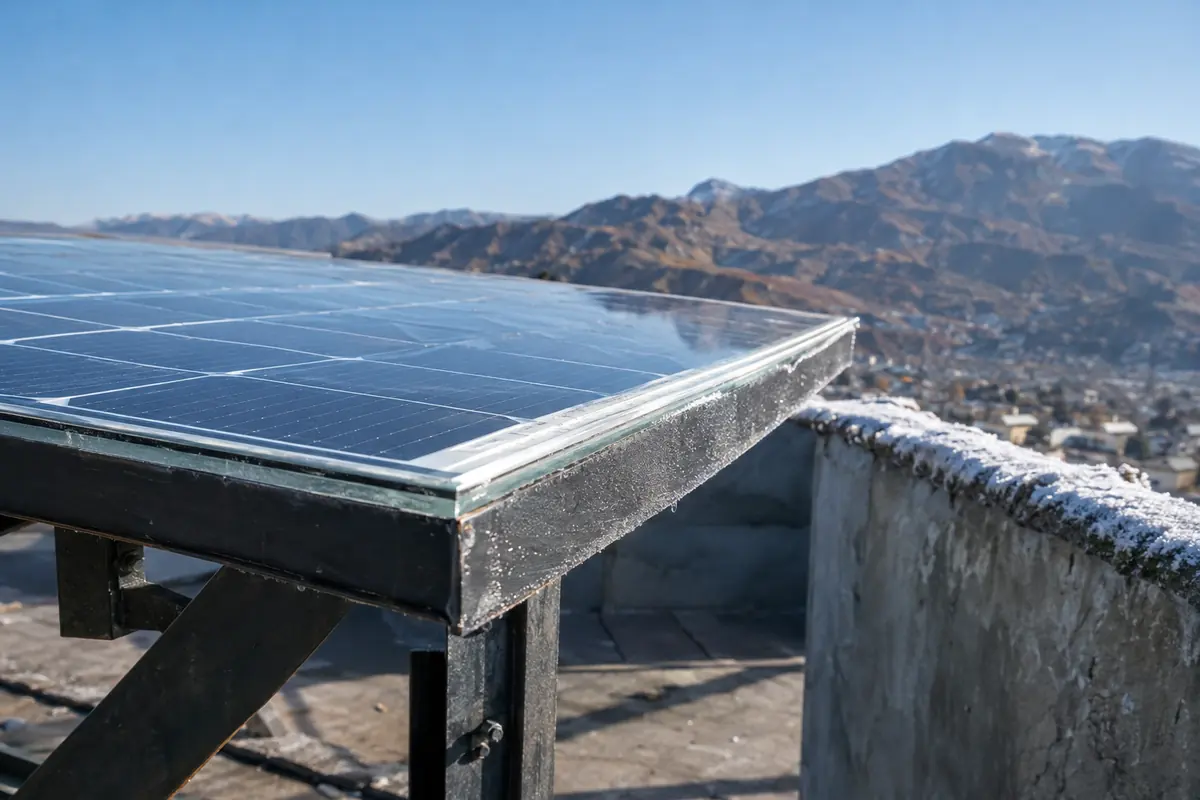
The ASTRO N5 bifacial dual-glass datasheet gives a stronger product warranty than many mainstream panels in this price band.
| Warranty item | ASTRO N5 585 W (datasheet) |
|---|---|
| Product warranty | 15 years |
| Power warranty | 30 years, linear |
| Guaranteed power at year 30 | 87% of nameplate |
| Construction | Dual glass, bifacial |
Compare that with the 12-year product warranty common on mainstream panels from several other Tier 1 brands. A longer product warranty matters more in Pakistan than abroad, because heat, dust storms and poor-quality connectors stress junction boxes and frames.
How the warranty works here:
- The warranty is issued by Astronergy but handled locally through the importer or distributor that brought your stock in.
- Your invoice should show the model code (for example CHSM72N(DG)/F-BH 585), each serial number and the seller’s details.
- For a claim, the distributor will want photos, serials, the invoice and often a site visit.
- Power claims need a test report; product claims for visible defects are simpler.
| Usually covered | Usually not covered |
|---|---|
| Junction box or diode failure | Cracks from impact or people standing on glass |
| Delamination or bubbles in the laminate | Damage from a structure that blew over |
| Frame or glass defects without impact | Burnt connectors from installer workmanship |
| Output well below the warranty curve, proven by test | Dirt, bird droppings and shading losses |
Why dual glass matters on Pakistani roofs
The ASTRO N panels sold in Pakistan are mostly dual glass: glass on the front and on the back, instead of a plastic back sheet. That has practical benefits in Pakistani conditions:
- Better resistance to moisture getting in during monsoon humidity in Karachi and Lahore.
- Less risk of back-sheet cracking and yellowing under strong UV, a known failure in older panels.
- Rear-side power from reflected light when the structure is high enough.
The downsides are weight and fragility at the edges. Dual-glass panels must be handled on edge and clamped only in the zones marked by the maker.
How to check an original Astronergy panel
Because “Astro” is a short, easy name, it is used loosely in the market. Some sellers put “Astro” on panels that have nothing to do with Astronergy, and some sell Astronergy B-grade stock as A-grade. Work through these checks before the installer lifts anything onto the roof.
- Look for the full brand. The label should say Astronergy (often with the Chint name or logo) and an ASTRO series, not just “Astro”.
- Read the model code. ASTRO N5 585 W is from the CHSM72N(DG)/F-BH family. A label with no model code is not a factory label.
- Measure the panel. An N5 should be about 2278 × 1134 mm. An “Astro 620” that is the same size as an N5 is not an N7.
- Check both sides. ASTRO N panels sold here are dual glass and bifacial, so you should see glass on the back, not a white plastic back sheet.
- Match serials. The serial on the rear label must match the barcode under the front glass and the box. Every panel’s serial should be different.
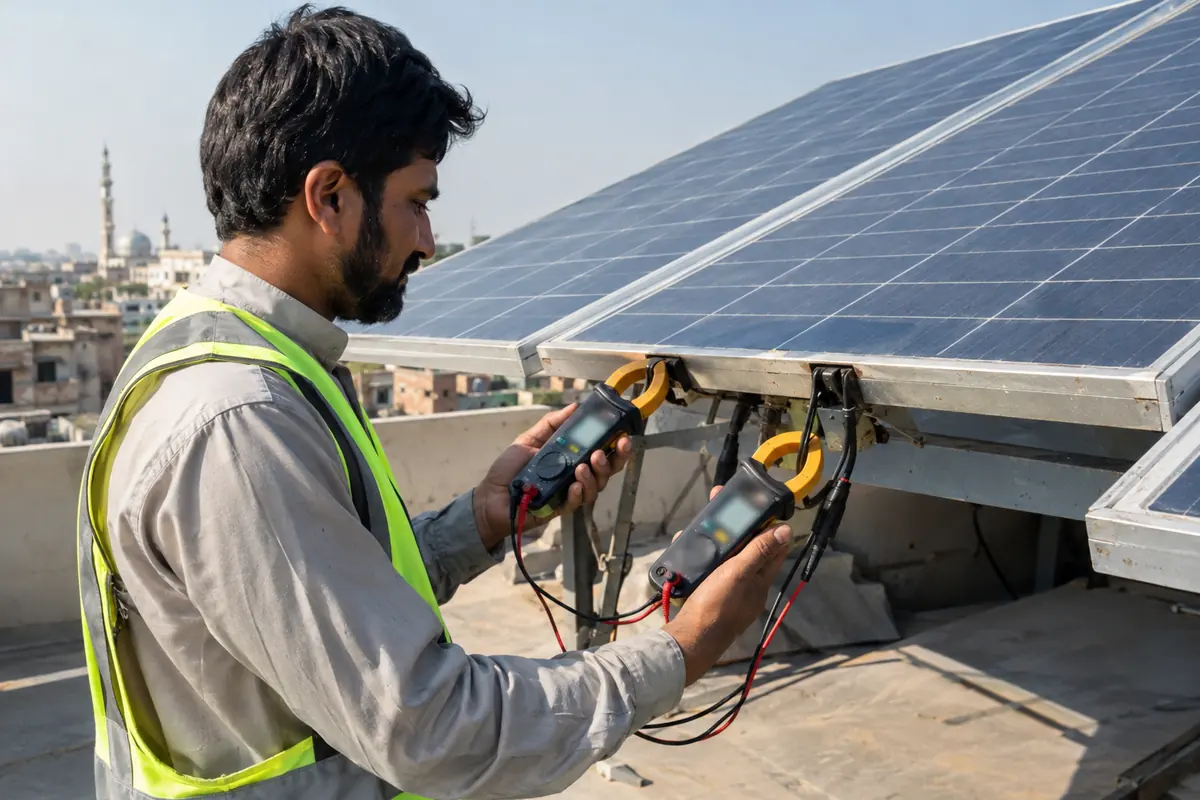
- Test in sun. With a multimeter in strong sun, the open-circuit voltage should be close to the label’s Voc, a little lower on a very hot roof.
- Confirm with the distributor. Send the serial numbers to the importer or distributor named on the invoice and ask them to confirm the batch.
| Warning sign | Likely problem |
|---|---|
| Label says “Astro” with no Astronergy name | Local or unrelated brand using the nickname |
| Back sheet instead of rear glass | Not an ASTRO N dual-glass panel |
| Seller cannot name the importer | Grey or rejected stock |
| Rate far below other Astronergy dealers | B-grade or relabelled |
What B-grade Astro stock looks like
B-grade panels are factory seconds: panels that passed electrical tests but failed a cosmetic or minor quality check. They are not always useless, but they are not what you are paying for at an A-grade price. Signs include:
- Visible colour differences between cells, or dark spots under the glass.
- Small chips at the glass edge or scratches on the frame from the factory.
- A label sticker that has been changed, or a missing grade mark.
- A flash test result below the rated wattage when the dealer shows the list.
If a dealer is honest about selling B-grade at a lower price with no warranty, that is a choice you can make for a tubewell or a shed. If the panel is sold as A-grade, it should look perfect.
Astronergy vs other Tier 1 brands
Astronergy competes head-on with Jinko, Longi and JA at 585 W, where all four have a panel on our sheet. Here is the live comparison.
| 585 W panel | Live price | Price per watt | Cell technology | Product warranty (datasheet) |
|---|---|---|---|---|
| Astronergy ASTRO N5 | Rs 23,985 | Rs 41 | N-type TOPCon, dual glass | 15 years |
| JA Solar DeepBlue 4.0 | Rs 23,545 | Rs 40.2 | N-type TOPCon | Check model datasheet |
| Longi Hi-MO 6 | Rs 25,010 | Rs 42.8 | N-type HPBC | Check model datasheet |
| Jinko Tiger Neo | Rs 25,420 | Rs 43.5 | N-type TOPCon | Check model datasheet |
Read the price-per-watt column. Astronergy is usually positioned as the value option among these four, but the gap is small and moves with each shipment. The real reasons to choose one over another are:
- Warranty. The N5’s 15-year product warranty on dual glass is a strong point.
- Availability. Jinko and Longi are stocked in more small-town shops. Astronergy is easy to find in big cities and through installers who buy direct from distributors.
- Resale. Jinko and Longi used panels sell faster, which matters if you might move house.
- Technology. Longi Hi-MO 6 uses back-contact HPBC cells; Astronergy, Jinko and JA use TOPCon. On a normal unshaded roof the yearly output difference is small.
For a broader ranking, read the best solar panels in Pakistan guide, or open the Longi and Jinko brand pages for the full ranges.
Astronergy vs local brands
Some buyers compare Astro with Pakistani labels such as Crown and Inverex, which usually sell at lower prices. The difference is not only the name.
| Point | Astronergy ASTRO N5 | Local brands |
|---|---|---|
| Who makes the cells | Astronergy itself | Partner factories, usually not disclosed |
| Tier 1 listing | Yes | No, these are brands rather than listed manufacturers |
| Datasheet detail | Full electrical and mechanical data published | Varies, often partial |
| Local support | Through importers and distributors | Directly from the Pakistani company |
If the price difference on your system is small, the Tier 1 maker is usually the safer long-term choice. If it is large and you value a local helpline, read our Crown and Inverex pages before deciding.
Astronergy solar panels: pros and cons
| Pros | Cons |
|---|---|
| Tier 1 maker backed by the Chint group | Fewer dealers in small towns than Jinko or Longi |
| ASTRO N5 fits the same rails as old 540–550 W panels | The “Astro” nickname makes fake labelling easier |
| 15-year product warranty on N5 dual glass | Used Astro panels resell for less than Jinko or Longi |
| Often among the lowest Tier 1 prices at 585 W | N8 700 W class is rarely in stock for home buyers |
| N-type TOPCon with dual glass, good heat behaviour | Local claim handling depends on your distributor |
The honest summary: Astronergy is the value pick among Tier 1 brands. You give up a little brand recognition and resale value, and in return you usually get a lower price per watt and a longer product warranty than the market leaders. For a family that plans to stay in the same house for ten years or more, that is a good trade.
Who should buy Astronergy
- Home owners who want Tier 1 N-type panels at a lower price per watt than the market leaders.
- Anyone extending an older 540–550 W system, thanks to the identical N5 footprint.
- Buyers who care more about a long product warranty than about resale value.
- Installers building several systems a month, who can buy straight from a distributor and check stock in bulk.
Who should look elsewhere? Buyers in small towns with no traceable Astronergy distributor nearby, where a widely stocked Jinko or Longi panel will be easier to service.
Where to buy Astronergy solar panels
Astronergy sells through importers and distributors who supply installers and solar shops, mainly in Lahore, Karachi, Islamabad, Rawalpindi, Faisalabad and Multan. We do not publish dealer names because authorisations change. Use this process wherever you live:
- Ask your installer or dealer which Astronergy distributor their stock comes from.
- Get a written quote naming the series (ASTRO N5, N7 or N8), wattage, quantity and the warranty period.
- Check the quote against the live 585 W price on this page.
- On delivery, check labels, size, rear glass and serials before you pay the balance.
- Keep the invoice, serial list and datasheet together for any future claim.
| Buying route | Advantage | Risk |
|---|---|---|
| Installer buying from a distributor | Panels, structure and fitting in one deal | Ask to see the distributor invoice |
| Solar shop in a big city | Can see stock before buying | Check grade and serials yourself |
| Online listing | Easy price check | Seller may be untraceable for a claim |
Before you sign, the solar panel brands in Pakistan page lets you compare Astronergy with every other brand we track, and the home page shows the full live price table.
Questions to ask an Astronergy dealer
- Is this ASTRO N5, N7 or N8, and what is the full model code?
- Which distributor supplied this stock, and do they handle warranty claims?
- Is every panel A-grade, dual glass and bifacial as the datasheet says?
- Will you list every serial number on my invoice?
- What happens if a panel arrives cracked or fails in the first month?
Frequently asked questions
What is the Astronergy solar panel price in Pakistan?
The Astronergy panel on our sheet is currently Rs 23,985, checked on 31 Oct 2026. That is the ASTRO N5 585 W, the most common Astronergy panel in Pakistan; the N7 and N8 series cost more per plate.
Are Astro solar panels and Astronergy the same?
Yes, "Astro" is the market nickname for Astronergy, and its series are called ASTRO N5, N7 and N8. Be careful, though: a label that says only "Astro" without the Astronergy name may be an unrelated brand using the nickname.
Is Astronergy a Tier 1 brand?
Yes. Astronergy, the solar company of China's Chint Group, is on BloombergNEF's Tier 1 list of bankable module manufacturers and makes its own cells and modules.
Is Astronergy better than Jinko or Longi?
All three are Tier 1 makers with N-type panels, and output on a normal roof is very similar. Astronergy usually wins on price per watt and on the ASTRO N5's 15-year product warranty, while Jinko and Longi are easier to find and resell.
What warranty does the Astronergy 585 W panel have?
The ASTRO N5 bifacial dual-glass datasheet gives a 15-year product warranty and a 30-year linear power warranty, with 87% of rated power guaranteed at year 30. In Pakistan, claims go through the distributor named on your invoice.
Can I add Astronergy 585 W panels to my old 545 W system?
Yes, the ASTRO N5 has the same 2278 × 1134 mm footprint as most 540 to 550 W PERC panels, so it fits the same rails. Wire the new panels on their own MPPT input or inverter instead of mixing them in old strings.
How do I check an original Astronergy panel?
Look for the Astronergy name and a full model code such as CHSM72N(DG)/F-BH, glass on both sides, the correct size for the series, and matching serials on the label, under the glass and on the box. Then ask the distributor to confirm the serials.