On this page11 min read
Risen solar panels price in Pakistan sits at the top end of the wattage scale, because the Risen panels most buyers are offered here are the big Hyper-ion heterojunction (HJT) plates rated around 700 W and above. They are built for heat, and that is their real selling point in a country where roof temperatures in June can cook an ordinary panel. This page explains the Hyper-ion series, what HJT changes on a Pakistani roof, the datasheet warranty, how to spot fakes and how Risen compares with Trina and other Tier 1 makers.
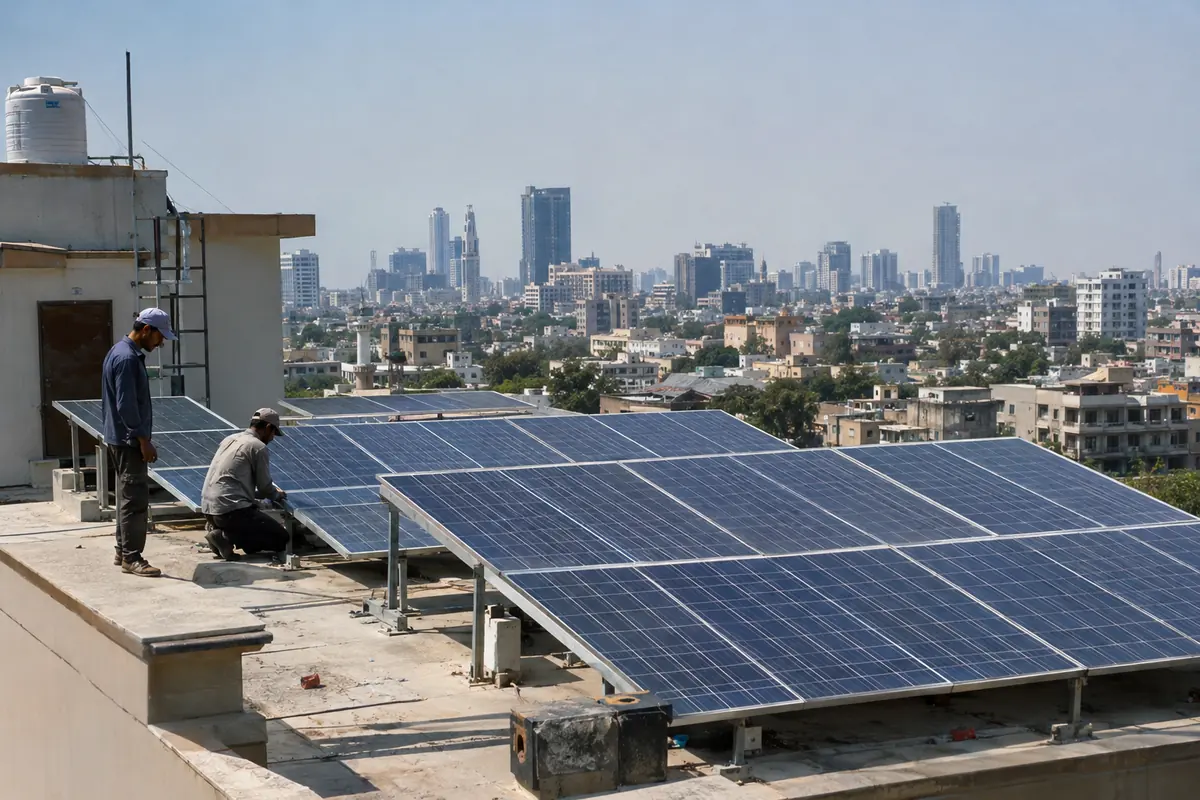
About Risen solar
Risen Energy is a Chinese solar manufacturer based in Zhejiang province, with a long history in the industry and its own cell and module production. It has been on BloombergNEF’s Tier 1 list of bankable module makers for many years and is one of the larger Chinese makers by capacity.
Where many rivals moved to TOPCon, Risen made heterojunction its flagship technology and sells it under the Hyper-ion name. In Pakistan, Risen panels arrive through importers and distributors; APT Inverex, for example, lists Risen modules among the panels on its product pages.
| Fact | Risen Energy |
|---|---|
| Country | China (Zhejiang) |
| Makes its own cells | Yes |
| BloombergNEF Tier 1 | Yes, long-standing |
| Flagship technology | HJT (heterojunction), Hyper-ion series |
| Panels on our sheet | 700 W and 720 W Hyper-ion |
| Typical buyers here | Large homes, commercial roofs, tubewells, ground mounts |
What HJT is, in plain words
A heterojunction cell is an N-type silicon wafer with ultra-thin layers of amorphous silicon added on both sides. Those layers cut the losses that happen at the surface of an ordinary cell. The practical results for a buyer:
- Lower power loss in heat, shown by the better temperature coefficient.
- Low first-year degradation, because N-type HJT cells do not suffer much light-induced loss.
- A naturally bifacial cell, so the back side works well when light reaches it.
- A more expensive manufacturing process, which is why HJT panels usually cost more per watt than TOPCon.
HJT is not new. It has been made at scale for years, and Risen’s Hyper-ion series is certified to international standards, with TÜV SÜD certification reported for the series.
Risen solar panel models explained
Risen’s Pakistani range is dominated by the Hyper-ion HJT bifacial panel. Here are its datasheet figures:
| Spec | Hyper-ion RSM132-8-700 to 725BHDG |
|---|---|
| Power range | 700 W to 725 W |
| Maximum efficiency | 23.3% |
| Cells | 132 N-type HJT cells |
| Size | 2384 × 1303 × 35 mm |
| Weight | 40.5 kg |
| Temperature coefficient of Pmax | −0.24% per °C |
| Build | Bifacial, dual glass |
And the two Risen panels our sheet tracks right now:
| Risen panel | Live price | Price per watt |
|---|---|---|
| Hyper-ion 700 W | Rs 29,400 | Rs 42 |
| Hyper-ion 720 W | Rs 29,520 | Rs 41 |
Risen also makes other N-type panels for different markets, but the Hyper-ion HJT is the one that Pakistani dealers stock and the one this page focuses on. Full lists of every brand at these sizes are on the 700 watt panel page and the 720 watt panel page.
Why HJT matters in Pakistani heat
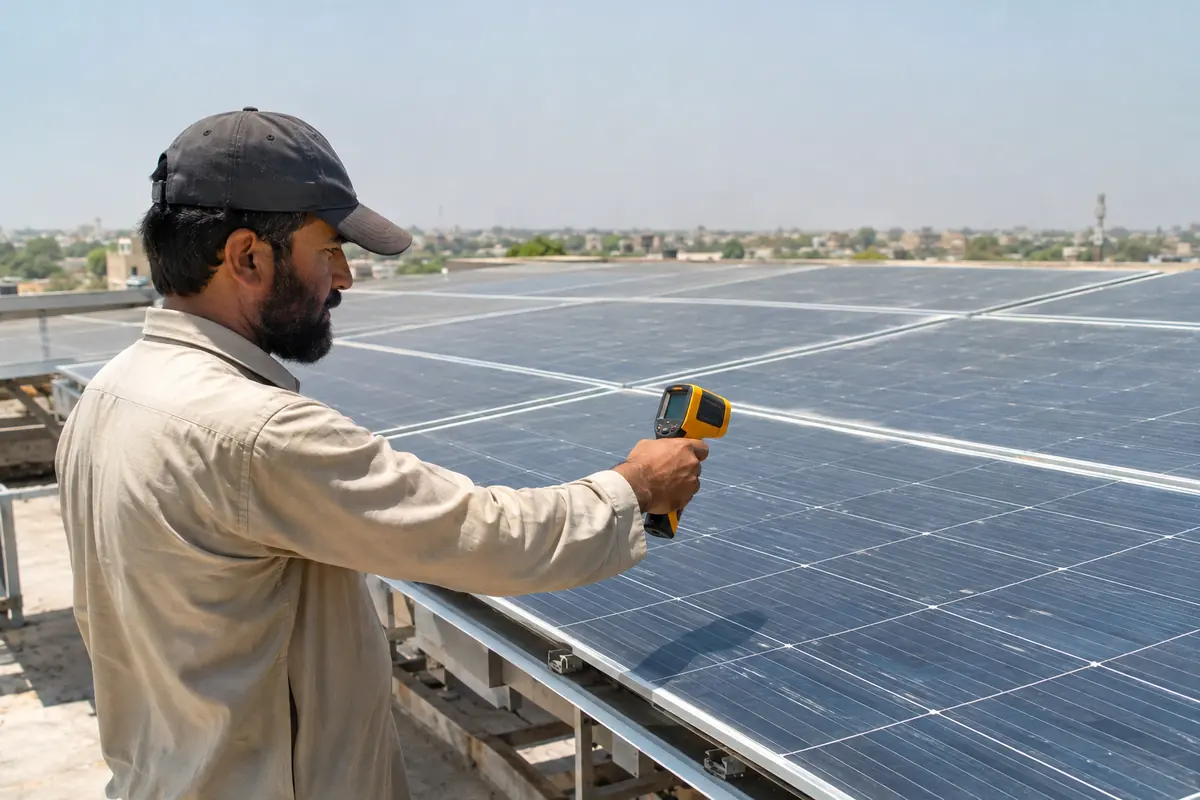
Every solar panel loses power as it heats up. The datasheet temperature coefficient tells you how much: the percentage of power lost for every degree the cells run above 25 °C. On a Lahore or Multan roof in June, cell temperatures of 60 to 70 °C are normal.
| Cell technology | Typical temperature coefficient | Approximate loss at 65 °C cell temperature |
|---|---|---|
| Risen Hyper-ion HJT | −0.24% per °C (datasheet) | About 9.6% |
| N-type TOPCon (e.g. Trina, Astronergy datasheets) | −0.29% per °C | About 11.6% |
| Older mono PERC | Around −0.34% to −0.35% per °C | About 14% |
The difference looks small on paper, but it is two to four percentage points of output on every hot afternoon from April to September. Over a Pakistani summer, HJT’s heat tolerance is worth real units. It matters most in Sindh, south Punjab and Balochistan, and less in Islamabad or the northern areas.
Rough daily output from one Hyper-ion panel
As a rule of thumb, multiply a panel’s rating by the peak sun hours where you live, then take off about 15% to 20% for heat, dust, wiring and inverter losses.
| Situation | Peak sun hours (rough) | One 700 W panel, per day (rough) |
|---|---|---|
| Clear summer day, southern Punjab or Sindh | 6 or more | About 3.5 kWh or a little more |
| Typical spring or autumn day | Around 5 | About 3 kWh |
| Hazy or foggy winter day in central Punjab | 3 or less | Under 2 kWh |
These are planning figures, not guarantees. The solar panel calculator gives a better estimate for your city and load.
How big is a 700 W panel?
At 2384 × 1303 mm and 40.5 kg, a Hyper-ion panel is one of the largest and heaviest panels you can put on a roof. Plan for it:
- Two strong people per panel, carried on edge.
- A structure designed for this size and weight, with rails at the correct spacing for the 1303 mm width.
- Enough wind resistance: bigger panels catch more wind, so legs and anchors must be stronger, especially in Karachi and coastal Sindh.
- A clear path from the street to the roof; narrow stairwells in older houses can make delivery hard.
Panel count and roof space
| System size | Panels at 700 W | Panels at 720 W |
|---|---|---|
| 10 kW | 15 | 14 |
| 15 kW | 22 | 21 |
| 20 kW | 29 | 28 |
Fewer panels per kilowatt means fewer clamps, fewer connectors and less structure. That is why 700 W class panels make the most sense from about 10 kW upward. For a 3 to 5 kW house system, a smaller 585 W or 620 W panel is usually easier to place.
Hyper-ion on ground mounts and tubewells
The bifacial dual-glass Hyper-ion is at its best on a ground-mounted structure, where the back of the panel sees reflected light. Risen’s own datasheet example shows a 10% rear-side gain; real gains depend on what is under the panels.
| Set-up | What helps rear-side output |
|---|---|
| Field tubewell array | Raise the lower edge well above the crop or soil, keep weeds down |
| Factory or warehouse roof | Light-coloured roof surface, enough height under the panels |
| Shed roof with panels flat on the sheet | Very little rear gain; treat it as a monofacial panel |
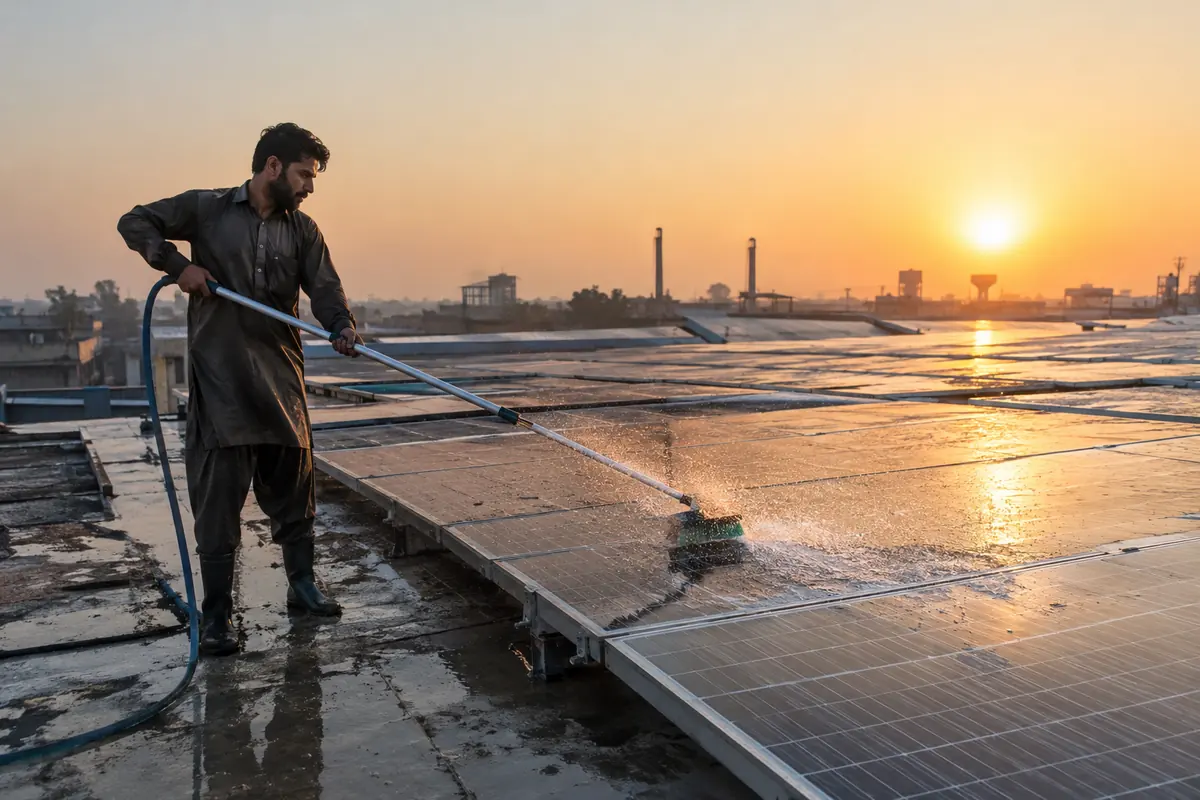
On a farm, also allow for dust from tractors and unpaved roads. Big panels collect a lot of it, and a muddy film after light rain can wipe out the bifacial bonus.
Inverter matching for 700 W panels
A 700 W class panel produces more current than the 540 W to 585 W panels most home inverters were designed around. Before you buy Risen panels for an existing inverter, your installer should compare the panel’s short-circuit current (Isc) and voltage from the datasheet with the inverter’s maximum input current per MPPT and its voltage window. Older or budget inverters may clip output or, worse, run outside their rating. For new systems, choose the inverter after the panel, not before. Ask the installer to show you both figures side by side.
What moves the Risen solar panel price
- Wattage bin. Within the Hyper-ion series, higher bins cost more per panel, but the price per watt is often close.
- HJT production cost. HJT uses more expensive processes than TOPCon, so Risen rarely competes on the lowest price per watt.
- Shipment timing. With fewer importers, stock gaps push prices up faster than for Jinko or Longi.
- Rupee and taxes. As with every imported panel, exchange rate and budget changes reach the shop price.
Risen solar panel warranty in Pakistan
The Hyper-ion datasheet gives a strong warranty for a panel of this class.
| Warranty item | Hyper-ion 700 to 725 W datasheet |
|---|---|
| Product warranty | 15 years |
| Power warranty | 30 years, linear |
| Power after year one | About 99% on the warranty chart |
| Power at year 30 | About 90% on the warranty chart |
A guaranteed output of about 90% after thirty years is higher than the roughly 87% on the TOPCon datasheets we checked for Trina and Astronergy. HJT cells are known for low light-induced degradation, which is why Risen can promise a flatter curve.
In Pakistan the warranty is handled through the importer or distributor that supplied your stock. Before buying:
- Ask the dealer which importer or distributor brought the panels in.
- Get the full model code (RSM132-8-xxxBHDG), quantity and every serial number on the invoice.
- Ask who will inspect a faulty panel and who pays for taking a 40 kg panel down and sending it back.
- Keep the datasheet for the exact model; power claims are measured against its curve.
| Usually covered | Usually not covered |
|---|---|
| Junction box, diode or bypass failures | Breakage during delivery or lifting |
| Delamination or moisture inside the laminate | Structure failure in a storm |
| Output below the warranty curve, proven by test | Burnt connectors from poor installation |
| Manufacturing defects in the glass | Shading and dirt losses |
Breakage in handling is the most common way a big panel is lost, and it is never a warranty claim.
Taking a 40 kg dual-glass panel down for inspection is a two- or three-person job, and some importers will only replace a panel after their technician has seen it on site. Agree in writing who pays for that labour and for transport, because on a 700 W panel those costs are not small. Photos, serial numbers and inverter app data showing one string underperforming will usually speed the claim up. Make sure your delivery terms say who pays if a panel arrives cracked.
How to check an original Risen panel
Big HJT panels are harder to fake than ordinary 550 W panels, but relabelled stock and B-grade panels still circulate. Check these points:
- Size and weight. A Hyper-ion 700 W class panel is about 2384 × 1303 mm and around 40 kg. A “Risen 720 W” panel that is only 1134 mm wide is not this model.
- Cell count and layout. Look for 132 large cells. A panel with 144 small half-cells is a different product.
- Glass on both sides. Hyper-ion bifacial panels are dual glass; a plastic back sheet means it is not the panel claimed.
- Label details. The rear label should show Risen branding and a model code in the RSM132-8 family, with Pmax, Voc, Isc and a serial number.
- Matching serials on the label, under the front glass and on the box.
- The importer’s flash test list. Ask to see the measured power for your serials.
| What you notice | What it suggests |
|---|---|
| Wrong width for the claimed wattage | Mislabelled or different panel |
| No model code on the label | Not a factory label |
| Back sheet instead of rear glass | Not a Hyper-ion bifacial panel |
| Price well under other Risen dealers | Grade or origin problem |
Risen vs other Tier 1 brands
At 700 W and above, Risen’s main rival on our sheet is Trina’s Vertex N Ultra 740 W, the largest Trina panel sold here. Here is the live comparison.
| Panel | Live price | Price per watt | Technology | Temperature coefficient (datasheet) |
|---|---|---|---|---|
| Risen Hyper-ion 700 W | Rs 29,400 | Rs 42 | HJT | −0.24% per °C |
| Risen Hyper-ion 720 W | Rs 29,520 | Rs 41 | HJT | −0.24% per °C |
| Trina Vertex N Ultra 740 W | Rs 30,340 | Rs 41 | TOPCon | Check model datasheet |
| Market average, all panels | Rs 41.3 |
The trade-off between the two is simple:
| Factor | Risen Hyper-ion (HJT) | Trina Vertex N (TOPCon) |
|---|---|---|
| Heat performance | Better, lower temperature coefficient | Good |
| Product warranty (datasheet) | 15 years | 12 years on mainstream 210R Vertex N |
| Power at year 30 (datasheet) | About 90% | About 87% |
| Availability in Pakistan | Limited, mostly through distributors | Wider |
| Size | About 2384 × 1303 mm | Similar for the 700 W plus class |
If you would rather stay with a more common panel size, a 585 W or 620 W N-type panel from Jinko, Longi or Astronergy will be easier to buy and resell; compare them on the 585 watt solar panel price page. For the full ranking across brands, see the best solar panels in Pakistan guide, and for the closest big-panel rival, the Trina price page.
Risen HJT vs other HJT panels in Pakistan
Risen is not the only HJT option on the Pakistani market. Inverex, the Karachi-based brand, has announced a Mustang HJT panel in the 695 W to 730 W class, not yet on sale at the time of writing, with a stated 15-year product warranty and 30-year power warranty. The difference is in who stands behind the panel: with Risen you are buying from a Tier 1 cell and module manufacturer through its importer, and with Inverex from a Pakistani brand that handles the warranty itself but does not disclose the factory. If both are offered at similar prices, ask each dealer for the full datasheet and compare temperature coefficient, warranty curve and size side by side.
Risen solar panels: pros and cons
| Pros | Cons |
|---|---|
| HJT cells with a −0.24% per °C temperature coefficient, strong in heat | Large and heavy, about 40 kg per panel |
| 15-year product warranty, 30-year power warranty | Fewer dealers than Jinko, Longi or Trina |
| Around 90% guaranteed power after thirty years | Price per watt usually above mainstream TOPCon panels |
| Bifacial dual glass, good for ground mounts | Not practical for small or cluttered house roofs |
| Long-standing Tier 1 manufacturer | Small resale market for used 700 W panels |
The honest view: Risen Hyper-ion is a specialist panel. For a factory, a big house roof in a hot city, or a tubewell array in south Punjab or Sindh, it is one of the best technical choices on our sheet. For an ordinary 5 kW home system, the size and the premium are hard to justify.
Who should buy Risen
- Owners of large flat roofs or sheds wanting 10 kW or more.
- Farmers running solar tubewells on ground-mounted structures.
- Factories and cold stores in hot districts, where every degree of heat loss costs money.
- Buyers who plan to keep the system for decades and value the flatter degradation curve.
Who should not: a home owner with a 3 to 5 kW budget and a small roof, anyone without a structure designed for very large panels, and buyers in towns where no installer has handled 40 kg panels before.
One more case to think through is an existing system. If you already have 540 W or 585 W panels on the roof and want to add Risen Hyper-ion panels, they must go on their own MPPT input or a separate inverter. Their size, voltage and current are too different to share a string with older panels, and the structure will almost certainly need new rails for the 1303 mm width. Budget for that before comparing panel prices, because the extra structure work can cancel out the savings from buying fewer, bigger panels.
Where to buy Risen solar panels
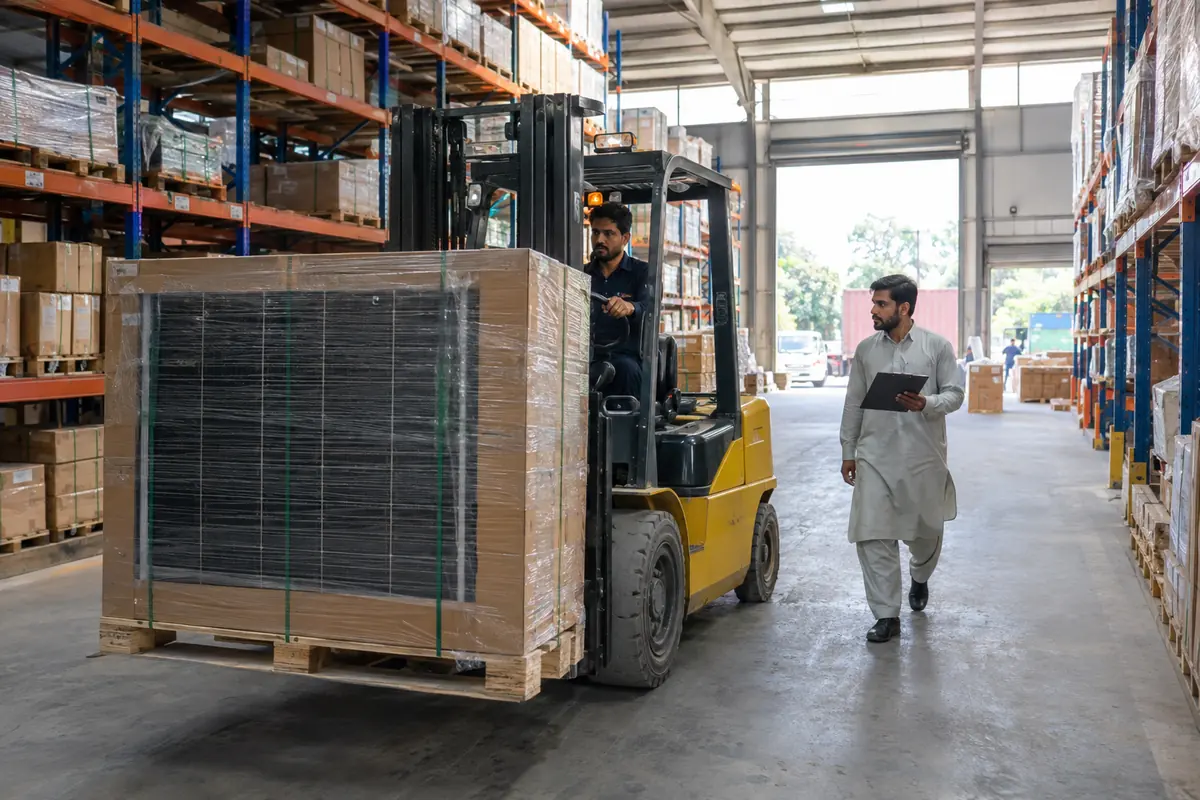
Risen panels reach Pakistan through importers and distributors, and from them to installers working on larger systems. Some Pakistani distributors that carry other brands, such as APT Inverex, also list Risen modules. We do not publish dealer names because stock and authorisations change. To buy safely:
- Ask commercial installers in your city whether they supply Risen Hyper-ion and through which distributor.
- Get a written quote with the model code, wattage, quantity, delivery terms and warranty periods.
- Compare it with the live 700 W and 720 W prices on this page.
- Check size, rear glass, labels and serials on delivery.
- Confirm that the structure quote is designed for 2384 × 1303 mm panels.
| Buying route | Good for | Watch out for |
|---|---|---|
| Commercial installer, supply and fit | Correct structure and string design | Ask for the distributor’s invoice |
| Distributor direct | Better price on large orders | You arrange installation and handling |
| Online listing | Price check | Big panels are risky to ship from unknown sellers |
To weigh Risen against every other brand we track, use the solar panel brands in Pakistan page, or check the live table on the home page.
Questions to ask a Risen dealer
- Is this the Hyper-ion HJT bifacial panel, and what is the full RSM132-8 model code?
- Which distributor supplied it, and do they handle warranty claims directly?
- Is the delivery price to the roof, and who pays for breakage in transit?
- Can I see the flash test results for my serial numbers?
- Has your team installed 700 W class panels before, and with what structure?
Frequently asked questions
What is the Risen solar panel price in Pakistan?
The cheapest Risen panel on our sheet is Rs 29,400, checked on 2 Nov 2026. The Risen panels sold here are mostly large Hyper-ion HJT panels around 700 to 725 W, so compare them by price per watt rather than per plate.
Are Risen solar panels good?
Yes. Risen Energy is a long-standing Tier 1 manufacturer, and its Hyper-ion HJT panel has a −0.24% per °C temperature coefficient, a 15-year product warranty and a 30-year power warranty on the datasheet. It is a strong panel for hot climates and large systems.
What is HJT in Risen panels?
HJT means heterojunction: an N-type silicon cell with thin amorphous silicon layers on both sides. It loses less power in heat and ages slowly, but costs more to make than TOPCon.
Are Risen 700 watt panels suitable for a house?
They suit large flat roofs and systems of about 10 kW or more. Each panel is about 2.38 by 1.30 metres and around 40 kg, so on a small or cluttered roof a 585 W or 620 W panel is easier to fit.
What warranty do Risen solar panels have in Pakistan?
The Hyper-ion datasheet gives a 15-year product warranty and a 30-year linear power warranty, with about 90% of rated power shown at year 30. In Pakistan, claims go through the importer or distributor named on your invoice.
Is Risen better than Trina?
Risen's HJT panel handles heat better and has a longer product warranty than Trina's mainstream Vertex N, while Trina is easier to find and has a wider range of sizes. For hot districts and big arrays Risen has the technical edge.
How do I check an original Risen panel?
Check that the panel is about 2384 × 1303 mm with 132 large cells and glass on both sides, that the label carries an RSM132-8 model code, and that serials match on the label, under the glass and on the box. Ask the importer for the flash test list for your serials.