| Model | Watt | Price per panel | Per watt | This week | Trend |
|---|---|---|---|---|---|
| Risen Hyper-ion Pro HJTN-type HJT | 720 W | Rs 29,520 | Rs 41.0 | No change |
On this page9 min read
- 720 watt solar panel specifications
- 720 W vs nearby wattages: which should you buy?
- How many 720 W panels for 3, 5 and 10 kW (with price)
- How many units does a 720 watt panel produce in Pakistan?
- What can a 720 watt solar panel run?
- Best inverter for 720 W panels
- Buying tips before you pay
- Frequently asked questions
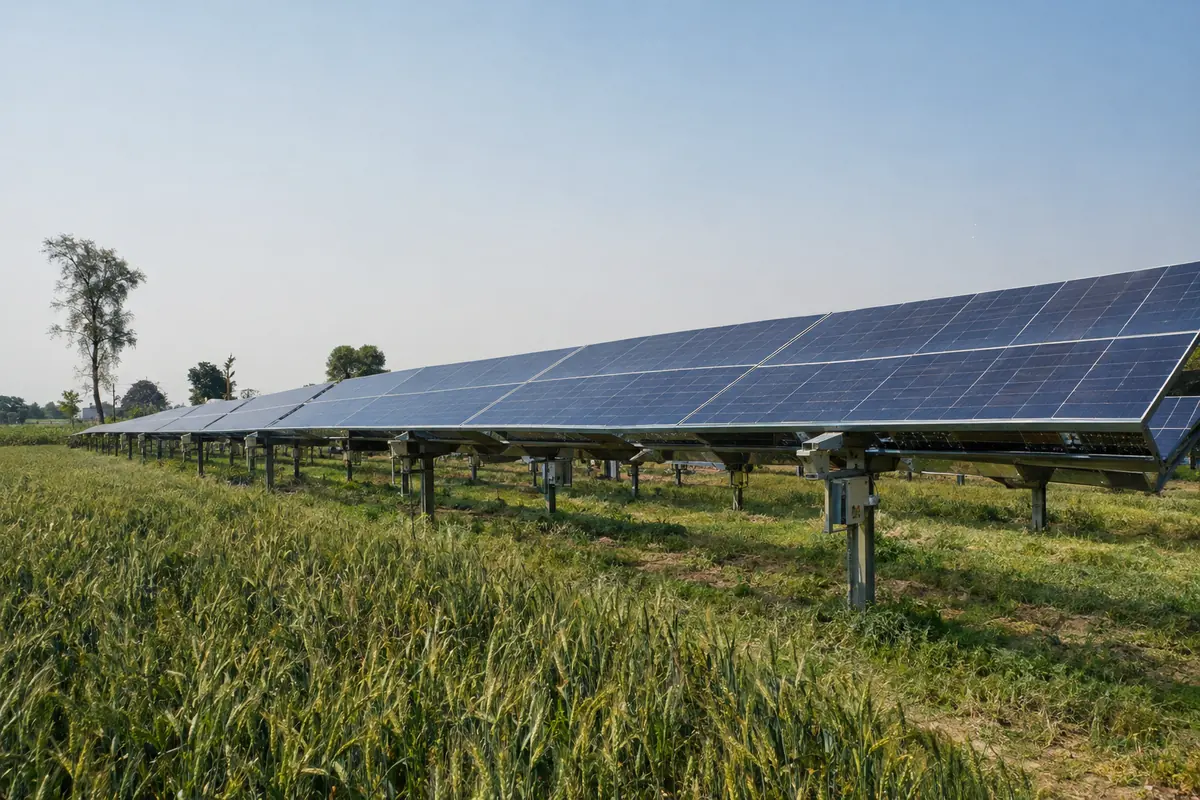
The 720 watt solar panel price in Pakistan currently starts at Rs 29,520, or Rs 41 per watt, for the cheapest A-grade plate on our rate sheet. A 720 W panel is the top power bin of the big 2384 × 1303 mm frame, the same body that is also sold as 700 W and 710 W. So the real question is not size but value: are those extra watts worth what the dealer charges for them?
This page answers that with datasheet figures for two representative models, panel counts and costs for common system sizes, realistic units for Multan, Faisalabad and Peshawar, and the inverter and string limits that trip up many 720 W installations.
720 watt solar panel specifications
The two 720 W models you are most likely to be offered are the Risen Hyper-ion RSM132-8-720BHDG (heterojunction) and the Trina Vertex N TSM-720NEG21C.20 (TOPCon). Both are bifacial, dual-glass and use 132 half-cut n-type cells.
| Datasheet item | Risen Hyper-ion 720 W | Trina Vertex N 720 W |
|---|---|---|
| Dimensions | 2384 × 1303 × 35 mm | 2384 × 1303 × 33 mm |
| In feet | 7 ft 10 in × 4 ft 3 in | 7 ft 10 in × 4 ft 3 in |
| Weight | about 40 kg | 38.3 kg |
| Cell type | n-type HJT | n-type i-TOPCon |
| Open-circuit voltage (Voc) | 50.18 V | 49.40 V |
| Short-circuit current (Isc) | 18.19 A | 18.49 A |
| Max power voltage / current | 42.08 V / 17.13 A | 41.30 V / 17.44 A |
| Module efficiency | 23.2% | 23.2% |
| Power loss per °C | -0.24% | -0.29% |
| Product / power warranty | 15 / 30 years | 12 / 30 years |
| Degradation (power warranty) | see maker’s warranty | 1% year one, 0.4% per year after |
What these numbers mean on a Pakistani roof:
- At 23.2% efficiency, a 720 W plate produces about 21.5 watts per square foot of panel, against about 20.9 W per square foot for a 22.5% efficient 700 W panel of the same size. Same roof, about 3% more power.
- Current is above 18 A. That rules out a lot of older and budget inverters, as explained further down.
- The weight is close to 40 kg per plate, so 14 panels for a 10 kW system put well over half a tonne on the roof before you count the steel.
If you need to fit panels around tanks and parapets, the solar panel size in feet guide lists dimensions for every common wattage.
What “720 W” on the label really means
Manufacturers build one panel design and then sort each finished plate by its measured output into bins, usually 5 W apart. A 720 W panel is one that tested in the top bins. Reputable makers quote a positive-only tolerance, typically 0 to +5 W, meaning a 720 W plate should test at 720 W or slightly above, never below. The sticker should show the exact bin and serial number. If a dealer cannot show you a label that matches the bill, walk away.
720 W vs nearby wattages: which should you buy?
Because 700, 720 and 740 W panels are all close in size, you should compare them on price per watt and on how many fit your roof.
| Option | Cheapest current price | Price per watt | Same 2384 × 1303 body? |
|---|---|---|---|
| 650 W | Rs 27,950 | Rs 43 | Depends on model |
| 700 W | Rs 29,400 | Rs 42 | Yes |
| 720 W | Rs 29,520 | Rs 41 | Yes |
| 740 W | Rs 30,340 | Rs 41 | Yes (newer cell generation) |
A simple way to decide:
- Count how many panels your roof can take in the 2384 × 1303 size. That number is fixed whichever bin you buy.
- Multiply the count by each wattage to see the system size you get.
- Compare the per-watt price. If 720 W costs the same per watt as 700 W, take the 720 W, because you get more power from the same roof and the same structure.
- If 720 W costs noticeably more per watt, the 700 watt solar panel may be the better deal for a roof that has room to spare.
- If roof space is your hard limit, look at the 750 watt solar panel price too, since it squeezes more out of the same frame.
For every size and brand on one page, check the solar panel price list.
How many 720 W panels for 3, 5 and 10 kW (with price)
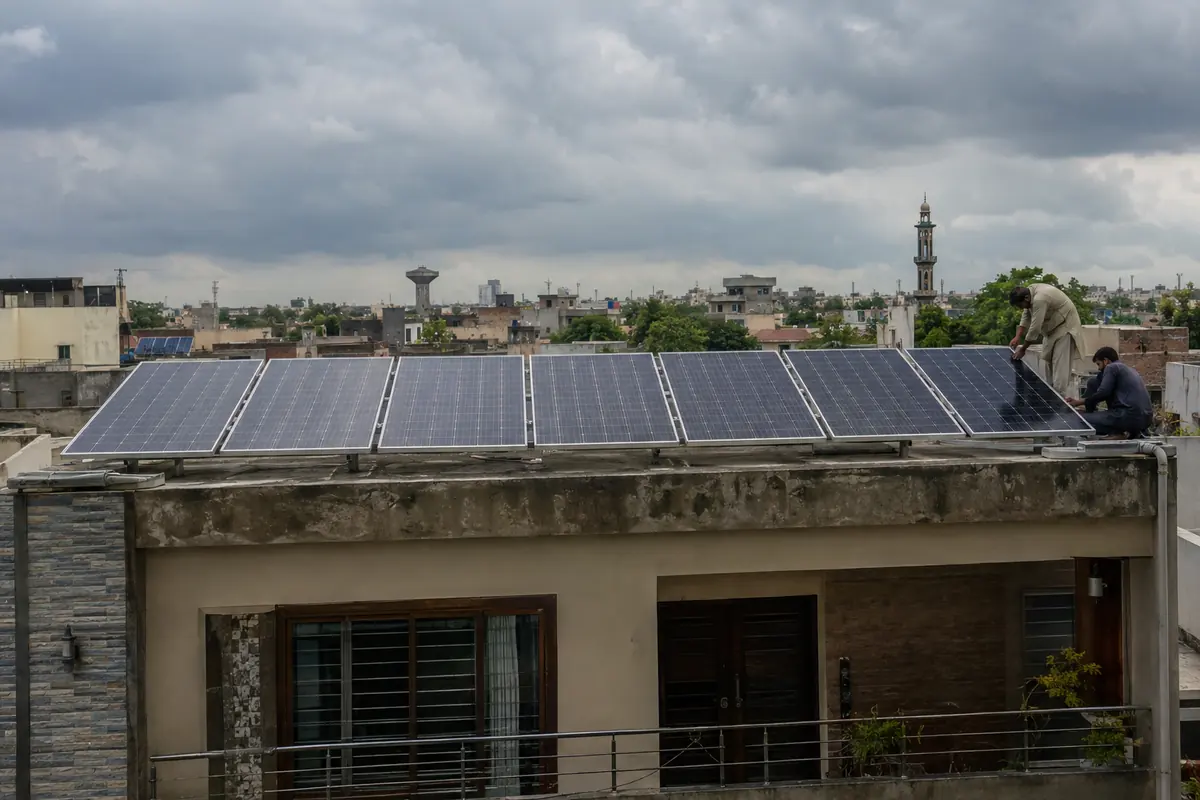
The 720 W plate divides neatly into common system sizes. Seven panels make 5.04 kW, almost exactly 5 kW, and fourteen make 10.08 kW. The price column below uses the cheapest 720 W plate on our sheet and covers panels only.
| Target size | 720 W panels | DC capacity | Panel cost | Panel area |
|---|---|---|---|---|
| 3 kW | 5 | 3.6 kW | Rs 147,600 | about 167 sq ft |
| 5 kW | 7 | 5.04 kW | Rs 206,640 | about 234 sq ft |
| 10 kW | 14 | 10.08 kW | Rs 413,280 | about 468 sq ft |
Two practical notes on these counts:
- Seven panels is an odd number. On a two-MPPT hybrid inverter that means a 4 + 3 split, and three 720 W plates in series give only about 115–125 V in summer heat, which is below the start-up window of many hybrids. A single string of seven, or eight panels at 5.76 kW, is often the better design.
- Fourteen panels for 10 kW splits cleanly into two strings of seven, which suits most 10 kW on-grid inverters with two MPPTs.
Worked example: a 10 kW roof in Faisalabad
Say a family in a 10 marla house in Faisalabad uses about 900 units in a summer month and 400 in winter, and wants to cut the day-time part of the bill. This is how a 720 W design comes together.
- Roof check: the clear area after tanks and the stair room is about 32 × 25 feet. In portrait, two rows of seven 720 W plates fit with a walkway, which is 14 panels.
- System size: 14 × 720 W gives 10.08 kW of panels.
- Expected units: about 3 units per panel per day on average, so roughly 42 units a day, or about 1,270 in an average month. Clear summer months reach about 1,500 units and foggy winter months drop to about 820, which is more than the winter use on paper, though night-time units still come from the grid.
- Inverter: a 10 kW on-grid unit with two MPPTs, one string of seven on each. Cold-morning voltage is about 368 V per string, well inside the limit.
- Structure: 14 plates at about 40 kg is roughly 560 kg of glass, so the frame and its anchors need to be designed for the weight and for wind.
The family would still import some power at night, but most of the daytime load, including two inverter ACs in the afternoon, would run from the roof.
Want to check a different system size? Our solar panel calculator works out panel counts and units for any load.
How many units does a 720 watt panel produce in Pakistan?
A clean 720 W panel facing south at a sensible tilt makes the following, after allowing about 20% for heat, dust, cable and inverter losses. The figures come from long-term solar data for each city.
| City | Clear summer day | Winter day | Average per day | Per month | Per year |
|---|---|---|---|---|---|
| Multan | 3.8 units | 2.3 units | 3.2 units | 68–116 units | about 1,180 units |
| Faisalabad | 3.7 units | 2.0 units | 3.0 units | 59–113 units | about 1,100 units |
| Peshawar | 4.5 units | 2.3 units | 3.4 units | 69–135 units | about 1,250 units |
Peshawar’s summer is strong because the air is drier and days are clear. Faisalabad, like Lahore, loses a lot in December and January to fog. Multan sits in between, with long hot summers where the panel’s temperature coefficient matters.
The heat penalty in central Punjab
In a Multan June, panel cells often run 35–40 °C above the test temperature. Here is how much power each type gives up at that point:
| Panel type | Loss per °C | Loss at +40 °C | Output of a 720 W plate in that heat (before other losses) |
|---|---|---|---|
| HJT (Risen) | 0.24% | 9.6% | about 650 W |
| TOPCon (Trina) | 0.29% | 11.6% | about 636 W |
| Old Mono PERC | 0.35% | 14% | not made at 720 W |
What can a 720 watt solar panel run?
On a clear day around noon, one 720 W plate gives about 520–600 W to your loads after losses. Few people buy just one, so the table also shows what a small set of these panels covers.

| Load | Running watts | One 720 W panel | Set of 3 (2.16 kW) | Set of 7 (5.04 kW) |
|---|---|---|---|---|
| AC ceiling fans (80 W) | 80 W each | 6–7 fans | 20 fans | a whole house |
| DC inverter fans (35 W) | 35 W each | 14–16 fans | 45+ fans | a whole house |
| Inverter fridge | 100–150 W running | Yes | Yes | Yes |
| 1 HP water motor | about 750 W | No | Yes | Yes |
| 1.5 ton inverter AC | 1,000–1,500 W | No | Yes, in good sun | Yes, plus fans |
| 2 ton inverter AC | 1,500–2,200 W | No | Barely | Yes |
These are daytime figures running straight from the sun. For evening use you need a battery, or the grid.
720 W panels for a tube well
Large 720 W plates are popular for farm tube wells because fewer panels mean fewer joints and less frame. A three-phase pump runs on a solar pump drive (VFD) that needs a high DC voltage. Each 720 W plate gives about 42 V at its power point, so 14 to 16 panels in one string reach the several hundred volts these drives typically ask for. Always match the string to the specific drive’s input range, and size the array at least 1.3 to 1.5 times the motor’s rating so it starts early in the morning.
Best inverter for 720 W panels
The higher current of the 720 W bin is the main thing to check.
- Input current: Isc is 18.2–18.5 A. Choose an inverter whose maximum short-circuit input per MPPT is at least that. Many budget hybrids accept 13–16 A and will waste power every sunny hour.
- Cold voltage: on a 3 °C morning, Voc rises to about 52–53 V per plate. A 500 V hybrid takes at most 9 in series. A 1,100 V on-grid unit can take about 20.
- Hot voltage: in June each plate gives roughly 38 V under load. Keep at least 5 panels in each hybrid string so the string stays inside the MPPT window.
- Parallel strings: if you put two strings on one MPPT, the current doubles to around 37 A. Only do this if the inverter allows it. Our series vs parallel guide explains the wiring.
| Use | Inverter type | 720 W string size |
|---|---|---|
| Day-time bill cutting, net billing | On-grid, 2 MPPT | 7 + 7 for 10 kW |
| Load-shedding backup | Hybrid with battery | 6 to 9 per string |
| Tube well | Solar pump drive (VFD) | 14 to 16 per string, per drive spec |
On-grid or hybrid for 720 W panels?
An on-grid inverter is the cheapest way to use 720 W plates because it handles long, high-voltage strings and has no battery to buy. It shuts down when the grid goes off, though, so in areas with long load-shedding it does nothing during an outage. A hybrid inverter keeps lights and fans running from batteries, but most hybrids sold in Pakistan have lower voltage and current limits, which is where 720 W plates need the most care. If backup matters, pick a hybrid that clearly lists at least 18 A per MPPT and a PV input of 500 V or more.
Under the NEPRA prosumer rules notified in February 2026, new connections are on net billing, so units you export earn much less than units you buy. Size the array to your daytime use rather than to export.
Buying tips before you pay
- Ask which bin you are getting. A “720 W” quote should be for 720 W plates, not 700 W plates with a new sticker. Check the label against the bill.
- Match HJT and TOPCon carefully. Do not mix the two, or mix bins, on one string, because the different currents drag the string down.
- Get warranty paperwork. Datasheets promise 12–15 years product warranty and 30 years on power, but in Pakistan you claim through the importer or distributor. Ask who that is.
- Plan the lift. Two people per plate, ropes or a lifter for older houses with narrow stairs, and no carrying flat.
- Check the structure. These panels are 2.4 m long. Ask for the rail size, how far the panel overhangs the rails, and confirm the installer follows the clamping zones in the maker’s installation manual.
- Keep the bill and serial numbers. You need them for warranty claims and for any grid connection application.
A five-minute check on delivery
| What to look at | Good sign | Warning sign |
|---|---|---|
| Carton and corners | Sealed, upright, corner guards in place | Crushed corners, loose plates |
| Glass | Clean, no chips at the edges | Chips, scratches, spider cracks |
| Back label | Model, 720 W bin and serial match the bill | Label missing, peeling or reprinted |
| Junction box and cables | Firmly bonded, MC4 caps in place | Loose box, cut or taped cables |
| Frame | Straight and square | Bent corners, twisted rail |
For brand-level pricing, see the Trina solar panel price page, or head to the home page for the full live rate board.
Frequently asked questions
What is the 720 watt solar panel price in Pakistan?
The cheapest A-grade 720 W panel on our sheet is Rs 29,520 as of 31 Oct 2026. Rates change with import costs and the dollar, so get a written quote on the day you buy.
Is a 720 watt solar panel bigger than a 700 watt panel?
No. Most 700, 710 and 720 W panels use the same 2384 × 1303 mm body. The 720 W plate simply tested in a higher power bin, so it gives a few percent more power from the same roof space.
What is the weight of a 720 watt solar panel?
Around 38 to 40 kg, depending on the brand and frame. Fourteen of them for a 10 kW system weigh more than half a tonne, so the structure must be designed for it.
How many 720 watt panels are needed for a 5 kW system?
Seven 720 W panels give 5.04 kW. Many installers use a single string of seven, or go to eight panels if the inverter allows a bit of oversizing.
How many units does a 720 watt solar panel give per day?
In Multan or Faisalabad a clean 720 W plate gives about 3.7 to 3.8 units on a clear summer day and about 2 units on a winter day. Peshawar does a little better in summer.
Can a 720 watt panel run a 1.5 ton AC?
Not on its own. One panel gives roughly 520 to 600 W at noon. Three panels, about 2.2 kW, can run a 1.5 ton inverter AC in good sun.
Which inverter is best for 720 watt panels?
Pick an inverter that accepts at least 18.5 A per MPPT and whose maximum PV voltage leaves room for about 53 V per panel on cold mornings. On-grid inverters handle long strings easily; check hybrid limits carefully.
Can I use 720 watt panels for a tube well?
Yes, they are a good fit for solar pump drives because fewer panels are needed. A string of roughly 14 to 16 plates usually reaches the DC voltage these drives need, but always follow the drive's own input range.