On this page
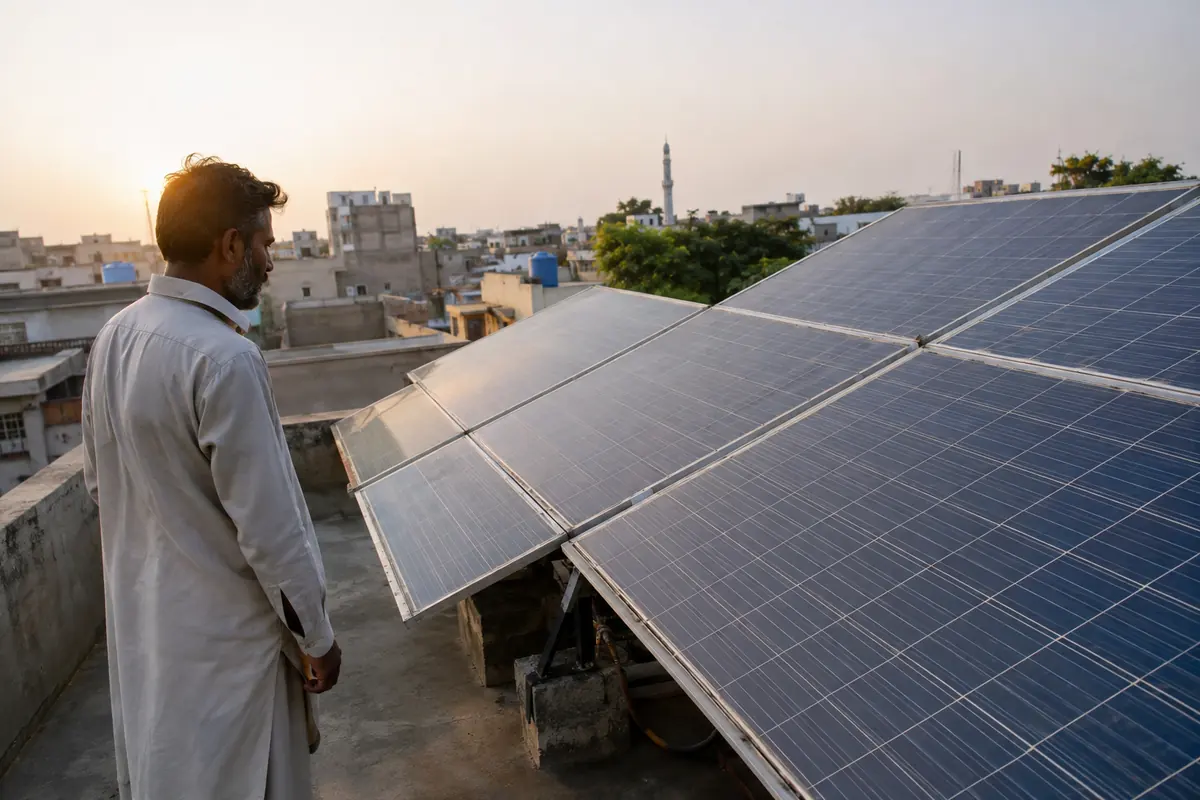
The average lifespan of solar panels is one of the strongest arguments for going solar: a good panel keeps working for decades, losing only a little output each year. But “lifespan” means different things for the panel, the inverter and the battery, and Pakistan’s heat, dust and humidity all play a part. This guide explains how long each part really lasts, what the warranty actually promises, and how to make your system last as long as possible.
Quick answer: the average lifespan of solar panels
A good quality solar panel typically lasts 25 to 30 years or more. It does not suddenly stop working at the end of that time; it simply produces a little less each year. Research from the US National Renewable Energy Laboratory (NREL) puts the median loss at about 0.5% per year, which means a panel in its 20th year still produces roughly 90% of what it did in its first year.
Modern N-type panels are warranted to do even better. The Jinko Tiger Neo series, for example, carries a 12-year product warranty and a 30-year power warranty, guaranteeing at most 1% loss in the first year, about 0.4% per year after that, and 87.4% of rated output at year 30.
In short, the solar panel lifespan is rarely what limits a system. The life of solar panels is usually longer than the life of the inverter, the batteries and sometimes even the roof structure they sit on. When people say their “solar stopped working” after a few years, the cause is almost always one of those other parts, a loose connection, or panels so dirty that output collapsed.
| Part of the system | Typical life expectancy |
|---|---|
| Solar panels | 25–30 years and often longer, with slow output loss |
| Mounting structure | Decades if galvanised or aluminium and well installed; less if rusting mild steel |
| Inverter | Usually needs repair or replacement at least once during the panels’ life |
| Lithium (LiFePO4) battery | Several thousand cycles on good brands, often around a decade of daily use |
| Tubular lead-acid battery | A few years, depending on depth of use and care |
| DC cables and connectors | Long, if UV-rated and properly crimped; poor joints fail early |
How we checked this
Lifespan claims are easy to exaggerate, so we used measured data and written warranties rather than sales talk.
| Question | Source |
|---|---|
| How fast do panels lose output in real life? | NREL research on field degradation rates (median about 0.5% per year), and NREL’s note that hotter climates and rooftops can degrade faster |
| What do makers promise? | Published power warranty terms on current datasheets (for example Jinko Tiger Neo: 1% first year, 0.4% per year after, 87.4% at 30 years) |
| How did older panels compare? | Typical PERC-era warranty terms |
| What shortens panel life in Pakistan? | Maker installation and maintenance manuals, and common faults seen on Pakistani rooftops |
We have not quoted inverter or battery prices, which change often. Where life depends on use, we explain the factors instead of giving one number.
Life expectancy of solar panels explained
What “lifespan” really means
A solar panel has no engine or moving parts to wear out. What ages are the materials around the cells, and the cells themselves very slowly. So a panel’s life is usually described in two ways:
- Useful life: how long it keeps producing a worthwhile amount of power. For good panels this is commonly 25–30 years, and many keep working well beyond that.
- Warranted life: how long the maker guarantees a minimum output. This is written on the datasheet and is the number you can actually claim against.
There is no switch that turns off at year 25. NREL makes the same point: panels have no fixed end-date. Many owners keep running old panels at reduced output, while others choose to “repower” with new panels around the 25-year mark.
How much power is left after 10, 20 and 30 years?
The table compares three cases for a panel rated at 100%: a current N-type power warranty, a typical older PERC warranty, and the NREL median field loss of 0.5% per year.
| Year | N-type warranty (1% then 0.4%/yr) | Older PERC warranty (2% then 0.55%/yr) | NREL median (about 0.5%/yr) |
|---|---|---|---|
| 1 | 99.0% | 98.0% | About 100% |
| 5 | 97.4% | 95.8% | About 98% |
| 10 | 95.4% | 93.0% | About 95.5% |
| 15 | 93.4% | 90.3% | About 93% |
| 20 | 91.4% | 87.5% | About 90.5% |
| 25 | 89.4% | 84.8% | About 88% |
| 30 | 87.4% | Not covered | About 85.5% |
Warranty figures are minimum guarantees; a well-made panel usually stays above them. The NREL figure is a median across many systems, so some panels do better and some worse.
What that means in units
Take a 5 kW system in Punjab producing roughly 7,500 units in its first year. Over 25 years:
- With N-type warranted ageing, the minimum total is roughly 176,000 units.
- With older PERC warranted ageing, the minimum total is roughly 171,000 units.
That gap of about 5,000 units is the hidden value of slower degradation. It is one reason N-type panels are worth paying a little more for, as our latest solar panel technology guide explains.
Life of solar panels by type
| Panel type | Typical power warranty | What to expect |
|---|---|---|
| N-type rigid (TOPCon, HJT, back-contact) | 25–30 years, about 0.4% per year after year 1 on many models | The longest-lasting option on sale today |
| P-type mono PERC | Usually 25 years, about 0.55% per year after year 1 | Still a long life; slightly faster ageing |
| Older polycrystalline | Usually 25 years on good brands | Many installed panels still work after decades |
| Flexible and portable panels | Much shorter; often 10–15 years at best on good ETFE models | Plastic layers age faster in heat |
| Unbranded B-grade plates | Often none in writing | Life is unpredictable |
Why cheap panels often age faster
The cells in a cheap panel may be similar to those in a branded one. What usually differs is everything around them: thinner glass, a weaker encapsulant, a cheaper back sheet, a junction box with poor sealing and less careful testing at the factory. Those are exactly the parts that decide how a panel survives 25 Pakistani summers. Relabelled or B-grade panels may also contain cells that were rejected for small cracks. A panel that costs a little less per watt but loses output twice as fast, or fails at year eight, is not cheaper in the end.
Product warranty vs power warranty
These are two different promises, and buyers often confuse them.
| Warranty | What it covers | Typical length on major brands |
|---|---|---|
| Product (materials and workmanship) | Defects such as delamination, junction box failure, frame faults, broken glass not caused by impact | Around 12 years on many current panels, sometimes longer |
| Power (performance) | Minimum output each year, on a stated line | 25–30 years |
A panel with a 30-year power warranty but only a 12-year product warranty is normal. If a junction box fails in year 15, it is generally a product issue outside the product warranty, even though the power warranty is still running. Read both lines on the datasheet.
What shortens panel life in Pakistan
NREL notes that degradation can be faster in hot climates and on rooftops, where air does not circulate as well behind the panels. Much of Pakistan fits that description. Here are the main threats:
| Threat | What it does | How to reduce it |
|---|---|---|
| High heat (Multan, Sukkur, Jacobabad, interior Sindh) | Speeds up ageing of encapsulant and back sheet | Raised structures with airflow; N-type panels with lower heat loss |
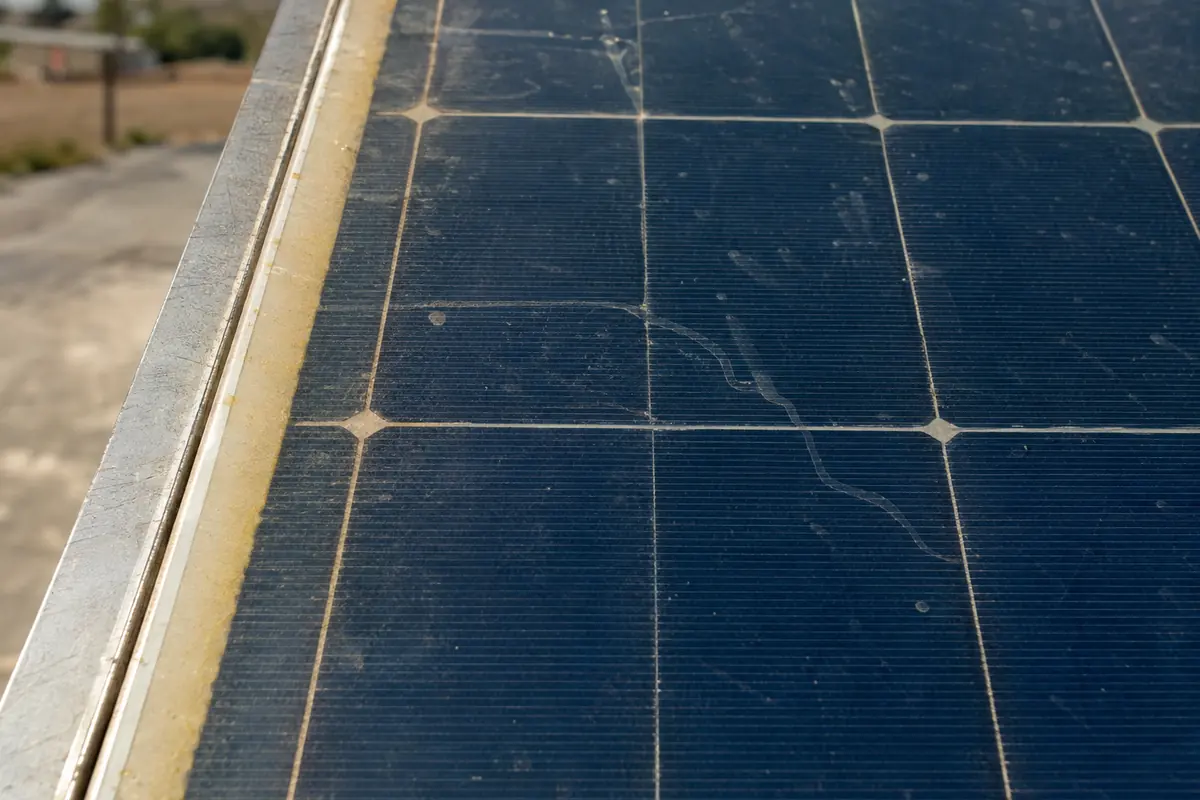
| Dust and soot | Hot spots under dirt patches and bird droppings | Regular soft-water cleaning |
| Humidity and salt air (Karachi, coastal Sindh, Balochistan coast) | Corrosion of frames and connectors; moisture ingress | Dual-glass panels, POE encapsulant, sealed connectors |
| Wind and dust storms | Loose panels, cracked glass, broken clamps | A properly designed, bolted structure |
| Hail (occasional, especially in the north) | Cracked glass and cells | Panels with tested hail resistance; insurance |
| Poor installation | Micro-cracks from stepping on panels, loose MC4 joints | Trained installers, correct crimp tools, no walking on panels |
| Bad cleaning | Scratched glass and water damage | Soft brushes, low pressure, early morning cleaning |
Our solar panel cleaning guide covers the safe way to keep panels clean without harming them.
Does a hotter city mean a shorter life?
Somewhat. Heat speeds up the chemical ageing of the plastics in a panel, so a panel in Jacobabad or Multan will usually age a little faster than the same panel in Islamabad or Murree. The difference is not dramatic for well-made panels, but it adds up over decades, and it is one more reason to raise panels on a structure with airflow behind them rather than laying them flat on a hot roof. Coastal Karachi brings a different problem: salt and humidity, which attack frames, bolts and connectors more than the cells themselves.
Common ways panels age or fail
- Gradual degradation: the normal slow loss covered by the power warranty.
- Light-induced degradation: an early loss in some P-type cells in the first months; N-type cells suffer much less from this.
- Potential-induced degradation (PID): voltage stress in long strings can cause power loss; good panels are tested for PID resistance.
- Hot spots: a cracked or shaded cell heats up and can damage the panel over time.
- Snail trails and micro-cracks: fine dark lines or invisible cracks, often from rough handling or installation.
- Delamination and back-sheet cracking: layers separating or the back sheet splitting, letting in moisture.
- Junction box and diode failure: a common product-warranty claim.
Signs your panels are ageing faster than they should
Normal ageing is slow and even. Watch for these signs that something else is going on:
- One string or MPPT input in the inverter app produces clearly less than an identical one, day after day, even after cleaning.
- Brown or yellow discolouration, bubbles, or lines spreading across the cells.
- A burnt smell, melted plastic or brown marks at a connector or junction box.
- Cracked glass, even a small chip near the edge, which lets moisture in over time.
- System output that falls noticeably faster than the warranty line allows.
An installer can check further with a string voltage and current test, or with a thermal camera on a sunny day. LONGi’s maintenance manual, for example, treats a temperature difference of 30 °C or more between cells in the same module as a sign of a hot spot that needs attention.
Does solar still pay off in year 25?
Yes, usually. At year 25 an N-type panel is still warranted to give close to 90% of its rated output, and most good panels do better than their warranty. The panels have normally paid for themselves many years earlier, so their later years produce units at almost no cost. The real long-term costs are the inverter and battery replacements, which is why a sensible payback plan includes them from the start. Our solar panel calculator helps estimate the early years of savings.
How to make a warranty claim
- Collect the evidence. Photos of the fault, the panel’s serial number label, inverter data showing the drop, and the date it started.
- Find your documents. The original invoice, the installer’s details and the datasheet.
- Contact the installer or seller first. They usually deal with the distributor and can test the panel.
- Go to the authorised distributor. In Pakistan, warranty claims on major brands are normally handled through the official importer or distributor, not the factory directly.
- Expect a test. A power warranty claim normally requires the panel to be tested against its rated output, after allowing for the warranted ageing.
What happens to old panels?
At the end of their first life, many panels still work at reduced output. Some owners move older panels to a less important job, such as a tube-well or a farm shed, when they upgrade a home system. Others sell them into the used panel market, which is active in Pakistan; if you are on the buying side, test any used panel carefully. Formal recycling for solar panels is still limited in Pakistan, so ask your installer what they do with replaced panels rather than letting them be dumped.
How long do inverters and batteries last?
The panels usually outlive everything else in the system. Plan for:
- Inverters: most systems will need inverter repair or replacement at least once during the panels’ life. Keep it in a cool, shaded, ventilated place, away from dust, and check its warranty length before you buy.
- Lithium batteries: good LiFePO4 batteries are rated for several thousand charge cycles, which at one cycle a day is often around a decade, if kept cool.
- Tubular lead-acid batteries: a few years, shorter if drained deeply every day or kept hot.
Our solar panel battery price page compares current battery options.
Comparison table: how long each part lasts and what helps
| Part | Life expectancy | Biggest enemy | What helps most |
|---|---|---|---|
| N-type panel | 30 years or more, about 0.4%/yr warranted loss | Heat, dirt, rough handling | Airflow, cleaning, careful installation |
| PERC panel | 25 years or more, about 0.55%/yr warranted loss | Same, plus early light-induced loss | Same |
| Galvanised or aluminium structure | Decades | Rust at cut edges and bolts | Hot-dip galvanising, stainless bolts |
| Inverter | Repair or replacement likely within the panels’ life | Heat and dust | Shaded, ventilated, clean location |
| Lithium battery | Several thousand cycles | Heat and very deep discharge | Cool room, correct inverter settings |
| Tubular battery | A few years | Deep discharge, low water, heat | Shallow use, distilled water top-ups |
For the live price of panels that carry long power warranties, see the solar panel price list. A Jinko Tiger Neo 585 W currently costs Rs 25,420, and the market average is Rs 41.3 per watt.
Buying checklist for a long-lasting system
- Read the power warranty line. First-year loss, yearly loss after that, and guaranteed output at 25 or 30 years.
- Read the product warranty. The number of years covering defects is usually much shorter than the power warranty.
- Prefer N-type panels. Slower ageing and lower heat loss suit Pakistani conditions.
- Verify the panel is genuine. Check serial numbers with the maker where possible; our Jinko solar panel verification guide shows one example.
- Buy from an authorised distributor. Warranty claims in Pakistan normally go through the official importer or distributor.
- Ask about the structure. Galvanised steel or aluminium, proper bolts, enough height for airflow and cleaning.
- Choose a trained installer. No standing on panels, correct crimping, proper earthing and surge protection.
- Keep every document. Invoice, serial numbers, datasheet and installation date. Without them, a warranty claim years later is nearly impossible.
How to make solar panels last longer
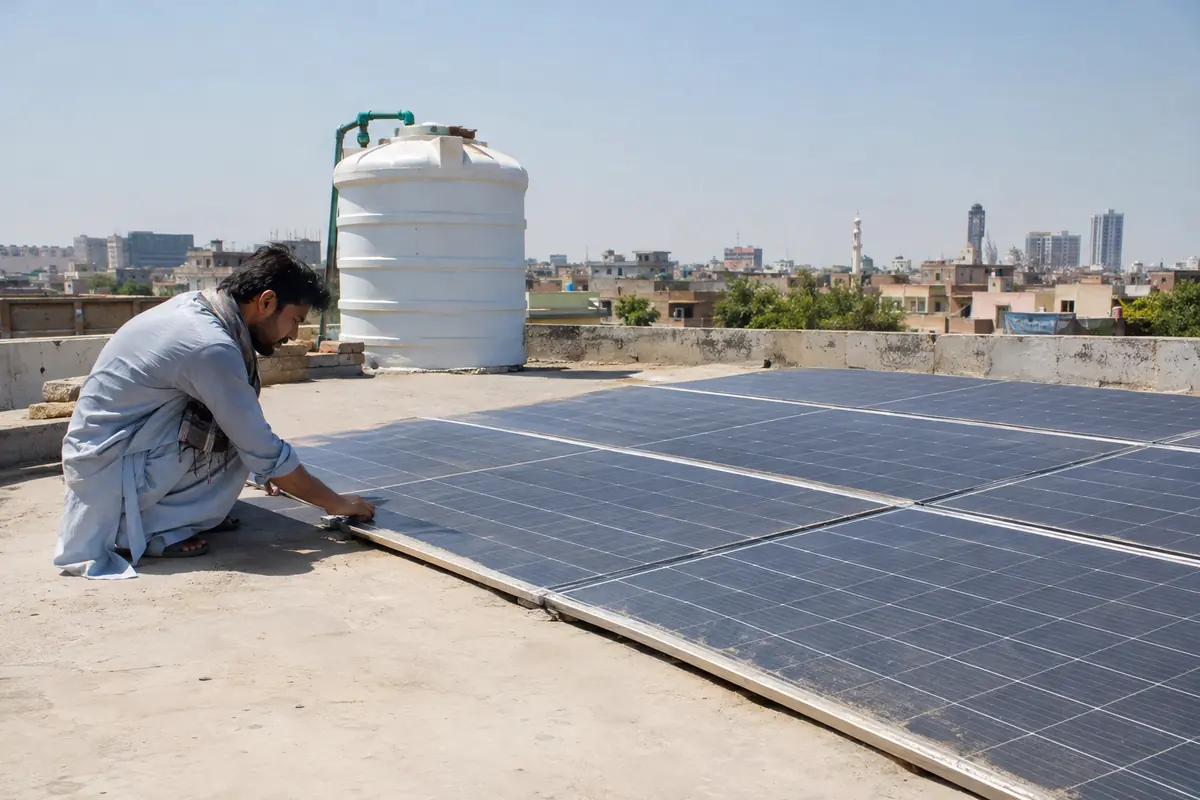
- Clean regularly with soft water and a soft brush, never at noon.
- Keep shade off the panels; trim trees and avoid placing new tanks in front of them.
- Check the inverter app weekly for strings producing less than others.
- Have an installer inspect connectors, clamps and earthing once a year.
- After dust storms or hail, look for cracked glass or loose panels.
A simple maintenance plan for a long life
| How often | What to do |
|---|---|
| Weekly | Glance at the inverter app; compare today with similar sunny days |
| Every 1–3 weeks (dry, dusty months) | Clean the panels with soft water and a soft brush |
| After storms or hail | Check for cracked glass, loose panels and fallen debris |
| Every 6 months | Check cables, connectors and the structure for wear, rust or loose bolts |
| Every year | Ask an installer to check earthing, surge protection, connections and inverter health |
Common mistakes to avoid
| Mistake | Result | Better approach |
|---|---|---|
| Confusing product and power warranties | Surprise when a defect is not covered | Read both lines on the datasheet |
| Buying unverified or grey-market panels | No warranty support from the maker | Verify serials and buy from authorised distributors |
| Mounting panels flat on a hot roof with no gap | Hotter panels, faster ageing | Raised structure with airflow |
| Using mild steel that rusts | Structure fails long before the panels | Hot-dip galvanised or aluminium |
| Walking on panels during installation or cleaning | Micro-cracks that grow into hot spots | Work from the sides |
| Losing the invoice and serial numbers | Warranty claims become impossible | Keep digital copies |
| Expecting the inverter and battery to last as long as the panels | Unplanned replacement costs | Budget for them in your payback plan |
If you are weighing up brands for the long run, our list of the best solar panels in Pakistan compares warranties and technologies, and today’s prices for every size are on the home page.
Frequently asked questions
What is the average lifespan of solar panels?
A good quality solar panel typically lasts 25 to 30 years or more. It does not stop suddenly; it slowly produces a little less each year, and NREL research puts the median loss at about 0.5% per year.
What is the life expectancy of solar panels in Pakistan?
Good panels can be expected to last 25-30 years in Pakistan too, although heat, dust and coastal humidity can make them age a little faster. Raised mounting with airflow, regular cleaning and careful installation help them reach their full life.
How much power does a solar panel lose each year?
Modern N-type panels are typically warranted to lose about 1% in the first year and around 0.4% per year after that. Older PERC panels were usually warranted at about 2% in the first year and 0.55% per year after.
What happens to solar panels after 25 years?
They usually keep working at reduced output, often close to 90% of their original rating for good N-type panels. Many owners keep using them, move them to a less important job or replace them with new, more efficient panels.
What is the difference between product warranty and power warranty?
The product warranty covers defects in materials and workmanship, usually for around 12 years on major brands. The power warranty guarantees a minimum output each year, usually for 25-30 years.
Do inverters and batteries last as long as solar panels?
No. Most systems need inverter repair or replacement at least once during the panels' life, and batteries need replacing more often, especially tubular lead-acid types. Include these costs in your payback plan.
What shortens the life of solar panels?
Heat, dirt left for long periods, rough handling, walking on panels, poor connectors, rusting structures and harsh cleaning methods all shorten panel life. Cheap or B-grade panels with weaker materials also tend to age faster.
How can I make my solar panels last longer?
Mount them with airflow behind, clean them gently and regularly, keep shade off them, check connectors and the structure once or twice a year, and keep your invoice and serial numbers safe for warranty claims.