On this page
- The new annual cycle: rebasing every January
- The protected category and the six-month rule
- Fixed charges: the new line on every bill
- Quarterly and monthly adjustments in 2026
- How the 2026 electricity tariff and net billing work together for solar users
- What to change if you already have solar
- What to do if you are still deciding
- What to watch for the rest of 2026
- Frequently asked questions
For solar users, the 2026 electricity tariff in Pakistan brought one big change and several smaller ones. The big one is fixed monthly charges, now applied to almost all domestic consumers at roughly Rs200 to Rs675 a month, which solar cannot reduce. Per-unit slab rates were kept broadly unchanged when tariffs were rebased in January 2026, and quarterly adjustments have moved bills slightly up and down since. Combined with net billing, this means the value of solar now lies almost entirely in the grid units you avoid buying.
This post sets out what is on your bill as of October 2026, which numbers are firm and which are disputed, and what each item means if you already have solar or are thinking about it.
The new annual cycle: rebasing every January
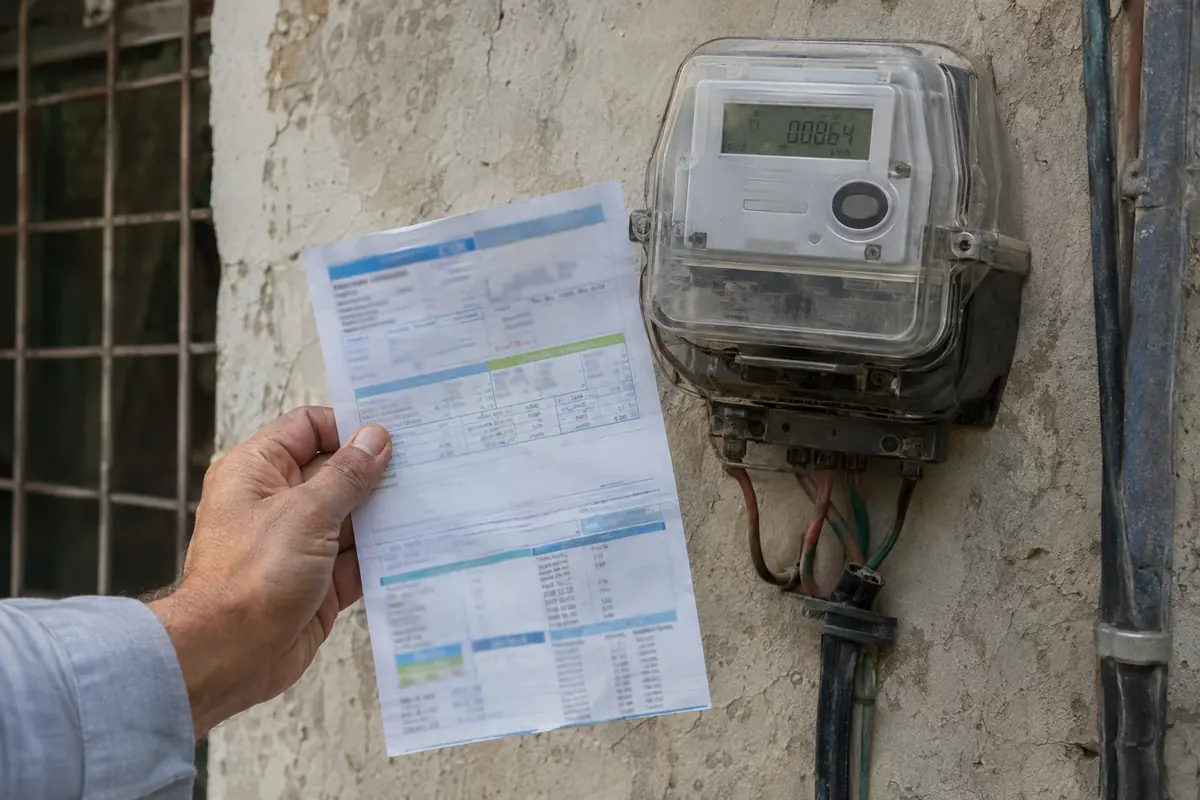
Base tariffs are now rebased each calendar year from 1 January, instead of the old mid-year cycle that followed the budget. The Nation reported in January 2026 that NEPRA set a national average tariff of Rs33.38 per unit for 2026, but the federal government kept the uniform domestic tariff unchanged, with the top domestic slab staying at up to Rs47.69 per unit.
The difference between those two figures matters. The national average is what NEPRA calculates the system needs to recover. The uniform tariff is what the government decides consumers in each slab actually pay, after subsidies and cross-subsidies. Domestic users on higher slabs pay well above the average, which is one reason solar is attractive to them.
2026 domestic slab rates
The Nation published these per-unit rates (before taxes) in January 2026. The article was inconsistent in places and we have not been able to match every figure against the NEPRA notification, so use the table as a guide and confirm with the rate printed on your own bill.
| Category | Monthly units | Rate per unit (before taxes) |
|---|---|---|
| Protected | 1 to 100 | Rs10.54 |
| Protected | 101 to 200 | Rs13.01 |
| Non-protected | 1 to 100 | Rs22.44 |
| Non-protected | 101 to 200 | Rs28.91 |
| Non-protected | 201 to 300 | Rs33.10 |
| Non-protected | 401 to 500 | Rs40.22 |
| Non-protected | Above 700 | Rs47.69 |
Slabs not listed above were not clearly reported. Taxes, duties and adjustments are added on top, so the effective rate on your bill is higher than these figures.
The protected category and the six-month rule
Protected consumers are households using up to 200 units a month. Daily Pakistan reported in August 2026 that going over the limit even once, by a single unit, removes protected status, and that a household then has to stay within the limit for six months to regain it. The same report noted proposals to raise the limit from 200 to 300 units, but no decision had been reported as of October 2026.
The gap between protected and non-protected rates is large. Someone using 201 units a month pays a far higher rate than someone using 199. For a solar home near that line, the question is how your billed consumption is counted under net billing: imports only, or imports minus exports. That depends on how your DISCO applies the Prosumer Regulations, so ask in writing before you size a system around staying protected.
Fixed charges: the new line on every bill
In February 2026, NEPRA extended fixed monthly charges to protected domestic consumers, who had previously been exempt. Profit reported on 12 February 2026 that protected consumers would pay Rs200 a month up to 100 units and Rs300 up to 200 units, while non-protected consumers pay from Rs275 up to Rs675 above 700 units. Lifeline consumers are exempt. The Nation reported the government aims to collect about Rs355 billion through fixed charges in 2026.

Reports conflict on the details. The Express Tribune described the charges as per kW of sanctioned load per month and gave different figures for the middle slabs, and Profit’s own figures for those slabs differ again. Until the notification is checked line by line, the safe description is fixed monthly charges of roughly Rs200 to Rs675 depending on slab. The exact amount is printed on your bill.
Why fixed charges exist, and why they target solar
The stated reason was that DISCOs need to recover their network costs even when consumption falls because of rooftop solar. Wires, transformers and staff cost the same whether you buy 50 units or 500. Before 2026 most of that cost was hidden inside the per-unit rate, so every solar unit you used also cut your share of network costs. A fixed charge moves part of that cost to a line solar cannot touch.
For a solar home the practical effect is simple: your bill will not reach zero, even in a month when you import nothing. Build the fixed charge plus taxes into any savings estimate as a cost you pay with or without solar.
Quarterly and monthly adjustments in 2026
On top of the base tariff, your bill can carry two kinds of adjustment: a monthly fuel charges adjustment and a quarterly tariff adjustment. Both are set by NEPRA after the period they relate to, so they show up on bills a few months late. Here are the quarterly adjustments reported so far this year.
| Bills affected | Adjustment | Reported by |
|---|---|---|
| June to August 2026 | Cut of about Rs1.99 per unit (Rs1.9857), relating to January to March 2026 | Profit and the Express Tribune, June 2026 |
| September to November 2026 | Increase of about Rs0.52 per unit (Rs0.5194) | Express Tribune, September 2026 |
Both adjustments excluded lifeline consumers, prepaid consumers and units billed under the incremental consumption package, according to those reports. The September increase was notified by NEPRA in early September 2026 and will be recovered over three months. Monthly fuel adjustments also come and go, sometimes up and sometimes down. For example, NEPRA added about Rs1.11 per unit (Rs1.1086) to October 2026 bills for August’s fuel costs, according to Dawn on 8 October 2026; lifeline and prepaid consumers were excluded. Check your bill’s adjustment lines each month.
For solar users, these adjustments apply per unit billed, which in practice means the units you import. The less you draw from the grid, the less any increase costs you. A cut helps you less for the same reason.
How the 2026 electricity tariff and net billing work together for solar users
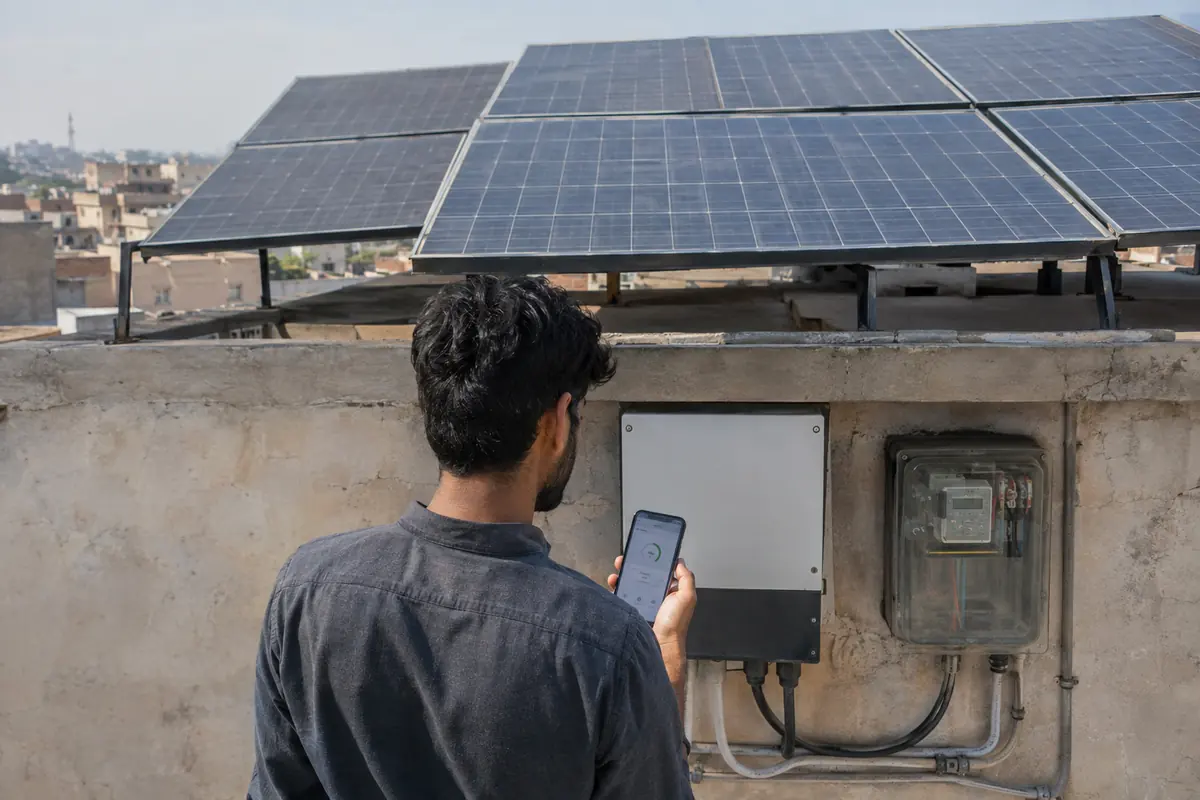
Put the tariff and net billing side by side and the picture is clear. Since 9 February 2026, new solar users export at about Rs10 to 11 per unit, a rate linked to the national average energy purchase price. Every unit they import is charged at their full slab rate. Looking at the table above, a non-protected home on the higher slabs buys grid units at roughly four times the export rate, before taxes.
| What happens to a solar unit | What it is worth to you |
|---|---|
| Used in the house while the sun is up | Your marginal slab rate, plus the taxes and adjustments you avoid on it |
| Stored in a battery and used at night | Your marginal slab rate, minus battery losses and wear |
| Exported under net billing | About Rs10 to 11 |
| Exported under a grandfathered net metering agreement | Offsets an imported unit until your agreement expires |
If you applied for net metering on or before 8 February 2026, NEPRA’s April 2026 amendment lets you keep the old terms until your agreement expires. Fixed charges still apply to you, though.
One household, before and after solar
Here is how the lines on a bill shift for a typical non-protected family in Lahore using about 500 units a month, after installing a 5 kW system on net billing. Assume the system makes about 600 units in a good month, the family uses 300 of them directly during the day, exports the other 300 and imports 200 units at night. The figures are illustrative; your own split will differ.
| Bill line | Before solar | After solar (net billing) |
|---|---|---|
| Units billed at the slab rate | 500 | 200 imported |
| Export credit | None | 300 units at about Rs10 to 11, roughly Rs3,000 to 3,300 |
| Fixed monthly charge | Charged | Charged, unchanged |
| Quarterly and fuel adjustments | On 500 units | On the 200 imported units |
| Taxes | On the full bill | On a much smaller bill |
Notice where the saving comes from. The 300 units used in the house remove 300 units from the most expensive part of the bill, along with the taxes and adjustments on them. The 300 exported units earn a modest credit. If the same family moved 100 more units of use into daylight hours, imports and exports would both drop by 100, and the bill would fall by far more than the export credit lost. Which slab the remaining 200 imported units are billed in depends on how your DISCO counts consumption for net billing customers, so confirm that before relying on any rupee estimate.
What to change if you already have solar
- Read your bill line by line. Find the fixed charge, the quarterly adjustment, the fuel adjustment and the taxes. Know what is fixed and what changes with units.
- Use more of your solar during the day. Move the water motor, washing machine, iron and pre-cooling to sunshine hours. Our guide to running an AC on solar covers the biggest load.
- Watch your slab, not just your total. If you are close to 200 units of billed consumption, find out from your DISCO how net billing customers are counted, because crossing the line once costs six months of higher rates.
- Price a battery honestly. A battery moves cheap afternoon units to the expensive evening. Whether that pays depends on battery prices and your evening slab. Do the maths per stored unit before you buy.
- Do not add panels just to export. At about Rs10 to 11 per exported unit, extra panels for export pay back slowly. Add them only if your daytime load has grown.
What to do if you are still deciding
Start from your last twelve bills and note how many units you used and when. Size a system that covers your daytime use with the solar system size calculator, then price it. At today’s rates the panels for a 5 kW system with 585 W modules come to about Rs 210,600, with inverter, structure and installation on top. Our 5 kW system price guide shows the full breakdown, and the solar system price overview covers other sizes.
If you are a protected consumer using well under 200 units, solar saves less per unit because your grid power is cheap. Check whether you qualify for one of the provincial solar schemes before spending your own money.
What to watch for the rest of 2026
- January 2027 rebasing. The next annual tariff decision is due for 1 January 2027. As of October 2026, no rates have been announced.
- The next quarterly adjustment. The September to November increase will end, and a new one, up or down, will follow based on later quarters.
- The buyback rate. Because the net billing rate is tied to the national average energy purchase price, it can change when that price is redetermined.
- The protected limit. Any decision to raise the 200-unit limit, or to change the six-month rule, would matter a lot for small solar homes.
We review this post every week and update the adjustment table as new decisions are reported.
Frequently asked questions
What is the electricity tariff per unit in Pakistan in 2026?
For domestic consumers, The Nation reported 2026 slab rates from about Rs10.54 per unit for protected consumers using up to 100 units to Rs47.69 per unit above 700 units, before taxes. Your actual rate depends on your slab, protected status and DISCO, so check your bill.
Do solar users pay fixed charges in Pakistan?
Yes. Fixed monthly charges, reported at roughly Rs200 to Rs675 depending on slab, apply whether or not you have solar, and solar cannot offset them. Even a home that imports almost nothing still pays the fixed charge plus taxes.
Can solar keep me in the protected category?
Possibly, if it keeps your monthly billed consumption at or below 200 units, but how billed consumption is counted for a net billing customer should be confirmed with your DISCO. Going above 200 units in a single month removes protected status and, as reported in 2026, it takes six months to regain it.
When will electricity tariffs change next?
Base tariffs are now rebased every calendar year from 1 January, so the next rebasing is due for January 2027. In between, quarterly and monthly adjustments can raise or lower the per-unit cost on your bill.
Does a quarterly tariff adjustment affect solar users?
It is charged per unit billed, so it applies to the units you import from the grid. The fewer units you import, the less any increase costs you, which is one more reason to use your solar units yourself.
More from the blog
 Net Metering & Bills Is Solar Still Worth It in Pakistan in 2026? A Real Payback Calculation
Is solar worth it in Pakistan after net billing? A step-by-step payback calculation for a 5 kW home system, with the numbers to check your own case. · 8 min read
 Net Metering & Bills Net Metering vs Net Billing in Pakistan: What Changed and What It Means for You
Net billing in Pakistan explained: how it differs from net metering, who keeps the old rate, what exported units now earn, and how to size solar for it. · 8 min read
 Buying Guides How to Spot Fake, Refurbished or Mislabelled Solar Panels in Pakistan
Copied brand labels, re-stickered wattages and washed used panels all turn up in Pakistan. How each trick works and how to catch it before you pay. · 8 min read