On this page
A 10kW solar system in Pakistan produces about 40 to 45 units (kWh) per day on a yearly average, a 5kW system about 20 to 22 units, and a 15kW system about 60 to 67 units. The exact figure for 10kW solar system per day units depends on your city’s sun hours, panel tilt, dust, heat and the season, so a December day in Lahore can give barely half of a clear April day.
Below you will find the simple formula installers use, a city-wise table, how output shifts month to month, and how to check whether your own system is performing.
The formula: kW x sun hours x efficiency
Daily units are worked out with one line of arithmetic:
Units per day = system size (kW) x peak sun hours x system efficiency
- System size is the total panel wattage. Twenty 585 W panels make 11.7 kW, not 10 kW, so count panels, not the number on the inverter.
- Peak sun hours are not daylight hours. They are the equivalent number of hours of full-strength (1,000 W per square metre) sunlight your location gets in a day. Lahore averages about 5.2 over a year.
- System efficiency covers heat losses, dust, wiring, inverter conversion and mismatch. For a decent Pakistani rooftop installation, 75 to 82 percent is realistic. We use 80 percent in the tables below.
Example for Lahore: 10 kW x 5.2 hours x 0.80 = 41.6 units a day. Multiply by 30 for roughly 1,250 units a month, or by 365 for about 15,200 units a year.
City-wise units: 5kW, 10kW and 15kW
These figures use annual average peak sun hours for each city and 80 percent system efficiency. They describe a south-facing array at a sensible tilt with no shading.
| City (sun hours) | 5kW per day | 10kW per day | 15kW per day | 10kW per month | 10kW per year |
|---|---|---|---|---|---|
| Karachi (5.6) | 22.4 | 44.8 | 67.2 | about 1,340 | about 16,350 |
| Multan (5.5) | 22.0 | 44.0 | 66.0 | about 1,320 | about 16,060 |
| Faisalabad (5.3) | 21.2 | 42.4 | 63.6 | about 1,270 | about 15,480 |
| Lahore (5.2) | 20.8 | 41.6 | 62.4 | about 1,250 | about 15,180 |
| Gujranwala (5.1) | 20.4 | 40.8 | 61.2 | about 1,220 | about 14,890 |
| Peshawar (5.1) | 20.4 | 40.8 | 61.2 | about 1,220 | about 14,890 |
| Islamabad / Rawalpindi (5.0) | 20.0 | 40.0 | 60.0 | about 1,200 | about 14,600 |
Monthly figures for 5kW and 15kW follow the same pattern: roughly 600 to 670 units a month for 5kW and 1,800 to 2,000 for 15kW. For a custom size, plug your own numbers into the solar panel calculator, which also works backwards from your monthly bill.
Why the same system makes different units every month
An annual average hides a big seasonal swing. Three things drive it in Pakistan.
Winter: short days, low sun, fog and smog
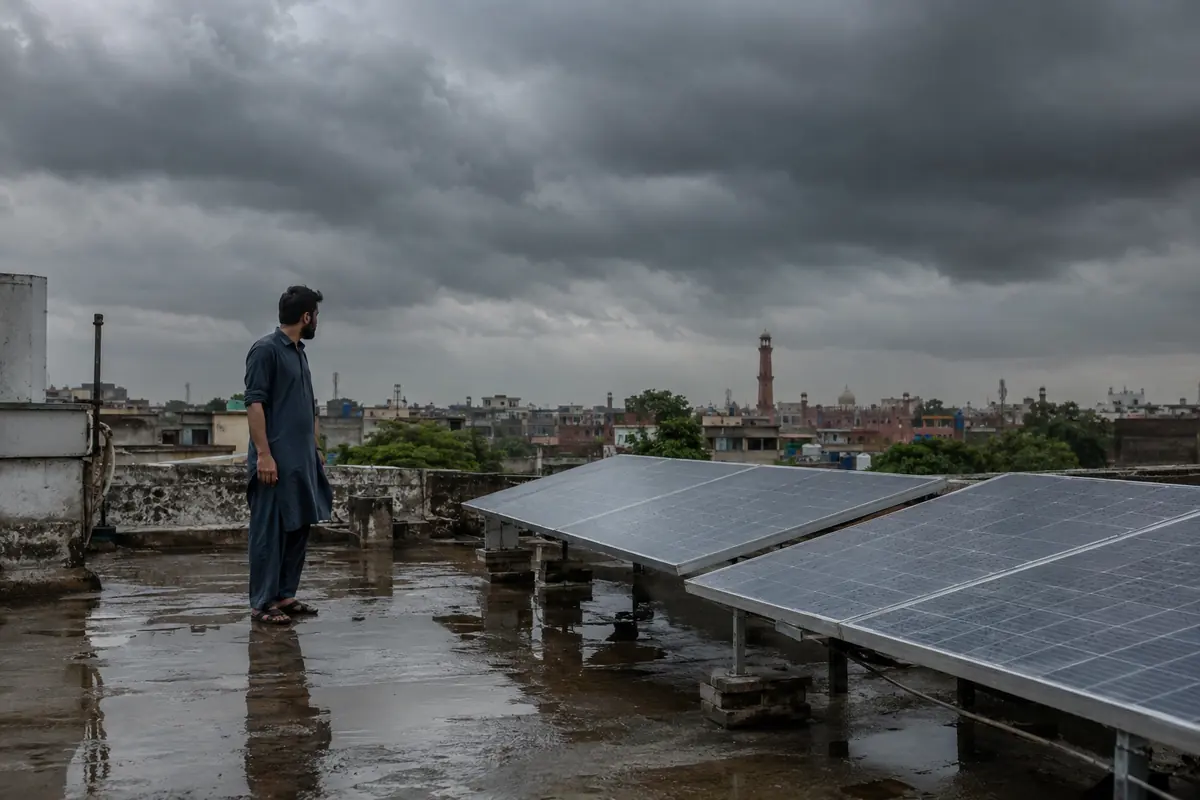
From late November to January, the sun sits low, days are short and Punjab often gets dense fog and smog. Peak sun hours drop well below the annual figure. On a foggy Lahore or Faisalabad morning, a 10kW system might do almost nothing until 11 am. Over these months many owners see output fall to somewhere around half to two thirds of their spring figures, and lower in a bad fog week. Karachi and Quetta-side areas are less affected by fog.
To put numbers on it: weather records for Lahore put average incoming solar energy in December at about 3.4 kWh per square metre per day, against an annual average of about 5.2. Run the same formula with 3.4 instead of 5.2 and a 10kW system drops from about 41.6 units to roughly 27 units a day, before any extra loss from fog days or a dusty film on the glass. One solar resource estimate for Lahore (profileSOLAR) gives roughly 3.5 units per kW per day in winter against about 6.5 in spring, which shows the same pattern: winter output around 45 percent below the best season.
Smog adds its own penalty. A study by MIT researchers found that urban haze cut solar output in Delhi by about 12 percent on an annual average. Lahore sits in the same smog belt, but no measured figure for Lahore itself has been published that we could verify, so treat any claim of a fixed percentage loss for Lahore smog with caution.
Spring: the best months
March, April and early May usually deliver the highest daily units in Punjab and Khyber Pakhtunkhwa. Skies are clear, the sun is high and temperatures are not yet extreme. A clean 10kW system often beats its annual average comfortably on these days.
Summer: strong sun, but heat losses
In June the sun is strongest, but panel cells can run 30 to 40 degrees hotter than the air. Every panel loses a fraction of a percent of output per degree above 25 degrees Celsius (the temperature coefficient on the datasheet, typically about 0.29 to 0.35 percent per degree for modern mono panels). On a 45 degree afternoon in Multan or Jacobabad that adds up to a meaningful loss. Monsoon cloud in July and August trims output further, especially in Lahore and Islamabad.
| Season (Punjab) | Typical output vs annual average | Main reason |
|---|---|---|
| Dec to Jan | Well below average | Low sun, short days, fog and smog |
| Feb to Mar | Near or above average | Clearing skies, cool panels |
| Apr to May | Above average | High sun, mostly clear |
| Jun | Around average | Strong sun offset by heat loss and dust storms |
| Jul to Aug | Below average | Monsoon cloud and humidity |
| Sep to Nov | Near average, falling | Clear skies, shortening days, smog by November |
This is a general pattern, not a forecast for any particular year. It is also why we wrote a separate guide on choosing the right tilt angle: a steeper winter tilt claws back some of those lost units.
Panel kW, inverter kW and what you actually get
People often mix up three ratings:
- Panel (DC) capacity: total panel wattage. This decides daily units.
- Inverter (AC) rating: the most power the inverter can deliver at once. A 10kW inverter on 11.7 kW of panels is normal and slightly oversizing panels is common practice.
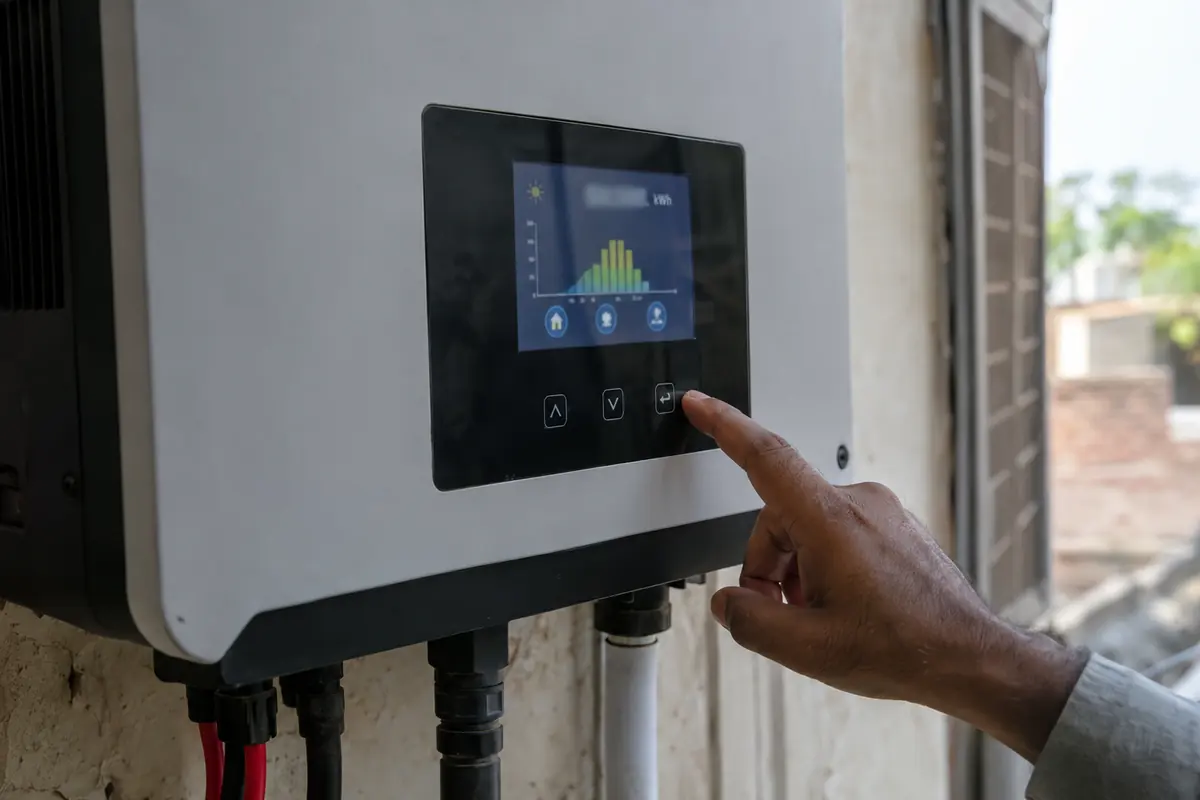
- Peak output on your app: the highest reading of the day. On a hot, clear day a 10kW array might peak at 8 to 8.8 kW. That is not a fault.
If panels are heavily oversized against the inverter, the midday peak is cut off (clipping). A small amount is fine. A lot means you paid for panels you cannot use. Our inverter price and sizing page explains how to match the two.
For reference, a 10kW system built on 585 W panels needs 18 panels, and the panel cost alone today is about Rs 421,200. For 5kW it is 9 panels and roughly Rs 210,600 in panels. Full system costs with inverter, structure and wiring are on the solar system price page.
Matching units to your bill
Your electricity bill shows units consumed per month. Your system should be sized around that, but with two warnings.
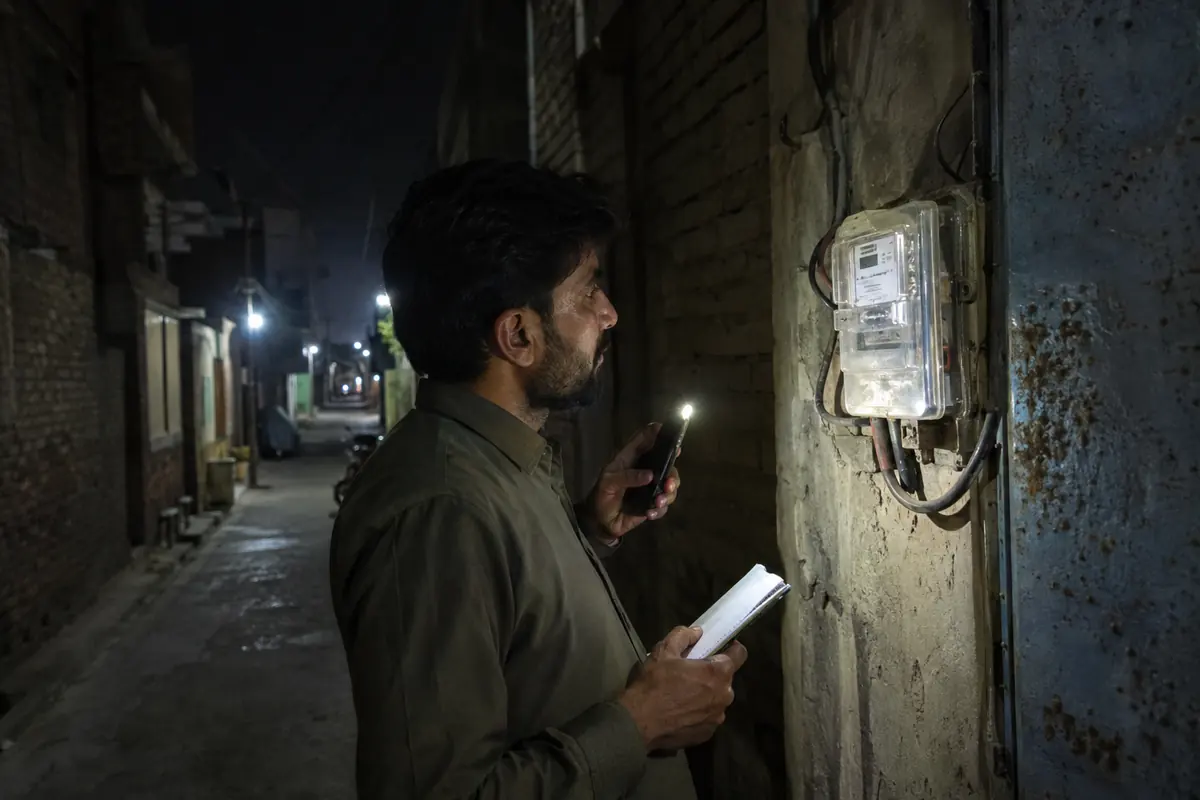
First, solar produces during the day. If most of your use is at night (ACs in bedrooms, for instance), daytime units either go to the grid under your net metering or net billing arrangement, or into a battery. Units sent to the grid are worth less to you than units you use directly, so count self-consumption separately.
Second, look at your highest-use months, not the average. A house using 1,200 units in July and 350 in January will not be fully covered by a system sized for the average. A rough guide many installers use:
| Typical summer monthly use | Approximate system size to cover most daytime use | Typical house |
|---|---|---|
| 400 to 600 units | 4 to 5 kW | 5 marla, 1 or 2 ACs |
| 800 to 1,200 units | 8 to 10 kW | 10 marla, 3 or 4 ACs |
| 1,500 to 2,000 units | 12 to 15 kW | 1 kanal, 5 or more ACs |
These are starting points. Roof space and your DISCO’s approval will also limit what you can install. Under NEPRA’s Prosumer Regulations 2026, a grid-connected system is capped at your sanctioned load, and a DISCO can stop accepting new applications on a transformer once solar on it reaches 80 percent of its capacity. If you want 15kW but your sanctioned load is 10kW, you will need to apply for a load extension first.
Why self-consumed units are worth more in 2026
Since the Prosumer Regulations took effect in February 2026, new applicants are on net billing rather than the old unit-for-unit net metering. Units you export earn a buyback rate linked to the national average energy purchase price, reported at about Rs10 to 11 per unit, while units you import are charged at your normal slab tariff, which is several times higher. Homes approved before 9 February 2026 keep their old terms until their agreement ends. For anyone on the new terms, a unit used at home in the afternoon saves far more than a unit sent to the grid, so it pays to run washing machines, water pumps, irons and ACs while the sun is up. Remember too that the fixed monthly charge on your bill does not go away, however many units you produce.
How to check your own system is performing
Every hybrid or on-grid inverter app shows daily generation. Use it to compare like with like.
- Pick three clear, cool days in spring or autumn. Ignore foggy, rainy or dusty-storm days.
- Divide each day’s units by your panel kW. This gives “specific yield” in units per kW.
- In most of Pakistan a clean, unshaded system should reach about 4 to 5 units per kW on such days. Karachi and southern Punjab tend to be at the higher end.
- If you are consistently below 3.5 units per kW on clear days, something is wrong.
The usual culprits, in order of how often they show up:
- Dust: a layer of dust after two dry weeks can cut output noticeably. Wash and compare the next day. See the safe cleaning guide.
- Shading: water tanks, parapet walls, mumty rooms and neighbours’ new floors. Even partial shade on one panel drags down a whole string.
- Wrong tilt or orientation: panels laid flat, or facing east-west to fit the roof.
- Inverter limits: zero-export settings, a capped grid feed, or a battery-priority mode that throttles panels when the battery is full and the house load is low.
- Wiring faults: a loose MC4 connector or a dead string. Check whether one MPPT input reads far lower than the other.
Bottom line
Use about 4 units per kW per day as your yearly planning number for most of Pakistan, slightly more for Karachi and Multan, slightly less for Islamabad. That gives roughly 20 units a day from 5kW, 40 to 45 from 10kW and 60 to 67 from 15kW. Expect winter to fall short and spring to beat it. If your clear-day output is well under these figures, check dust, shade and inverter settings before you blame the panels.
Frequently asked questions
How many units does a 10kW solar system produce per day in Pakistan?
On a yearly average a well-installed 10kW system makes roughly 40 to 45 units a day, depending on the city. Expect more on clear spring and early summer days and noticeably less during winter fog.
How many units does a 5kW solar system generate per month?
About 600 to 670 units a month on average across major Pakistani cities, using local peak sun hours and around 80 percent system efficiency. Winter months come in lower and spring months higher.
How many units does a 15kW solar system produce?
Roughly 60 to 67 units a day on a yearly average, or about 1,800 to 2,000 units a month. That is enough for a large house running several inverter ACs in the daytime.
Why is my solar system producing less than expected?
Common causes are dust on the panels, shading from water tanks or neighbouring buildings, poor tilt, an undersized inverter, loose connections, and winter fog. Compare a clear day's output with the figures in this guide before blaming the panels.
Does a 10kW system mean 10kW output all day?
No. 10kW is the panel rating under laboratory conditions. Real output rises from zero at sunrise to a midday peak, usually below 10kW because of heat and losses, and falls back to zero by evening.
More from the blog
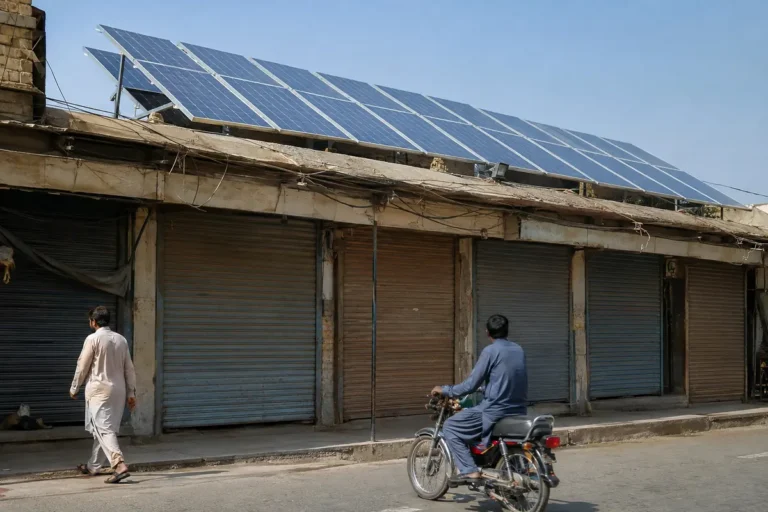 Buying Guides Solar for Shops and Small Businesses in Pakistan: Sizing and Payback
How to size a solar system for a shop or small business in Pakistan from your bill and your loads, and how to work out payback at your commercial rate. · 8 min read
 Buying Guides 15 Questions to Ask Your Solar Installer Before You Pay
Before you pay a solar installer in Pakistan, ask these 15 questions about panels, inverter, structure, wiring, net metering, payment and after-sales. · 8 min read
 Buying Guides Solar Panel Warranty in Pakistan: Product vs Performance, and What Dealers Honour
Product warranty, performance warranty and dealer warranty are three different promises. Here is what each covers in Pakistan and how to claim it. · 8 min read