On this page
- Why shops suit solar better than most homes
- Step 1: find your real cost per unit
- Step 2: list your daytime loads
- Step 3: size the solar system for your shop
- Step 4: work out payback from your own numbers
- Load shedding, generators and batteries
- Practical issues shopkeepers face
- What to do this week
- Frequently asked questions
A solar system for a shop in Pakistan should be sized from your daytime electricity use, not your total bill. Shops, clinics, workshops and small offices are open when the sun is up, so most of the solar units are used on the spot at your full commercial rate, which is why payback for a busy shop is often faster than for a house. For most small shops that means somewhere between 3 and 10 kW; the steps below show how to find your exact figure and how to calculate payback from your own bill.
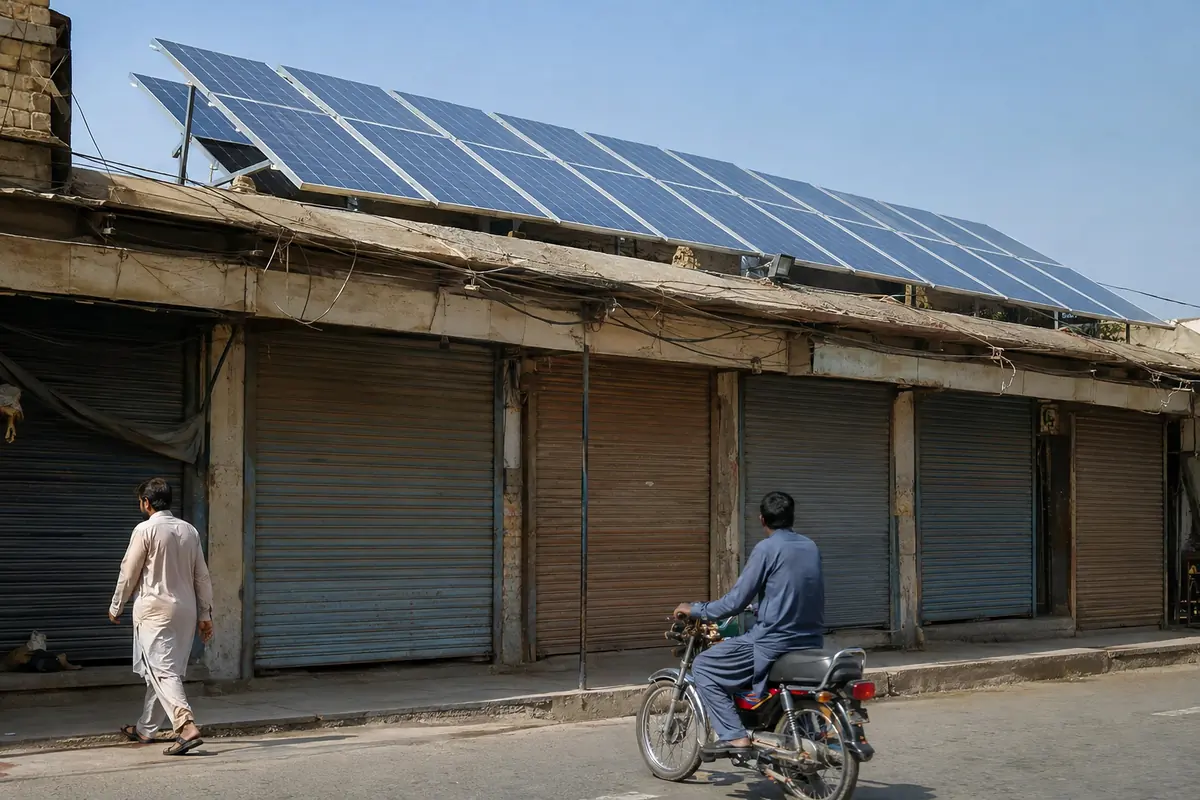
Why shops suit solar better than most homes
A typical home uses a lot of its power in the evening and at night: lights, ACs in bedrooms, the water pump at dawn. Solar produces between roughly 8 am and 5 pm. Every unit not used at the time it is produced either goes to a battery or back to the grid, and both are worth less to you than using it directly.
A shop open from 10 am to 9 pm flips that pattern. Fans, freezers, display lights, the AC in the back office and the POS machine all run through the productive hours. That means:
- Higher self-consumption. More of each solar unit replaces a unit you would have bought at your full tariff.
- Less dependence on export terms. Under net billing, an exported unit earns far less than an imported unit costs (more on this below). A shop that consumes most of its own production is affected far less than a home that exports half of it.
- Expensive units to replace. Commercial connections are not billed on the cheap lower slabs that protect small residential users, so each unit you avoid tends to be costly. Check the exact rate on your own bill, since it depends on your DISCO, connection type and whether you are on a time-of-use meter.
Step 1: find your real cost per unit
Do not use the headline tariff. Take your last bill and divide the total payable amount by the units billed. This “effective rate” includes taxes, fixed charges and adjustments, and it is the number solar actually saves you, minus any fixed charges you will pay regardless. Do this for a summer and a winter bill, as the figure moves through the year.
If your connection is on a time-of-use (peak and off-peak) meter, which is common for larger commercial loads, note both rates. Solar offsets mostly off-peak daytime units. The evening peak hours, when rates are highest, are after sunset, so solar alone does not touch them unless you add batteries.
Step 2: list your daytime loads
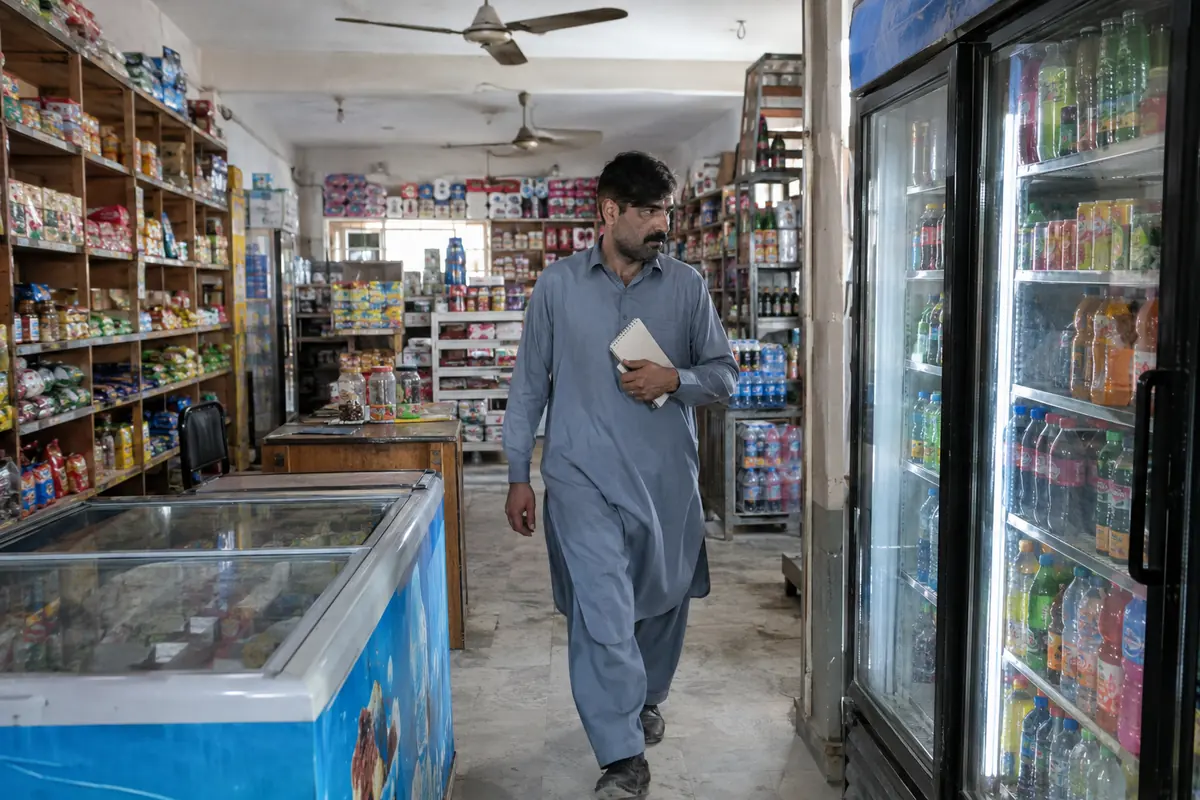
The bill tells you how much you use; a load list tells you when. Walk through the shop and write down every appliance, its wattage and the hours it runs while the sun is up. Here is an example for a mid-sized grocery store in Lahore, open 10 am to 11 pm. Wattages and hours are typical estimates; use the labels on your own equipment.
| Load | Quantity | Approx. units per day (all hours) | Of which during sun hours |
|---|---|---|---|
| Deep freezer | 2 | 5.0 | 2.5 |
| Visi cooler (drinks chiller) | 1 | 3.0 | 1.5 |
| Ceiling fans, about 80 W, 12 h | 6 | 5.8 | 3.4 |
| LED tube lights, about 20 W, 13 h | 10 | 2.6 | 1.4 |
| 1.5 ton inverter AC, about 8 h running | 1 | 8.8 | 6.6 |
| POS, router, CCTV, phone charging | 1 set | 2.0 | 1.0 |
| Total | about 27 | about 16 |
That store uses roughly 800 units a month, and about 60% of it during sun hours. Fridges and freezers run day and night; fans and the AC run hardest in the afternoon, which lines up well with solar output. If your shop’s single biggest load is air conditioning, our page on running an AC on solar covers sizing for it in detail.
Step 3: size the solar system for your shop
A practical rule for Pakistan: one kW of well-installed panels produces roughly 4 units a day as a yearly average in most Punjab cities, a little more in Multan and Karachi, and noticeably less in December and January. That comes from city sun hours (Lahore around 5.2, Karachi 5.6, Multan 5.5, Islamabad 5.0) multiplied by about 0.8 for heat, dust, wiring and inverter losses.
| Shop type (example) | Typical daytime loads | Rough daily units | Starting system size |
|---|---|---|---|
| Small retail or mobile shop | Fans, lights, chargers, one fridge | 6 to 10 | 2 to 3 kW |
| Grocery or general store | Freezers, chillers, fans, lights, one AC | 20 to 30 | 5 to 7 kW |
| Clinic or pharmacy | ACs, medicine fridge, lights, computers | 25 to 40 | 6 to 10 kW |
| Small workshop (tailoring, printing, repair) | Motors, machines, fans, lights | 15 to 35 | 4 to 8 kW |
These are starting points only. For the grocery example above, about 27 units a day divided by about 4.2 units per kW in Lahore suggests roughly 6.5 kW to cover the whole bill on an annual basis, or around 4 kW to cover only the daytime use without relying on export. Which you choose depends on whether you can get net metering and on the export terms at the time. Run your own figures through our solar calculator with your city selected.
Using 585 W panels, a 5 kW array needs 9 panels and the panels alone cost around Rs 210,600 at today’s rates. For a 7 kW array it is 12 panels, around Rs 280,800.
Net billing: why a shop should aim to use its own units
Under NEPRA’s Prosumer Regulations 2026, notified on 9 February 2026, new applicants no longer get the old unit-for-unit net metering swap. They move to net billing: units you import are charged at your normal tariff, and units you export are bought at a rate linked to the National Average Energy Purchase Price, which news reports put at about Rs10 to 11 per unit. That rate can change at each tariff determination. Connections whose agreement or application was in place by 8 February 2026 keep the old terms until their agreement expires.
A few other rules from the same regulations matter for shops:
- Size cap. The system is limited to your sanctioned load. A shop with a small sanctioned load may need to apply for an extension before installing a larger array.
- Agreement length. New agreements run for 5 years, renewable by mutual consent.
- Licence fee. NEPRA withdrew the licence requirement and fee for systems up to 25 kW; larger systems pay a one-time fee per kW.
- Transformer limit. A DISCO can stop accepting applications on a transformer once solar on it reaches 80% of its capacity, which happens in busy markets where many shops have gone solar.
The practical conclusion is to size for your daytime use first and treat exports as a small bonus, not the basis of your payback. For the full comparison of the two schemes, see our post on net metering versus net billing.
Step 4: work out payback from your own numbers
Payback is simple arithmetic once you have the effective rate and the system cost.

- Units solar will offset per month = system kW x units per kW per day x 30, limited to what you can actually use or credit through net metering.
- Monthly saving = offset units x your effective rate per unit (from Step 1), minus any fixed charges that stay on the bill regardless. Count exported units at the buyback rate, not at your import rate.
- Payback in years = total installed cost / (monthly saving x 12).
Get the installed cost as an itemised quote. The panel portion moves with the market and is shown live above; inverter, structure, cabling, protection and labour make up the rest, and they vary by brand and site, so collect at least three quotations. Our overview of complete solar system prices in Pakistan shows how those parts usually add up, and the 5 kW system price page breaks down the most common shop size.
Two adjustments make the estimate more honest. Reduce the saving slightly each year for panel degradation (well under 1% a year for good panels). And if your shop is closed on Fridays or Sundays without net metering, the units produced that day are lost unless a battery stores them, so take them out of the offset figure.
Load shedding, generators and batteries
An on-grid system is the cheapest per unit, but it switches off during load shedding, by design, so it cannot feed power into a dead line. For a shop that loses sales when the lights go out, that matters.
- Hybrid with a small battery: size the battery for essential loads only, such as lights, fans over the counter, POS, CCTV and one freezer, not the AC. A small battery bank keeps the shop trading through a typical outage without the cost of backing up everything. See current solar battery prices before deciding how much storage to add.
- Existing generator: many shops already have one. Tell your installer, because connecting a generator to the same circuits as an inverter needs a proper changeover arrangement. Some hybrid inverters have a dedicated generator input; many on-grid inverters will not run reliably on generator power.
- Three-phase connection: if your shop has a three-phase supply, ask whether a three-phase inverter suits your loads better, especially with motors or multiple ACs.
Practical issues shopkeepers face
Homes rarely deal with these, but shops in markets and plazas do.
- Roof rights. In a plaza or a row of shops, the roof often belongs to the building owner or is shared. Get written permission, agree where your panels go, and agree a cable route down to your meter.
- Theft. Panels on open market roofs are a target. Ask for anti-theft fasteners on the clamps, and keep the roof door locked.
- Dust. Market roofs next to busy roads get dirty fast. Plan for regular cleaning with water and a soft brush; output can fall noticeably between cleanings in dry months.
- Shading from neighbouring floors. A building next door that adds a floor can shade your array. Look at what is planned around you, and leave space to move panels if needed.
- Fire safety. Keep DC isolators accessible, label them clearly, and make sure cables are protected where they pass through the roof or walls.
Paying for it
For many small businesses the question is cash flow, not whether solar pays back. A system bought on monthly instalments can still save money from the first month if the instalment is lower than the reduction in your bill. Compare the total amount you will pay over the plan, not only the monthly figure. Our page on solar panels on instalments explains how bank and dealer instalment plans usually work.
What to do this week
Collect twelve months of bills and work out your effective rate from at least two of them. Walk the shop with a notebook and build the load list, marking which loads run during the day. Then size the system using the figures above, decide whether you need backup for load shedding, and only then ask installers to quote against your numbers. A shopkeeper who arrives knowing his daytime units and his rate per unit gets better quotes, and is much harder to oversell.
Frequently asked questions
What size solar system do I need for a shop in Pakistan?
Most small shops with fans, lights, a fridge or freezer and one AC fall in the 3 to 10 kW range. Work it out from your bill: take your highest monthly units, divide by 30, then divide by about 4 units per kW per day for most Punjab cities.
Is solar more worth it for a shop than for a house?
Often yes, because shops use most of their electricity during daylight, when panels produce, and commercial connections pay the full commercial rate on every unit, without the cheaper lower slabs that small homes get. That combination shortens payback compared with a home that uses most power at night.
Can a shop in a market or plaza install solar on the roof?
Only with permission from whoever controls the roof, usually the building owner or the plaza's management. Get it in writing before buying anything, and check where cables can run down to your shop.
Will an on-grid solar system run my shop during load shedding?
No. An on-grid inverter shuts down when the grid fails, for safety. To keep the counter, lights and fridge running during outages you need a hybrid inverter with a battery, sized for those essential loads only.
Can a shop get net metering in Pakistan?
New applicants since 9 February 2026 move to net billing under NEPRA's Prosumer Regulations 2026, where exported units earn a buyback rate linked to the national average purchase price, reported at about Rs10 to 11 per unit. The system is capped at your sanctioned load, so a shop gets the most value by using its solar units directly.
More from the blog
 Buying Guides 15 Questions to Ask Your Solar Installer Before You Pay
Before you pay a solar installer in Pakistan, ask these 15 questions about panels, inverter, structure, wiring, net metering, payment and after-sales. · 8 min read
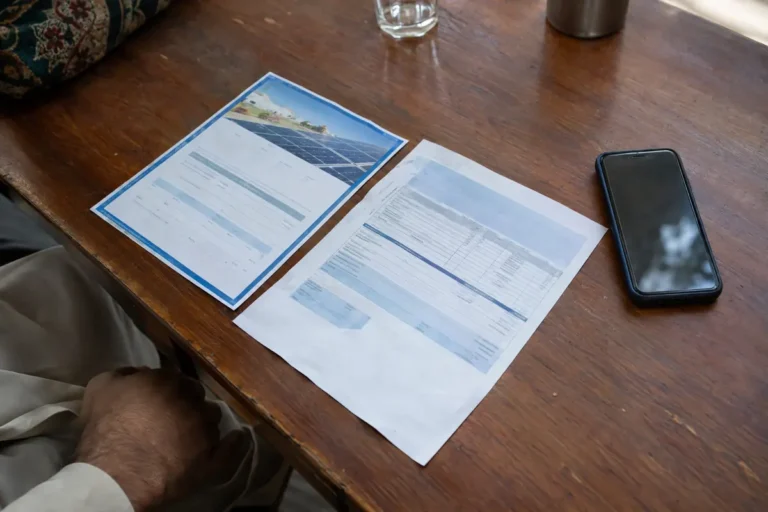 Buying Guides Solar Panel Warranty in Pakistan: Product vs Performance, and What Dealers Honour
Product warranty, performance warranty and dealer warranty are three different promises. Here is what each covers in Pakistan and how to claim it. · 8 min read
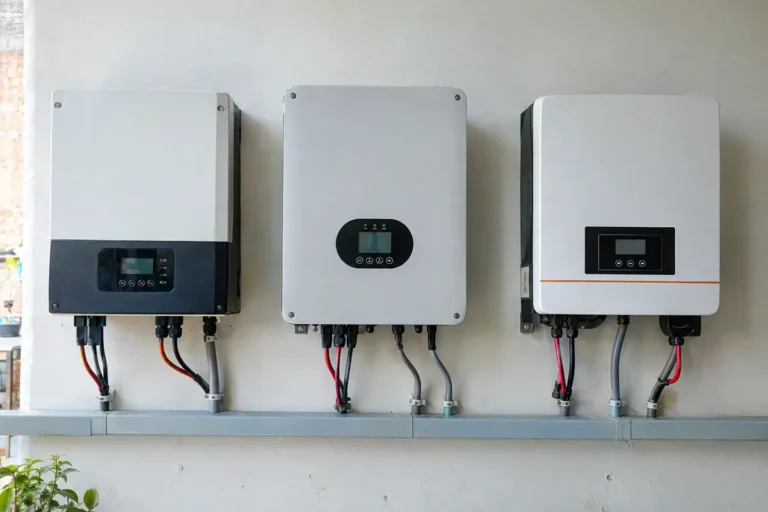 Buying Guides Hybrid Inverter Brands in Pakistan Compared: What Actually Matters
The best hybrid inverter in Pakistan is the one that matches your panels, battery and grid plans. Compare brands on the specs that matter, not on stickers. · 8 min read