On this page
- What makes a panel bifacial
- Where the extra power really comes from
- A realistic estimate for a Pakistani rooftop
- What it does to your units and your rupees
- Practical installation choices that make bifacial pay
- Downsides people do not mention
- When bifacial is worth it, and when it is not
- What to do now
- Frequently asked questions
Bifacial solar panels in Pakistan are worth buying when the back of the panel can actually see light: a raised stand, a light-coloured roof and decent row spacing. On a low, tightly packed array over a dark surface, the rear side adds so little that you are really paying for an ordinary panel with an extra sheet of glass. Since most large TOPCon panels on the market are now bifacial anyway, the real question is usually how to install them, not whether to buy them.
This guide explains what the back side does, how much it can realistically add on a Lahore, Karachi or Multan rooftop, and the installation choices that decide whether the extra glass earns its keep.
What makes a panel bifacial
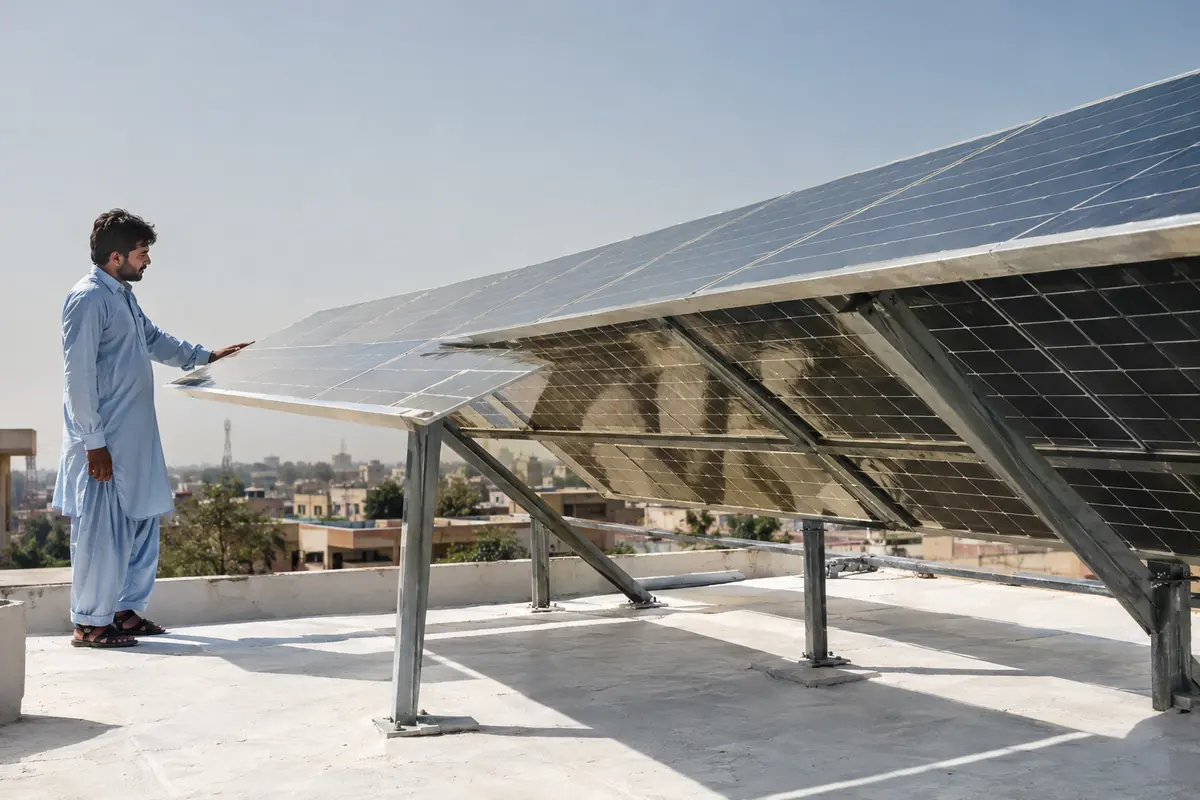
A standard (monofacial) panel has cells sealed between front glass and an opaque plastic backsheet, usually white. Light that hits the back is wasted. A bifacial panel replaces that backsheet with a second layer of glass, or occasionally a transparent backsheet, and uses cells that can convert light arriving from either side.
The front still does almost all the work. The rear side only receives light that bounces off the roof, walls, water tanks and anything else under or around the array. That reflected light is called albedo light, and it is much weaker than direct sunlight.
Two numbers on the datasheet tell you how good the rear side is:
- Bifaciality factor: rear efficiency as a percentage of front efficiency. PERC bifacial panels typically sit around 70 percent, TOPCon around 80 percent, and heterojunction (HJT) higher still. A higher number means each unit of reflected light is converted more effectively.
- Bifacial gain power ratings: many datasheets list the panel’s output at 5, 10, 15 or 20 percent rear gain. These are laboratory scenarios, not a promise. Your roof decides which column, if any, applies to you.
If you want the wider picture of how cell types compare, our page on the main types of solar panels covers mono, poly, PERC, TOPCon and HJT side by side.
Where the extra power really comes from
The rear side gain is a product of three things: how much light the surface reflects, how much of that reflected light the back of the panel can see, and the bifaciality factor. Drop any one of them and the gain collapses.
Surface reflectance (albedo)
Solar design software uses rough albedo values for common surfaces. Fresh grey concrete reflects around a quarter to a third of incoming light, dry asphalt and dark bitumen sheets much less, and a clean white reflective coating considerably more. Typical Pakistani roofs are plain concrete, often with a layer of mud-and-brick tiles or a dark waterproofing coat, so most start in the low-to-middle range.
| Surface under the array | Approximate reflectance | What it means for bifacial |
|---|---|---|
| Dark bitumen or tar sheet | Low (around 0.1) | Rear side contributes very little |
| Brick tiles, dusty roof | Low to moderate | Small gain, falls further as dust builds |
| Plain grey concrete | Around 0.25 to 0.35 | Modest gain if panels are raised |
| Fresh white reflective coating | High, but fades with dirt | Best realistic rooftop case |
| Galvanised sheet (shed roof) | Moderate when new, low when dirty | Gain drops as the sheet weathers |
These are planning figures used by design tools, not measurements of your roof. A white coating that looks bright in October can be grey with dust by May, especially in Multan, Faisalabad and the rest of central Punjab.
View of the ground (mounting height)
The back of a panel bolted 15 cm above the roof sees a narrow, shaded strip of concrete directly under itself. Raise the lower edge to a metre or more and the back side can see a much wider patch of lit roof. Height is the single biggest lever you control.
Shading of the reflecting surface
The array shades the roof beneath it. Tightly packed rows mean most of the roof under the panels is in shadow and reflects little. Wider row spacing, or a single long row on an elevated frame, leaves more sunlit surface for the rear to see.
A realistic estimate for a Pakistani rooftop
Here is a simple way to sanity-check any claim. Suppose the back of your panel receives about 10 percent as much light as the front, which is a reasonable outcome for a raised array over clean grey concrete. With a TOPCon bifaciality factor of about 0.8, the rear adds roughly 10 x 0.8 = 8 percent to front-side output, before losses from frame shading and dust.
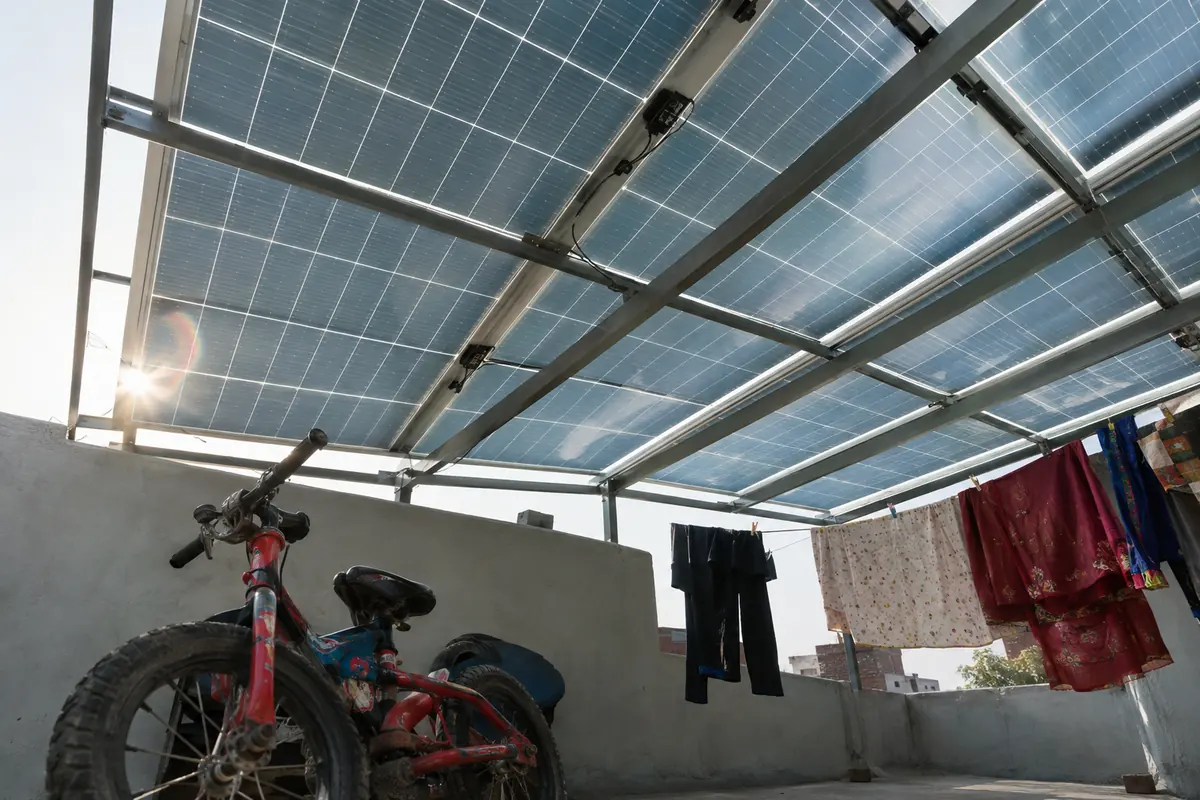
Now take the common Pakistani installation: panels on a low L-angle stand, rows close together, a brick-tile roof. The back might see 3 to 5 percent of front irradiance. The gain shrinks to roughly 2 to 4 percent. That is still free energy, but it will not change your payback much.
| Installation style | Rear light reaching the back | Likely rear gain (TOPCon) |
|---|---|---|
| Flush or very low stand, dark roof | Very little | Close to zero to about 2 percent |
| Standard stand, packed rows, tiled roof | Low | About 2 to 4 percent |
| Raised frame, grey concrete, wide spacing | Moderate | About 5 to 8 percent |
| Raised frame over fresh white coating | Higher | Upper single digits, sometimes more |
Treat these as engineering estimates for planning, not guarantees. They are worked out from the formula above, not from a published study of Pakistani homes. If a dealer quotes a 25 or 30 percent gain on a normal rooftop, ask which datasheet column they are reading from and how they expect your roof to reflect that much light.
What it does to your units and your rupees
To turn a gain percentage into units, start with your system’s normal output. A 5 kW array in Lahore at 5.2 peak sun hours and around 80 percent system efficiency makes roughly 20.8 units a day, or about 7,600 units a year. A 4 percent rear gain adds around 300 units a year. A 7 percent gain adds roughly 530.
Use the solar panel calculator to get your own baseline from your bill, then apply a conservative rear gain. Multiply the extra units by what each unit saves you to see the yearly value. Under net billing, which applies to new applicants since February 2026, exported units earn a rate linked to the national average purchase price, reported at about Rs10 to 11 per unit, while units you use yourself avoid your full slab tariff. Extra midday units from the rear side are worth most if you can use them in the house.
On cost, the comparison is per watt, not per panel. Today a 585 W panel starts from Rs 23,400, which works out to Rs 40 per watt, against a market average of Rs 41.3 per watt across all listed panels. Because most 580 W to 620 W TOPCon stock is already bifacial, the honest comparison is often bifacial versus bifacial, and the choice comes down to brand, warranty and the per-watt figure. See the price per watt breakdown for how different wattages compare.
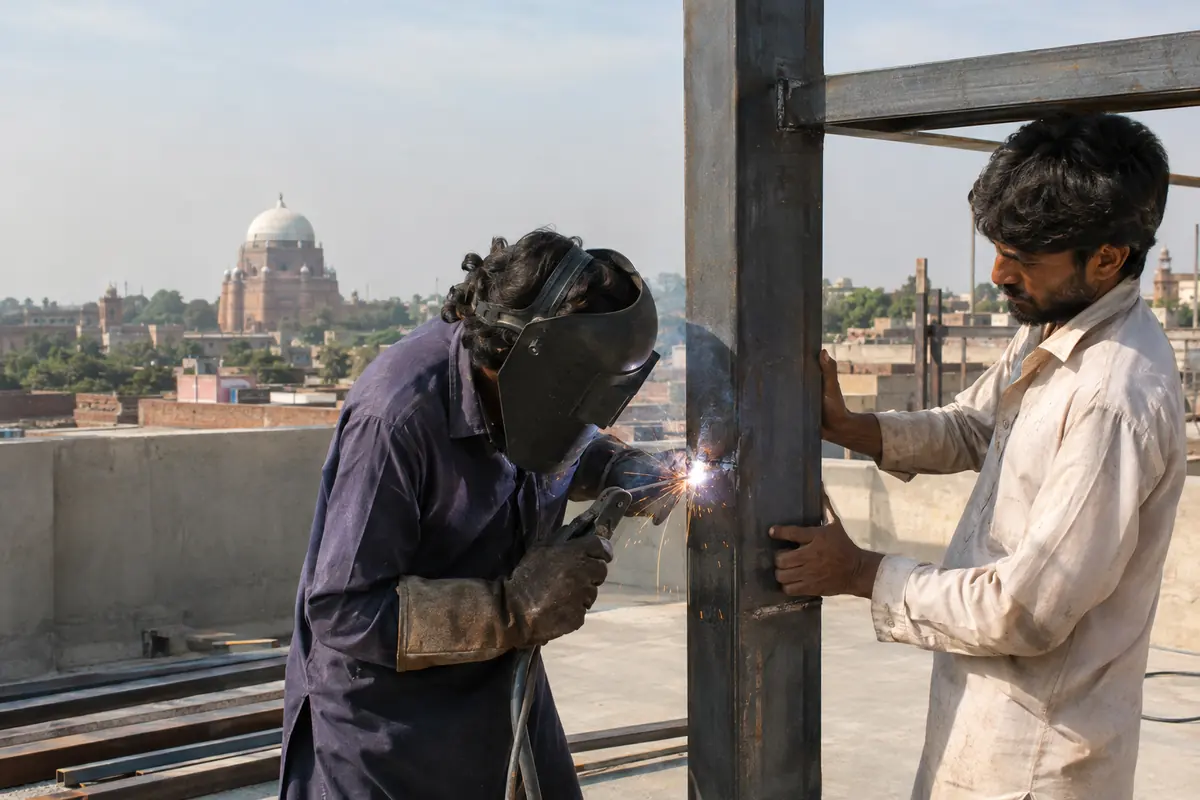
Where bifacial does cost you extra is in the structure. A taller, stronger stand uses more steel and more labour. If raising the array is what unlocks the rear gain, include that cost in your sums before deciding it is worth it.
Practical installation choices that make bifacial pay
Raise the lower edge
Aim for the lowest edge of the panel to be well clear of the roof, ideally a metre or more, instead of the usual few inches. Many Pakistani homeowners already like elevated structures so they can use the roof underneath for drying clothes or parking a water tank. That same height helps bifacial gain. Check the solar panel stand options and costs before you commit, because a raised frame must handle wind loads safely.
Keep rails and junction boxes off the back
Horizontal rails running directly behind the cells shade the rear side. Better structures clamp the panel near the ends, as the manufacturer’s manual specifies, and keep cable trays and junction boxes away from active cell area. Ask your installer how the rear side will be kept clear.
Lighten the roof under the array
A white reflective roof coat does two jobs in Pakistan. It lifts rear-side light and lowers heat on the top floor during summer. Dust will reduce its effect, so plan to rinse it when you clean the panels. The solar panel cleaning guide covers safe washing for both glass surfaces.
Space rows wisely
Row spacing is usually set to avoid front-side shading in winter, when the sun is low. A little extra space beyond that also leaves more lit roof for the back side. On small 5 marla roofs there is rarely room for this, which is one reason bifacial gain on compact urban homes is usually modest.
Downsides people do not mention
- Weight: glass-glass panels are usually a few kilograms heavier than glass-backsheet panels of similar size. Twenty panels add up. Older roofs need a structural check before a heavy, raised array goes up.
- Handling: two glass sheets make the panel stiffer but less forgiving of point loads. Workers should never stand on them, and they should be carried by the frame, not the junction box.
- Frameless versions: a few bifacial models are frameless. These need specific clamps. Most panels sold in Pakistan are framed, but check before buying a structure.
- Misleading ratings: some listings advertise the “with bifacial gain” wattage as if it were the nameplate. A 585 W panel is a 585 W panel at standard test conditions. Anything above that is a scenario.
- Fakes and relabels: genuine bifacial stock has transparent backs where you can see cells and gaps. Always verify the serial with the manufacturer. Our Jinko panel verification guide shows how one brand’s check works.
When bifacial is worth it, and when it is not
Bifacial makes good sense if you are installing on a raised frame anyway, if you can keep the surface under the array light and reasonably clean, or if you are building a ground-mounted array for a farmhouse or tubewell where panels sit high over sand or dry soil. It also makes sense simply because the best value high-wattage panels on the market are already bifacial, so you lose nothing by choosing them.
It is not worth paying a noticeable premium for bifacial if your panels will sit low on a crowded roof, if you are putting them on a tin shed with the rear side facing dark, dusty sheet, or if the extra structure cost outweighs a few percent more units. In those cases a monofacial panel with a better per-watt price is the smarter buy.
A quick test: stand where your panels will go at midday and look down. If the surface you see is dark, dusty or in deep shadow, plan your numbers without any bifacial gain. Anything extra is a bonus.
What to do now
- Decide how high your structure will be. This matters more than the panel choice.
- Compare per-watt prices of the exact models offered. Check the best solar panels in Pakistan list for brands with reliable local warranty support.
- Read the bifaciality factor on the datasheet and use a conservative gain (2 to 5 percent for a normal roof) in your payback sums.
- If you are re-waterproofing the roof anyway, choose a light, reflective coat.
- Ask the installer to keep rails and cables off the active rear surface.
Done this way, bifacial panels in Pakistan give you a small, steady bonus on top of a sound system. Bought on the promise of a huge rear-side gain, they mostly give you heavier panels and a disappointing app screen.
Frequently asked questions
Do bifacial solar panels work on a flat concrete roof?
Yes, but the extra output depends on how high the panels sit and how bright the roof surface is. On a raised stand over a light-coloured roof the back side contributes noticeably; flush on a dark surface it adds very little.
How much extra power does a bifacial panel give?
There is no fixed number. The rear gain depends on ground reflectance, mounting height, row spacing and the panel's bifaciality factor. On typical Pakistani rooftops expect a single-digit percentage gain, and treat any dealer promise of 20 to 30 percent with suspicion.
Are bifacial panels heavier than normal panels?
Most bifacial modules use glass on both sides, so they are usually a few kilograms heavier than a glass-backsheet panel of the same size. Check the datasheet weight and make sure your stand and roof can carry it.
Should I paint my roof white for bifacial panels?
A white or light reflective coating under the array raises rear-side light and also keeps the roof cooler. It helps most when the panels are raised well above the surface. It will not rescue a low, tightly packed installation.
Is the bifacial price higher in Pakistan?
In 2026 most high-wattage TOPCon panels sold in Pakistan are already bifacial, so the gap with monofacial stock is often small. Compare the per-watt price of the exact models on the day you buy.
More from the blog
 Solar Tech How to Read a Solar Panel Datasheet (for Pakistani Heat)
Pmax, Voc, temperature coefficient, NMOT: what each datasheet line means, which ones matter in a Pakistani summer, and how to compare two panels properly. · 8 min read
 Solar Tech Winter Solar Checklist: 9 Things to Do Before December
Fog, smog and short days cut solar output every winter. These 9 checks on panels, tilt, battery, inverter and bills help your system get through December. · 8 min read
 Solar Tech How Much Do Solar Panels Produce in Winter Fog and Smog?
Smog and fog can cut solar output sharply in Punjab's winter. What a 5 kW system really makes on hazy days, why, and what you can do to recover lost units. · 8 min read