On this page
- First, two very different machines share the word “hybrid”
- The brands you will meet, grouped by how they are sold
- Specifications that decide the best hybrid inverter in Pakistan for your house
- Why net billing makes this choice matter more in 2026
- A scoring sheet you can use at the shop
- Warning signs at the dealer
- Cost: compare the whole package
- What to do now
- Frequently asked questions
The best hybrid inverter in Pakistan is not a particular brand. It is the model whose PV input range, battery voltage, grid export ability and after-sales support fit your system and your city. A well-known name in the wrong configuration will disappoint you, while a less famous model with the right specs and a service centre nearby can run trouble-free for years.
This guide groups the brands you will actually see at dealers, then walks through the specifications that decide whether a hybrid inverter suits a Pakistani home.
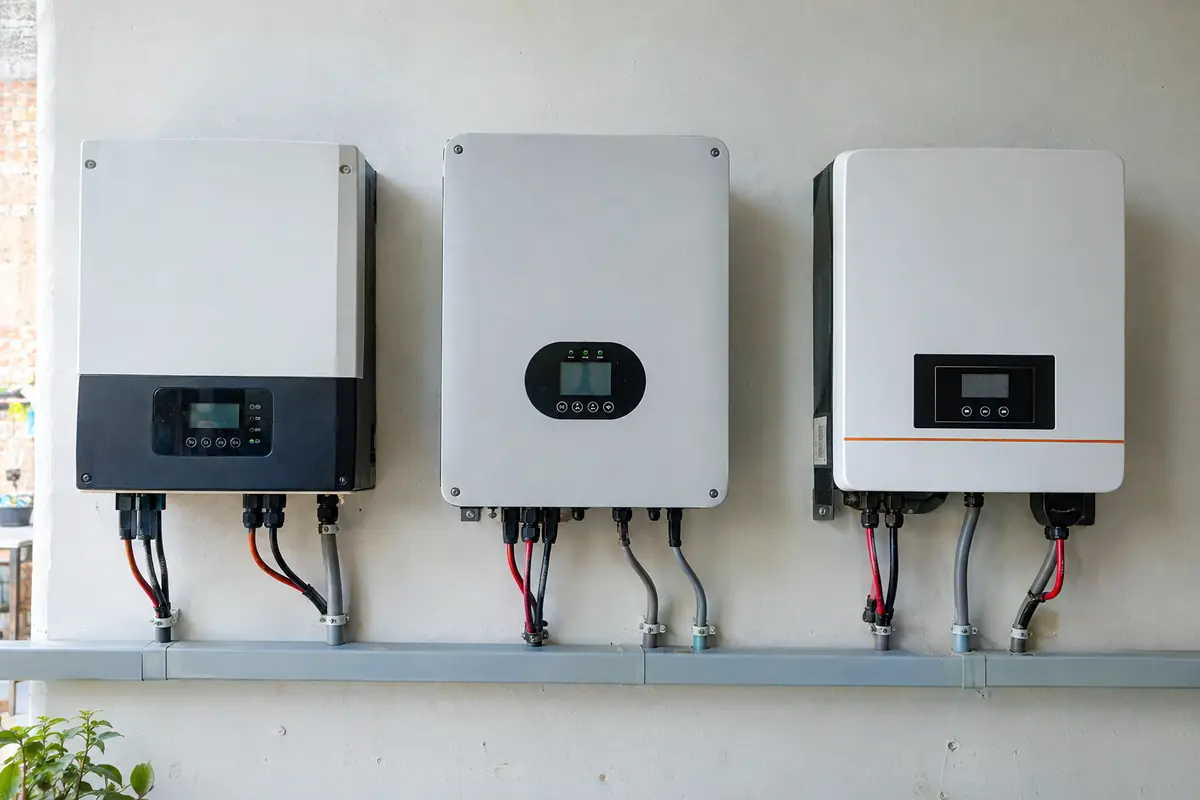
First, two very different machines share the word “hybrid”
Before comparing brands, check which kind of hybrid you are being offered. Shops on Hall Road and Brandreth Road sell both under the same label.
| Feature | Grid-tie hybrid (on-grid hybrid) | Off-grid hybrid (solar UPS style) |
|---|---|---|
| Exports surplus to WAPDA/DISCO grid | Yes, suitable for net metering or net billing | No |
| Uses the grid | Runs in parallel with it | Charges batteries or passes grid through |
| Behaviour during load shedding | Switches backup loads to battery and panels | Keeps running from battery and panels |
| Battery | Usually optional on newer models | Often required or strongly preferred |
| Zero-export / CT clamp | Usually included or available | Not applicable |
| Typical buyer | Homes wanting bill savings plus backup | Homes with no net metering plans, or very weak grid |
If you intend to apply for net metering or net billing, you need a grid-tie hybrid (or a plain on-grid inverter), and the model should be on your DISCO’s accepted list. An off-grid hybrid will throw away your midday surplus once the battery is full. Our guide to inverter types and prices covers plain on-grid units too.
The brands you will meet, grouped by how they are sold
Rather than rank brands, it is more useful to understand the three broad groups on the Pakistani market. Within each group, quality varies by model and batch, so judge the specific unit.
Global inverter manufacturers
Names such as Huawei, Sungrow, Solis, GoodWe, Growatt, Deye, Fox and Fronius are manufacturers selling under their own brand worldwide. Their grid-tie hybrids are widely used for net metered homes in Pakistan. Strengths are published datasheets, certification documents and firmware updates. The thing to check is local support: who is the authorised distributor in Pakistan, and does the warranty run through them or through the dealer.
Pakistani brands
Brands such as Inverex, Knox, Fronus, Itel, Crown Micro, Ziewnic and MaxPower sell ranges designed for local conditions, from small 3 kW off-grid units to large three-phase grid-tie hybrids. Many of these products are manufactured to the brand’s specification by factories abroad, which is normal across the industry. Their advantage is often a wide dealer network and service centres in more cities. Check carefully which models in the range are true grid-tie hybrids and which are off-grid.
Unbranded and grey imports
You will also find inverters with little-known names, generic labels or no Pakistani distributor at all. Some work fine, but warranty claims are hard and spare parts may not exist. If the price is far below the brands above, ask why.
The solar companies in Pakistan page lists installers who usually stock several of these brands, so you can compare models side by side.
Specifications that decide the best hybrid inverter in Pakistan for your house
Read these on the datasheet, not the box. Bring the sheet to your installer and check each one against your panel layout.
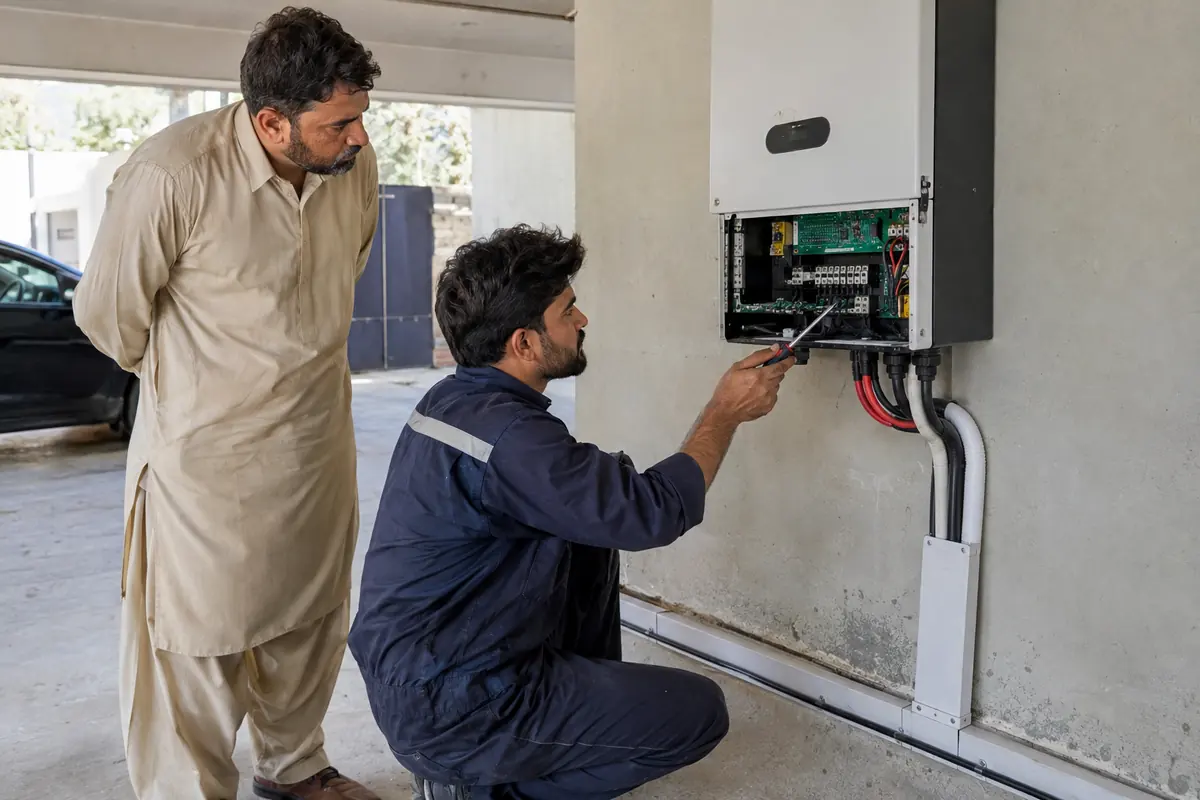
1. Rated AC power and phase
Match the inverter to your sanctioned load and the loads you actually run. A 6 kW single-phase inverter suits a typical 5 to 10 marla house. Larger homes on three-phase supply with several ACs usually need a three-phase hybrid, which spreads the load and is often what DISCOs ask for on larger connections. Confirm with your DISCO before buying.
2. Maximum PV input and MPPT voltage range
Two different numbers matter here. Maximum PV power tells you how many watts of panels the inverter accepts (often more than its AC rating). MPPT voltage range tells you how many panels can be wired in series per string. With modern 580 W to 620 W panels, the open-circuit voltage of each panel is high, and a long series string on a cold January morning can exceed the inverter’s maximum DC voltage and damage it. Ask your installer to show the cold-weather string voltage calculation. Our page on series vs parallel wiring explains why this matters.
3. Number of MPPT inputs
Two independent MPPT inputs let you put panels on two roof faces or two different tilts without one dragging the other down. For roofs with water tanks or mumty shading on one side, two MPPTs are worth having.
4. Battery voltage and type
- 24V low voltage: small systems only. Higher currents mean thicker cables and more losses.
- 48V low voltage: the most common choice for homes. Wide choice of lithium (LiFePO4) packs and compatible with tubular banks.
- High voltage: efficient for larger systems but usually ties you to specific battery brands.
For lithium, check that the inverter talks to the battery’s BMS (CAN or RS485) and that your battery brand appears on the inverter’s compatibility list. The solar battery price guide compares lithium and tubular options.
5. Battery-less operation
Many buyers start without a battery and add one later. Confirm the model can start up and run on panels alone during the day. Some designs need a battery connected, or behave unstably without one.
6. Transfer behaviour during load shedding
Grid-tie hybrids switch backup loads to battery and panels when the grid fails. The switching time decides whether desktop computers, routers and LED lights flicker or restart. Datasheets usually list it in milliseconds. Also check which circuits are on the backup output; whole-house backup needs a larger inverter and battery than “fans, lights and fridge” backup.
7. Heat handling and protection rating
Inverters de-rate (reduce output) when they get too hot. Pakistani summers push garage and roof temperatures above 45 degrees Celsius. Check the full-power temperature range on the datasheet and install the unit in shade with airflow. An IP65 or IP66 rating protects against dust and rain if it has to go outdoors; IP20 or IP21 units must stay indoors.
8. Monitoring and settings access
Wi-Fi or 4G dongles let you see daily units and spot faults early. Check whether the app works reliably in Pakistan, and whether you or only the installer can change key settings such as battery priority, grid charging and export limits.
Why net billing makes this choice matter more in 2026
Until early 2026, many homeowners bought a plain on-grid inverter, exported everything they did not use during the day and took it back unit for unit at night. NEPRA’s Prosumer Regulations 2026, notified in February, changed that for new applicants. Exports now earn a buyback rate linked to the national average energy purchase price, reported at about Rs10 to 11 per unit, while imports are billed at your normal slab tariff, which is several times higher. Homes whose agreements or applications were in by 8 February 2026 keep the old net metering terms until their agreement expires, and new agreements run for five years.
For a new connection this tilts the sums towards using your own solar, including storing some of it for the evening. That is exactly what a grid-tie hybrid does well. Three features become more valuable as a result:
- Clean battery integration, so midday surplus charges the battery before it goes to the grid at the low buyback rate.
- Flexible priority and timed charge/discharge settings, so the battery covers the expensive evening hours and load shedding rather than emptying by 7 pm.
- Export limiting with a CT clamp, useful if your application is still pending or your transformer has hit its solar limit.
None of this means every home needs a battery today. It means that if you are buying an inverter now, choose one that can take a battery later without being replaced. The full solar system price guide shows how the battery changes the total.
A scoring sheet you can use at the shop
| Check | What to look for | Weight |
|---|---|---|
| Grid export ability | True grid-tie hybrid if you want net metering | Essential |
| Service centre in your city | Name, address, how warranty claims are handled | Essential |
| PV voltage and power | Fits your panel strings with cold-weather margin | Essential |
| Battery compatibility | 48V LiFePO4 with BMS communication, or your chosen type | High |
| Battery-less start | Stated in the manual | High if starting without battery |
| Two MPPTs | Needed for split roofs or shading | Medium |
| Heat de-rating | Full output at high ambient temperature | Medium |
| IP rating | IP65 or better if mounted outside | Medium |
| Monitoring | Working app, local data access | Nice to have |
Score each model you are offered. If two models tie, buy the one with the better local service, not the cheaper one.
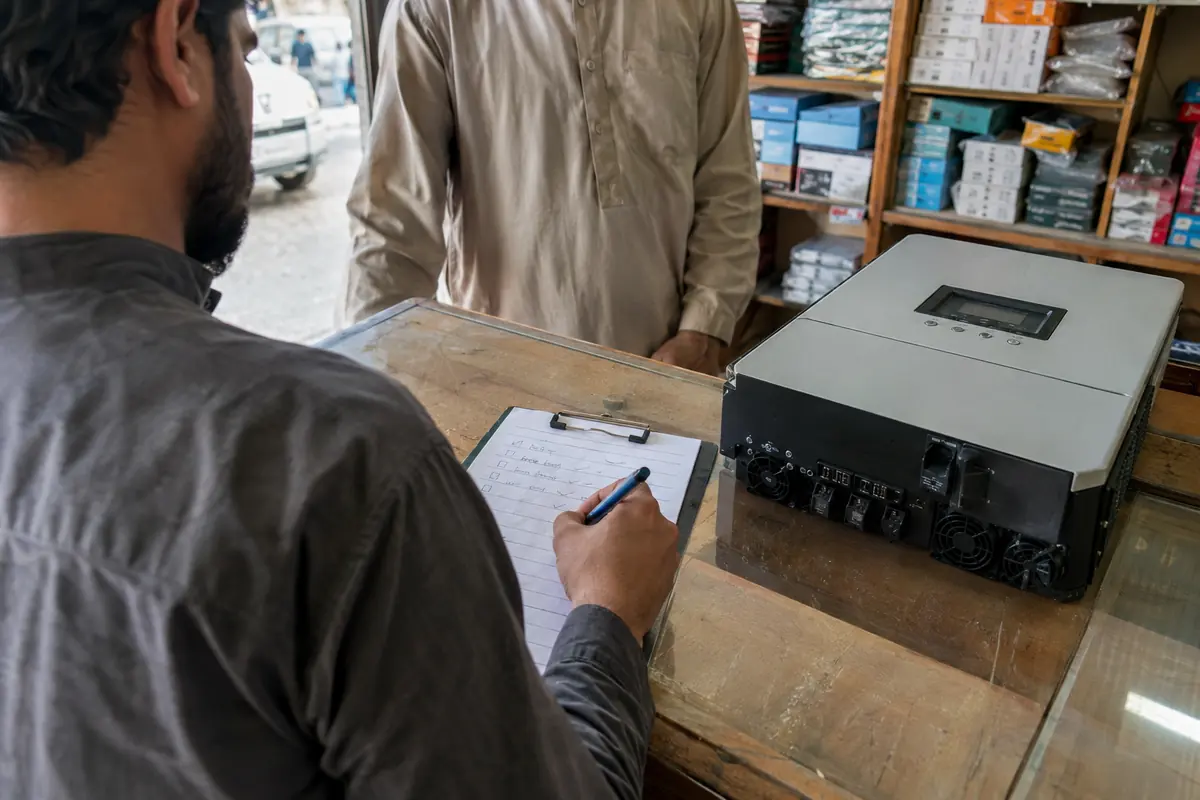
Warning signs at the dealer
- The “hybrid” on offer cannot export, but you are told it will work with net metering.
- The PV wattage on the box is quoted as if it were the AC output (for example “6 kW” on a unit that delivers far less AC).
- No printed datasheet or manual, only a brochure.
- Warranty described verbally as “dealer warranty” with no manufacturer or distributor name.
- Serial number on the unit does not match the box or the warranty card.
- Installer plans string lengths without checking panel voltage against the inverter limit.
Cost: compare the whole package
Hybrid inverter prices move with the dollar, import duties and stock levels, so we do not list them here. Budget discussions in mid-2026 included talk of higher duties on inverters and batteries, but we could not confirm final rates, so ask the dealer whether a quote is valid for a fixed number of days. Lithium battery prices are worth watching too: China is phasing out its export tax rebate on batteries, with the remaining rebate due to end on 1 January 2027, which could push imported battery prices up, though that is not certain. Get at least three quotes for the same size and type, and compare the inverter together with the battery it will run and the monitoring dongle, which is sometimes sold separately. On the full system, panels are usually the larger share: a 5 kW array of 585 W panels currently costs about Rs 210,600 for 9 panels. See the 5kW system price breakdown for how inverter, battery and installation add up.
What to do now
- Decide whether you want net metering or net billing. That settles grid-tie hybrid versus off-grid hybrid.
- Fix your panel count and layout first, then pick inverters that suit those strings.
- Choose battery voltage and chemistry, and confirm compatibility in writing.
- Shortlist two or three models from brands with a service centre near you.
- Score them with the table above and only then compare price.
Choosing this way means your inverter fits your house rather than the other way round, and that, more than the logo, is what makes it the best hybrid inverter for you.
Frequently asked questions
Which is the best hybrid inverter brand in Pakistan?
No single brand is best for every house. Choose a model whose PV voltage range, battery type, grid export ability and phase match your system, from a brand with a working service centre in your city. Then compare price.
Can a hybrid inverter run without a battery?
Many newer models can run on panels alone during the day, but some older and budget designs need a battery connected to start or to stay stable. Confirm battery-less operation in the datasheet or manual, not just from the dealer.
What is the difference between an on-grid hybrid and an off-grid hybrid inverter?
An on-grid (grid-tie) hybrid can legally export surplus power to the grid for net metering or net billing and usually has a CT for zero-export control. An off-grid hybrid charges from the grid but cannot export, so surplus solar is wasted when the battery is full.
Is a 48V or high-voltage battery better?
Most home hybrid inverters in Pakistan use 48V low-voltage batteries, which are widely available and easy to service. High-voltage batteries are more efficient at large sizes but tie you to specific inverter and battery pairings.
Do I need a three-phase hybrid inverter?
If your house has a three-phase connection and large loads on all phases, a three-phase hybrid keeps loads balanced and DISCOs often ask for it on larger connections, so confirm before buying. Single-phase homes should use single-phase units.
More from the blog
 Buying Guides Solar for Shops and Small Businesses in Pakistan: Sizing and Payback
How to size a solar system for a shop or small business in Pakistan from your bill and your loads, and how to work out payback at your commercial rate. · 8 min read
 Buying Guides 15 Questions to Ask Your Solar Installer Before You Pay
Before you pay a solar installer in Pakistan, ask these 15 questions about panels, inverter, structure, wiring, net metering, payment and after-sales. · 8 min read
 Buying Guides Solar Panel Warranty in Pakistan: Product vs Performance, and What Dealers Honour
Product warranty, performance warranty and dealer warranty are three different promises. Here is what each covers in Pakistan and how to claim it. · 8 min read