On this page
Lithium (LiFePO4) batteries cost more to buy but usually cost less per year of use, because they last several times longer, can be discharged more deeply and need no maintenance. In a rough 2026 comparison for a typical 48 V hybrid system, a tubular bank works out to roughly four times the cost per year of a comparable lithium battery when both are cycled daily. Tubular still has a place when the battery is used only for short, occasional backup and the upfront budget is tight.
The lithium vs tubular battery for solar decision is really a question about how often the battery works. Here is how to make it with numbers instead of sales talk.
What you are actually comparing
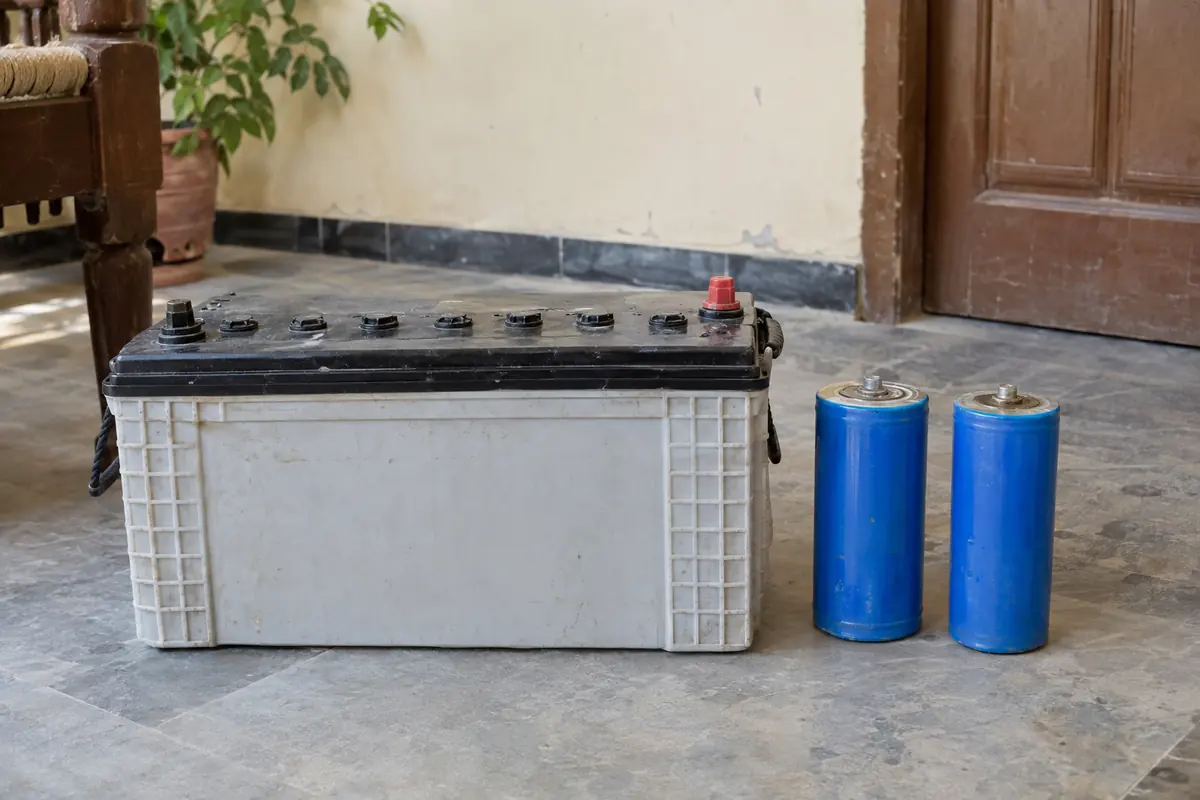
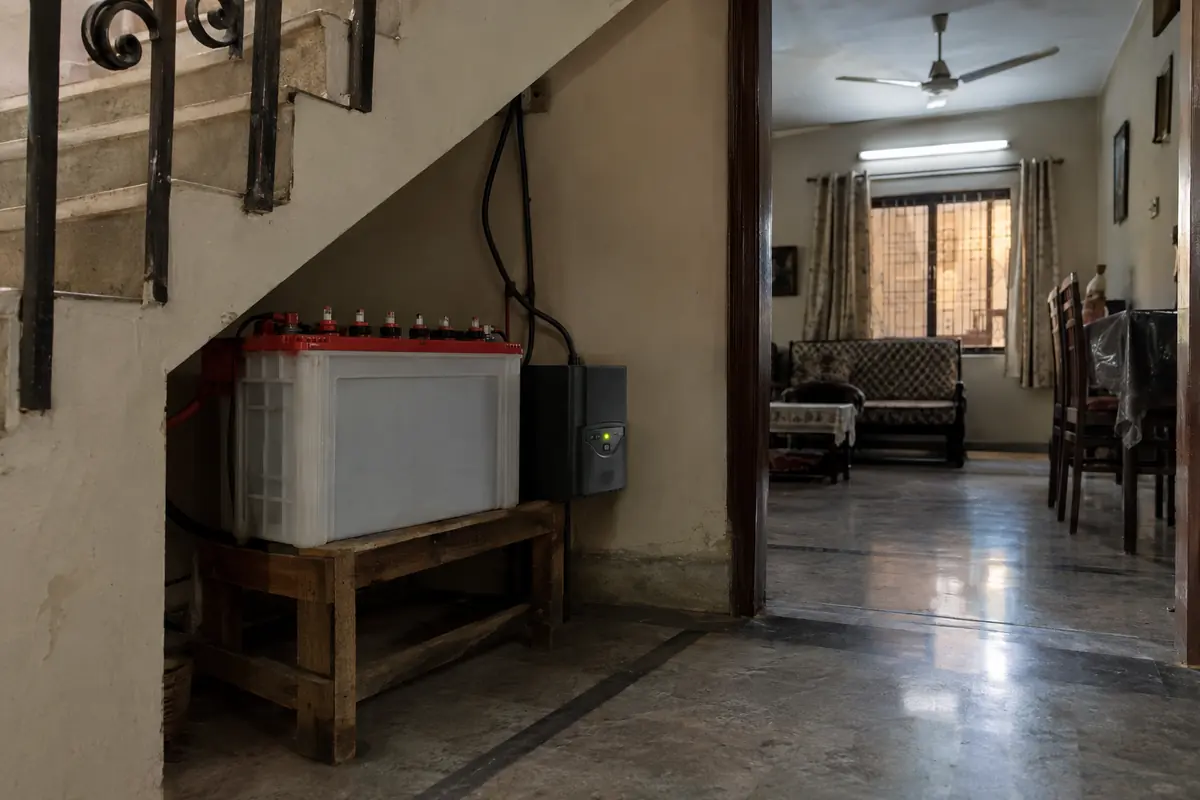
Tubular batteries are flooded lead-acid batteries with tube-shaped positive plates, built for deep cycling. In Pakistan they are usually 12 V units of roughly 150 to 230 Ah, sold by local brands and widely used with UPS and off-grid inverters. You top them up with distilled water and keep them in a ventilated place.
Lithium solar batteries sold for homes are almost always LiFePO4 (lithium iron phosphate). They come as 24 V or 48 V packs (often written 25.6 V or 51.2 V) with a built-in battery management system (BMS). A common home size is 51.2 V 100 Ah, which stores about 5.1 kWh.
The sticker price comparison is misleading because the two batteries do not deliver the same usable energy or last the same number of years. You have to compare three things: usable capacity, life, and cost per stored unit.
Usable capacity: a 9.6 kWh tubular bank is not 9.6 kWh
A 12 V 200 Ah tubular battery stores 2.4 kWh on paper. To get reasonable life, lead-acid should not be discharged much below half, so about 50% is a sensible daily depth of discharge. That leaves around 1.2 kWh usable per battery.
A 48 V hybrid inverter needs four 12 V batteries in series: 9.6 kWh on paper, about 4.8 kWh usable.
A 51.2 V 100 Ah LiFePO4 battery stores about 5.1 kWh, and these batteries are routinely used to 80 to 90% depth of discharge. Call it about 4.6 kWh usable.
So for a 48 V system, four tubular batteries and one 5 kWh lithium battery give you roughly the same usable energy each night. That is the fair comparison.
Upfront cost in 2026
Battery prices move with the rupee and import costs, so treat these as a snapshot and confirm with dealers:
- Dealer listings for 12 V tubular batteries of around 200 to 230 Ah from established local brands were roughly Rs 55,000 to Rs 85,000 each in mid to late 2026.
- Online retail listings for 51.2 V 100 Ah (about 5.1 kWh) LiFePO4 batteries were around Rs 210,000 to Rs 220,000 in October 2026. Premium brands cost more.
That puts a four-battery tubular bank at roughly Rs 220,000 to Rs 340,000, and a comparable lithium battery at about the same or slightly less. In other words, at 48 V the “lithium is too expensive” argument has mostly disappeared. At 24 V with only two tubular batteries, tubular is still clearly cheaper upfront. Check current prices on our solar battery price page.
One thing to watch: China, the source of most lithium cells sold here, has been phasing out its export tax rebate on batteries, with the remaining rebate scheduled to reach zero on 1 January 2027. That could push import prices up in early 2027, though local prices also depend on the rupee, duties and stock levels, so this is a possibility rather than a forecast.
Life: where the real difference is
Tubular batteries in daily solar use face two enemies in Pakistan: heat and partial charging. A widely used engineering rule is that lead-acid battery life roughly halves for every 8 to 10°C that the battery sits above 25°C. A battery in a hot store room in Multan in June can easily run well above that. And on hazy winter days, a solar system often fails to fully charge a lead-acid bank, which causes sulphation and permanent capacity loss.

Under these conditions, many tubular batteries that are cycled every day need replacing in about 2 to 4 years. Dealers who sell both types commonly quote this range, and it matches what installers see in the field. With careful maintenance and backup-only use, tubular batteries can last longer.
LiFePO4 batteries for home storage are typically rated for around 6,000 cycles. Check the depth of discharge and end-of-life capacity that rating assumes, because sellers do not always state them. At one cycle a day that is over 16 years on paper. Real life will be shorter because of heat and calendar ageing, so planning on 8 to 12 years is more realistic. Lithium also handles partial charging without damage, which suits cloudy and foggy days.
Cost per year and cost per stored unit
Here is the comparison for a 48 V system cycled once a day, using midpoint prices from the ranges above. Your figures will differ, so plug in the quotes you receive.
| Tubular bank (4 × 12 V 200 Ah) | Lithium (51.2 V 100 Ah) | |
|---|---|---|
| Upfront cost (illustrative) | Rs 280,000 (4 × Rs 70,000) | Rs 215,000 |
| Usable energy per day | about 4.8 kWh | about 4.6 kWh |
| Expected life with daily cycling | about 3 years | about 10 years |
| Cost per year | about Rs 93,000 | about Rs 21,500 |
| Units delivered over its life | about 5,250 | about 16,800 |
| Cost per stored unit | about Rs 53 | about Rs 13 |
| Round-trip efficiency (typical) | about 80% | about 95% |
| Maintenance | Water top-up, terminal cleaning | None beyond keeping it cool |
The cost per stored unit is the number that matters most, and net billing makes it easy to judge. Under NEPRA’s 2026 rules for new connections, a unit you export earns a buyback rate reported at about Rs 10 to 11, while a unit you import in the evening is billed at your slab rate, roughly Rs 37 to 55 before taxes according to reports. So storing a midday unit for the evening is worth roughly the difference, often Rs 25 or more.
If storing that unit in a tubular battery costs around Rs 53, the battery costs more than it saves, and a daily-cycled tubular bank can quietly turn the battery part of your solar system into a loss. At roughly Rs 13 per stored unit, lithium sits comfortably below the value of each shifted unit, so it pays for itself through the evening hours. Plug in your own tariff slab: the higher your slab, the stronger the case for lithium.
The lower efficiency of lead-acid adds to the gap. About a fifth of the solar energy you put into a tubular bank is lost as heat, while lithium loses only a small fraction. On a small system in winter, that difference is noticeable.
When tubular still makes sense
Tubular is not dead. It is the sensible choice in a few situations:
- Backup only, not daily cycling. If your hybrid inverter keeps the battery full and only uses it during an hour or two of load shedding a few times a week, the battery does far fewer cycles and the life gap narrows a lot.
- Small 12 V or 24 V UPS systems. For a 1 kVA UPS running fans and lights, one or two tubular batteries are a low upfront cost and widely serviceable.
- Very tight budgets. If the choice is a tubular battery now or no battery at all, tubular gives you backup today. Just budget for replacement.
- Older inverters without lithium support. If your inverter cannot be set for lithium charging, pairing it with tubular is safer than forcing a lithium battery onto the wrong settings.
Compatibility checks before you buy lithium
- Voltage must match the inverter. A 24 V inverter needs a 24 V battery, and a 48 V inverter needs a 48 V battery. There is no adapter that fixes a mismatch.
- BMS communication. Most modern hybrid inverters talk to lithium batteries over CAN or RS485. Ask the seller to confirm the battery is on your inverter’s compatibility list, or that it works in a user-defined mode with the correct voltages.
- Charge and discharge current. A 100 Ah lithium pack may limit continuous current. If you plan to run an inverter AC from the battery at night, check that the battery’s rated discharge current covers it. Our inverter price guide lists common hybrid models and their battery voltages.
- Warranty in writing. Ask for the warranty period, the cycle count it covers, and who in Pakistan honours it. A long warranty from a seller with no service centre is worth little.
- Genuine capacity. Some cheap lithium packs use recycled cells or overstate their capacity. Buy from established sellers and ask for a capacity test or at least a display showing the BMS reading.
How much battery do you need?
Size the battery for the loads you want during outages, not for the whole house:
- List what must run: for example 5 fans at 70 W, 8 LED lights at 12 W, a fridge averaging around 150 W, and a router at 15 W. That is roughly 600 W.
- Multiply by the hours of load shedding you want to cover. For 4 hours, that is 2.4 kWh.
- Add about 20% for inverter losses and margin, giving roughly 2.9 kWh usable.
That is one 24 V 100 Ah lithium battery (about 2.5 kWh) stretched a little, or one 48 V 100 Ah lithium battery with room to spare. With tubular, at 50% depth of discharge, you would need about 5.8 kWh of nameplate capacity, which is three 12 V 200 Ah batteries. Since inverters need two or four in series, that means four.
If you want to run an inverter AC through the night, the numbers grow quickly, and lithium becomes the only practical option. Our guide to on-grid vs hybrid vs off-grid solar covers how to split backed-up and grid-only circuits so the battery stays affordable.
The bottom line
Judge a solar battery by cost per year and cost per stored unit, not by the price tag. If your battery will be charged and discharged daily, which is the case for most hybrid systems and almost all off-grid ones, LiFePO4 lithium is the better buy in 2026, and at 48 V it often costs about the same upfront as a tubular bank. Choose tubular only for small UPS setups, backup-only use, or when the budget leaves no other option.
When pricing a full system, compare packages with and without a battery on the 5 kW solar system price page and the wider solar system cost guide. If the battery is what is stretching your budget, see whether solar on installments lets you buy lithium now instead of tubular twice.
Frequently asked questions
Which battery is best for solar in Pakistan, lithium or tubular?
If the battery is cycled every day, a LiFePO4 lithium battery is usually cheaper over its life, even though it costs more upfront. If it is used only for occasional load shedding, a good tubular battery can still make sense on a tight budget.
How long does a tubular battery last with solar?
With daily charging and discharging in Pakistani heat, many tubular batteries last about 2 to 4 years. Used only as backup and maintained properly, they can last longer.
How long does a lithium solar battery last?
A good LiFePO4 battery rated for around 6,000 cycles can reasonably be expected to give 8 to 12 years of daily use, provided it is kept out of direct heat and the inverter settings are correct.
Can I use a lithium battery with my old inverter?
Only if the inverter has a lithium or user-defined battery setting with the right charging voltages. For full protection the inverter should also talk to the battery's BMS. Check compatibility with both the inverter and battery seller before buying.
How much battery do I need for 4 hours of load shedding?
Multiply the watts you want to run by the hours, then add about 20 percent. Fans, lights, a fridge and a router drawing about 600 W for 4 hours need roughly 2.9 kWh of usable storage.
Can I mix lithium and tubular batteries?
No. They charge at different voltages and behave differently under load. Use one chemistry per battery bank.
More from the blog
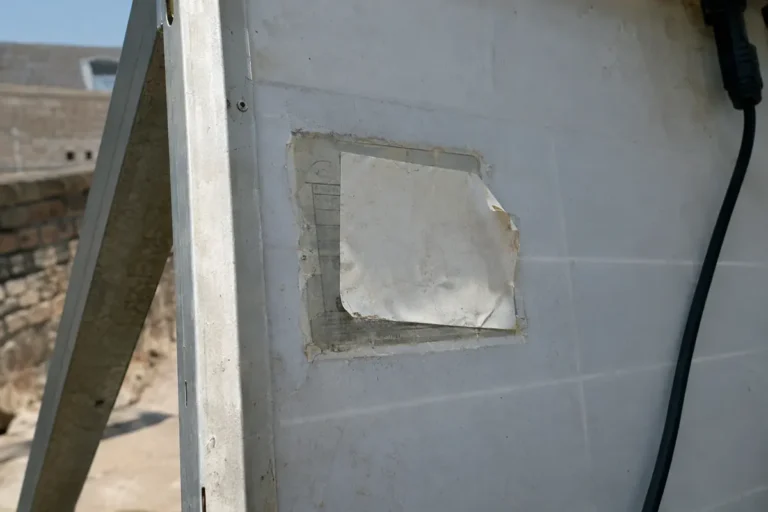 Buying Guides How to Spot Fake, Refurbished or Mislabelled Solar Panels in Pakistan
Copied brand labels, re-stickered wattages and washed used panels all turn up in Pakistan. How each trick works and how to catch it before you pay. · 8 min read
 Buying Guides A-Grade vs B-Grade Solar Panels: How Dealers Grade Stock and How to Check
What A-grade and B-grade really mean on a solar panel, why Hall Road prices differ for the same brand, and six checks to do before money changes hands. · 8 min read
 Buying Guides How Many Solar Panels Do I Need for a 5 Marla, 10 Marla or 1 Kanal House?
Work out how many solar panels your 5 marla, 10 marla or 1 kanal house needs from your bill, your city's sun hours and your roof, with worked examples. · 7 min read