On this page
- Three systems, three different jobs
- What happens when LESCO, IESCO or K-Electric cuts the power
- On grid vs hybrid solar system: the money side after net billing
- Upfront cost: where the extra money goes
- Off-grid: when it actually makes sense
- Matching the system to your house
- Hybrid details people get wrong
- What to do now
- Frequently asked questions
For most Pakistani homes with a grid connection, a hybrid system is the safest choice in 2026: it uses solar during the day, exports surplus under net billing, and keeps essential loads running through load shedding. Pick a pure on-grid system only if outages in your area are rare and you want the lowest upfront cost. Off-grid makes sense only where there is no reliable grid at all, such as farmhouses, remote shops and tubewell sites.
That is the short answer to the on grid vs hybrid solar system question. The rest of this guide explains why, with the details dealers often skip.
Three systems, three different jobs
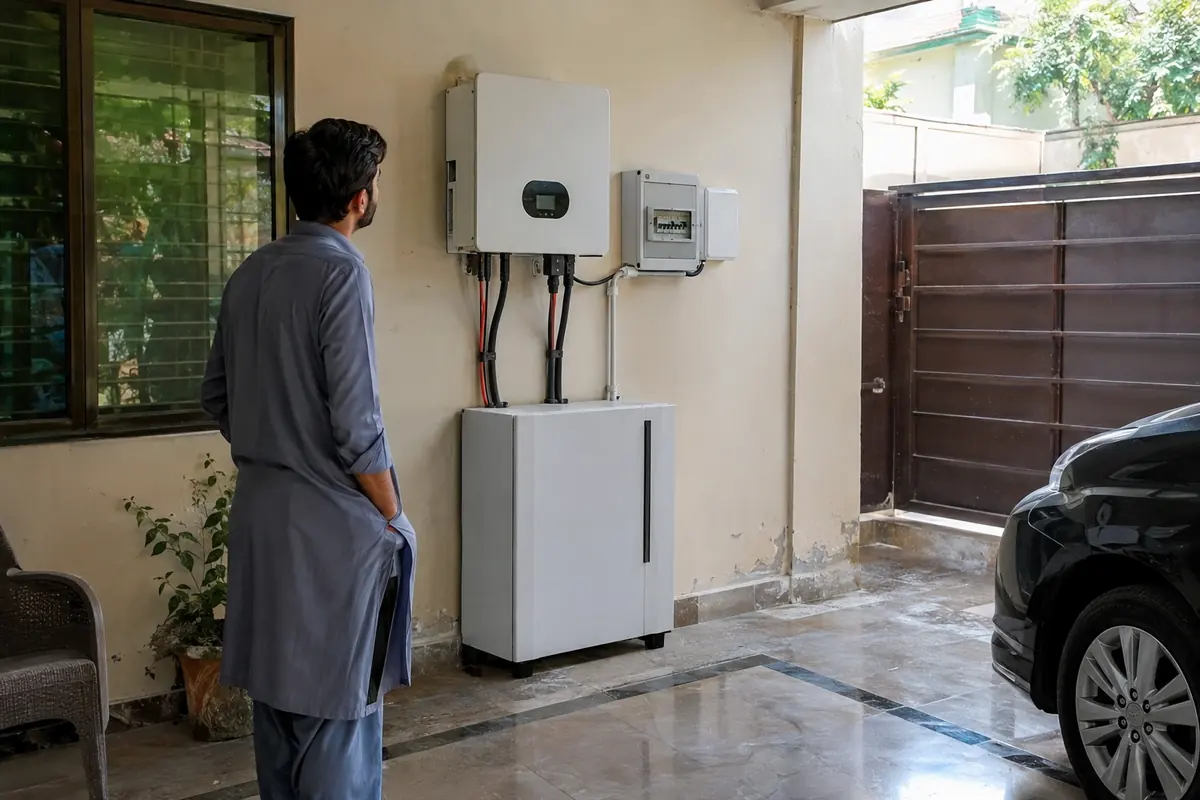
All three systems use the same solar panels. The panels in an on-grid system are identical to those on a hybrid or off-grid roof, whether they are 585 W TOPCon modules or older 545 W PERC stock. The difference is the inverter, whether there is a battery, and how the system talks to the grid.
- On-grid (grid-tied): Panels feed a grid-tied inverter. Solar power runs your house first, and any surplus goes to the grid through a bidirectional meter. There is no battery. When the grid goes down, the inverter shuts off.
- Hybrid: Panels feed a hybrid inverter that can do three things at once: run the house, charge a battery, and export surplus to the grid. When the grid fails, it switches the backed-up circuits to battery and solar.
- Off-grid: Panels feed an off-grid inverter and a battery bank. There is no export at all. The grid, if present, is used only as a charger or backup source, and you get no credit for extra solar.
One naming trap: many shops sell an “off-grid inverter with grid charging” as a hybrid. A true hybrid for net billing must be able to export power back to the grid in sync with the DISCO supply. If the spec sheet does not mention grid export or “grid-tie” capability, it is an off-grid inverter, whatever the box says.
What happens when LESCO, IESCO or K-Electric cuts the power
This is the question that decides most purchases, so it is worth being precise.
An on-grid inverter is required to stop feeding power the moment the grid disappears. This is called anti-islanding protection. Without it, your panels could push electricity into a line that a WAPDA lineman believes is dead. So even at noon in June, with your panels in full sun, an on-grid system gives you nothing during load shedding. Many first-time buyers only discover this after installation.
A hybrid inverter also disconnects from the grid during an outage, but it then builds its own small “island” for the circuits wired to its backup output. Fans, lights, the fridge, the router and often one inverter AC can keep running from solar during the day and from the battery at night. The switchover is usually fast enough that computers and Wi-Fi do not restart, though this depends on the model.
An off-grid system never depended on the grid in the first place, so load shedding does not affect it. Its limit is the battery. On a cloudy January week, an undersized battery bank will run flat and the house goes dark anyway.
| Situation | On-grid | Hybrid | Off-grid |
|---|---|---|---|
| Daytime load shedding, sunny | No power | Backup circuits run on solar | Runs on solar and battery |
| Night load shedding | No power | Runs on battery, if fitted | Runs on battery |
| Surplus solar on a sunny day | Exported for credit | Charges battery, then exported | Wasted once battery is full |
| Long foggy spell in winter | Grid covers the gap | Grid covers the gap | Battery drains, generator or grid charging needed |
| Needs a net billing application | Yes, to export | Yes, to export | No |
| Battery replacement cost over 25 years | None | Yes | Yes, and usually larger |
On grid vs hybrid solar system: the money side after net billing
The economics changed in 2026. Under NEPRA’s Prosumer Regulations 2026, notified on 9 February, new solar connections moved from unit-for-unit net metering to net billing. Exports and imports are now priced separately. The buyback rate for new prosumers is linked to the National Average Energy Purchase Price and was reported at about Rs 10 to 11 per unit, against roughly Rs 26 under old contracts, while imported units are billed at your normal slab tariff, roughly Rs 37 to 55 per unit before taxes. New agreements run for 5 years, and system size is capped at your sanctioned load. Consumers whose agreements or applications were in place by 8 February 2026 keep the old net metering terms until their agreement expires, and reports on NEPRA’s April 2026 amendment say that increasing the capacity of such a system loses those older terms. The buyback rate can change at each tariff determination, so check the current figure with your DISCO before you sign anything. Our net metering vs net billing article covers the policy in more detail.

What this means in practice:
- Exporting is worth much less than using. Every unit you consume yourself saves you the full tariff. Every unit you export earns the lower buyback rate. Under the old rules an on-grid system could treat the grid as a free battery. That is no longer true for new connections.
- Batteries look better than they used to. A battery lets you keep some of your midday surplus for the evening, when you would otherwise buy expensive grid units. That shifted value is the gap between the import tariff and the export rate on every stored unit, every day, which at current rates is often Rs 25 or more per unit.
- On-grid still wins on simple payback for daytime-heavy homes. If most of your consumption happens between 9 am and 4 pm, which is true of many offices, clinics, schools and shops, an on-grid system consumes most of its own output and the low buyback rate matters less.
A rough way to compare, without inventing numbers: take your average daily units, estimate how many of them fall in daylight hours, and compare that to what your system will produce (around 4 units per kW per day in Lahore on an annual average). Units used directly save the full tariff. Units exported earn the buyback rate. With a battery, some exported units become evening units that save the full tariff instead. The solar panel calculator does the production side for your city.
Upfront cost: where the extra money goes
The panels cost the same in all three designs. For a 5 kW array of 585 W panels you need 9 panels, and the panel cost today is about Rs 210,600. The difference between the three systems comes from three places.
- The inverter. On-grid inverters are the simplest and usually the cheapest per kW. Hybrid inverters cost more because they contain a battery charger and transfer switch. Off-grid inverters vary widely, and the cheap ones are often the least efficient. Current prices are on our inverter price page.
- The battery. This is the big one. A lithium battery of about 5 kWh can cost as much as a large part of the panel array. Off-grid systems usually need more battery than hybrids because there is no grid to fall back on. See the solar battery price list.
- Wiring and protection. A hybrid needs a separate backup distribution board, so the installer must split your circuits into “backed-up” and “grid-only”. This adds labour and some breakers. On-grid needs the bidirectional meter and DISCO paperwork. Off-grid needs neither, but battery cabling and fusing must be done properly.
A sensible way to keep hybrid cost down is to install the hybrid inverter now with a small battery, or none if the model allows it, and add capacity later when prices fall. This is the main advantage hybrid has over on-grid. Converting an on-grid system to backup later usually means buying a second inverter.
Off-grid: when it actually makes sense
Off-grid gets recommended far more often than it should be. It is the right answer in a few clear cases:

- A farmhouse, dera or tubewell room with no WAPDA connection, or one so unreliable it is effectively absent.
- A small load, such as a few fans, lights and a TV, where a modest battery covers the night.
- A household that wants nothing to do with DISCO paperwork and accepts that surplus solar is wasted.
For a normal city house with a working meter, off-grid usually costs more than hybrid and delivers less. You pay for a bigger battery, you throw away midday surplus once the battery is full, and in a foggy December week in Lahore or Faisalabad you will be charging from the grid anyway. A hybrid does the same job and adds export income.
Matching the system to your house
Your area has two hours of load shedding or less a day
On-grid is reasonable, especially if your family is home during the day and runs ACs then. Put the money you save into a slightly larger array. Keep a small UPS for the router and lights.
Your area has regular evening and night load shedding
Hybrid with a battery. Size the battery to cover the backup circuits for the typical outage length, not the whole house. A battery that runs fans, lights, the fridge and the router for three hours is far smaller than one that runs two ACs all night.
You have one or more inverter ACs and want them during outages
Hybrid, and make sure the inverter’s backup output rating can handle the AC starting current. A 1.5 ton inverter AC typically draws around 1 to 1.5 kW while running, more on very hot afternoons. Running ACs at night from a battery needs a large battery. Most families back up one AC and leave the rest on grid-only circuits. Our solar for AC guide walks through the sizing.
Farmhouse or plot without a grid connection
Off-grid, sized generously on panels so the battery refills even on hazy days. Tubewells are a separate case, usually handled with a dedicated solar pump drive and no battery at all.
Hybrid details people get wrong
- Battery voltage must match. Many smaller hybrid inverters run on 24 V battery banks and larger ones on 48 V. Buying a battery before choosing the inverter is a common and expensive mistake.
- Not every hybrid exports. Confirm grid export, and confirm the model is accepted by your DISCO for the net billing application.
- Backup output is smaller than the inverter rating. A 6 kW hybrid may still have a lower limit on what its backup port can carry. Read the spec sheet line that says “backup” or “EPS” output.
- Panel string voltage. Each inverter has a maximum PV input voltage. In Pakistani winters panel voltage rises on cold mornings, so the installer should leave a margin. Our series vs parallel guide explains why.
- Battery-less mode. Some hybrids run happily without a battery in daytime. Others refuse to start. If you plan to add batteries later, ask for this specifically.
What to do now
Start with two numbers: your monthly units from the last twelve bills, and the hours of load shedding your feeder actually gets. If outages are rare and your use is daytime-heavy, on-grid gives the fastest payback. If outages are a daily reality, or most of your use is in the evening, a hybrid with a right-sized battery is worth the extra cost, and net billing has strengthened that case. Choose off-grid only where the grid is missing.
Once you have picked the system type, price the full package with the 5 kW system price breakdown or the general solar system price guide, and get at least two written quotes that list the exact inverter model, battery model and backup circuits.
Frequently asked questions
Does an on-grid solar system work during load shedding?
No. An on-grid inverter switches off within a fraction of a second when grid power disappears, for the safety of line workers. Your panels keep receiving sunlight but the house gets nothing until the grid returns.
Can I add batteries to my on-grid system later?
Not directly to a normal on-grid inverter. You either replace it with a hybrid inverter or add a separate battery inverter alongside it (AC coupling), which costs more and needs a careful installer.
Is a hybrid inverter allowed for net billing?
Yes, as long as the inverter model is approved by your DISCO and it can export to the grid. Many hybrid inverters sold in Pakistan support export, but confirm the exact model with your installer before you apply.
Which is cheaper, hybrid or on-grid solar?
On-grid is cheaper upfront because there are no batteries and the inverter is simpler. A hybrid system costs more but keeps lights and fans running during load shedding.
Do I need batteries with a hybrid inverter?
Most hybrid inverters can run without batteries during the day, but without a battery they give you little or no backup at night. Check whether your model supports battery-less operation, because some will not start without one.
More from the blog
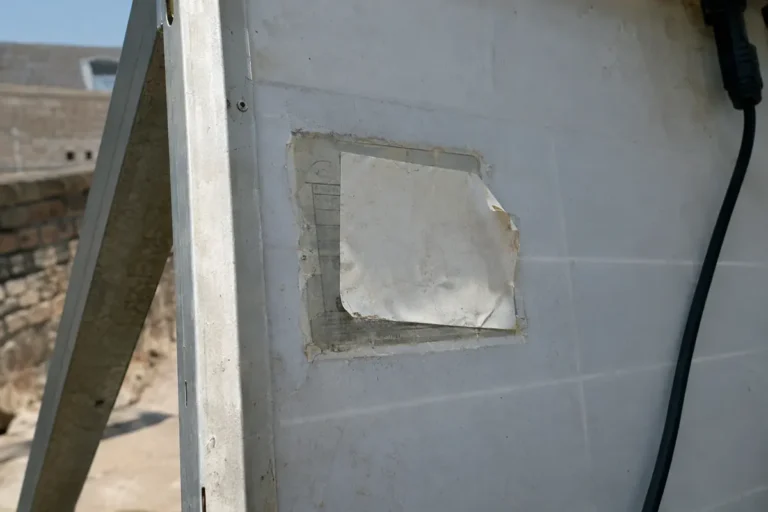 Buying Guides How to Spot Fake, Refurbished or Mislabelled Solar Panels in Pakistan
Copied brand labels, re-stickered wattages and washed used panels all turn up in Pakistan. How each trick works and how to catch it before you pay. · 8 min read
 Buying Guides A-Grade vs B-Grade Solar Panels: How Dealers Grade Stock and How to Check
What A-grade and B-grade really mean on a solar panel, why Hall Road prices differ for the same brand, and six checks to do before money changes hands. · 8 min read
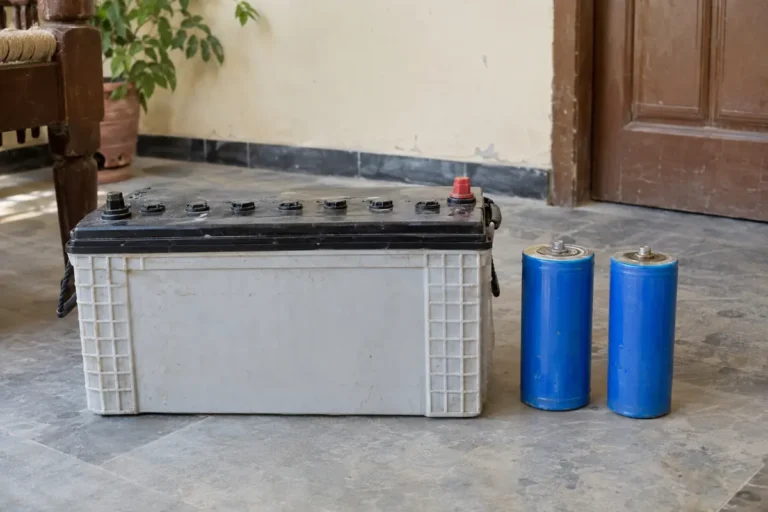 Buying Guides Lithium vs Tubular Battery for Solar in Pakistan: Cost per Year, Not Just Price
Tubular batteries cost less to buy, but lithium usually costs less per year and per stored unit. A worked comparison for Pakistani solar homes in 2026. · 8 min read